
Why you should experience Medici Fountain in Paris, France.
Medici Fountain is a serene Renaissance fountain where Odéon's literary heritage, Italian garden design, royal patronage, and quiet reflection endure within one of the Jardin du Luxembourg's most enchanting retreats.
Set along Allée de l'Observatoire near Rue Auguste Comte and just steps from Palais du Luxembourg, this secluded fountain draws visitors beneath arching plane trees toward tranquil waters framed by weathered stone, sculpted figures, climbing greenery, and one of Paris's most atmospheric garden settings. Originally conceived as a romantic grotto, the fountain invites moments of stillness far removed from the surrounding boulevards, where gently rippling water, filtered sunlight, and centuries of landscape design create an intimate experience that has captivated generations of writers, artists, and flâneurs. Every carefully composed perspective reflects the enduring influence of Italian Renaissance aesthetics upon one of Paris's most celebrated public gardens. The result is a destination defined by artistic harmony, historic continuity, and one of the Left Bank's most beloved garden compositions.
What you should know about Medici Fountain.
Medici Fountain is best known for being commissioned around 1630 by Marie de' Medici to evoke the grottoes and water gardens of her native Florence as part of the Luxembourg Garden she created beside the Luxembourg Palace, before being extensively relocated and transformed between 1862 and 1864 under Jean-Charles Alphand during Baron Haussmann's reconstruction of Paris, when architect Alphonse de Gisors incorporated Auguste Ottin's dramatic sculptural group depicting Polyphemus discovering Acis and Galatea into the redesigned fountain. Once supplied by the historic Rungis aqueduct and later reimagined to accommodate the construction of Rue de Médicis, the fountain preserves one of the city's earliest surviving grand garden features while embodying nearly four centuries of evolving French landscape architecture, hydraulic engineering, sculpture, and urban planning.
Beyond its celebrated mythology, the fountain occupies a distinctive place within Parisian cultural life because its shaded basin, elongated reflecting pool, and secluded setting have long inspired painters, photographers, poets, and novelists seeking one of the Luxembourg Garden's quietest corners. Moss-covered stonework, mature trees, mirrored water, and richly modeled sculpture soften the grandeur of the surrounding formal gardens, allowing visitors to experience a composition where Renaissance ideals, nineteenth-century restoration, and timeless landscape design continue existing in extraordinary balance.
How to fold Medici Fountain into your trip.
Medici Fountain works as part of a leisurely exploration through the Luxembourg Garden's celebrated landscapes, historic monuments, and cultural institutions.
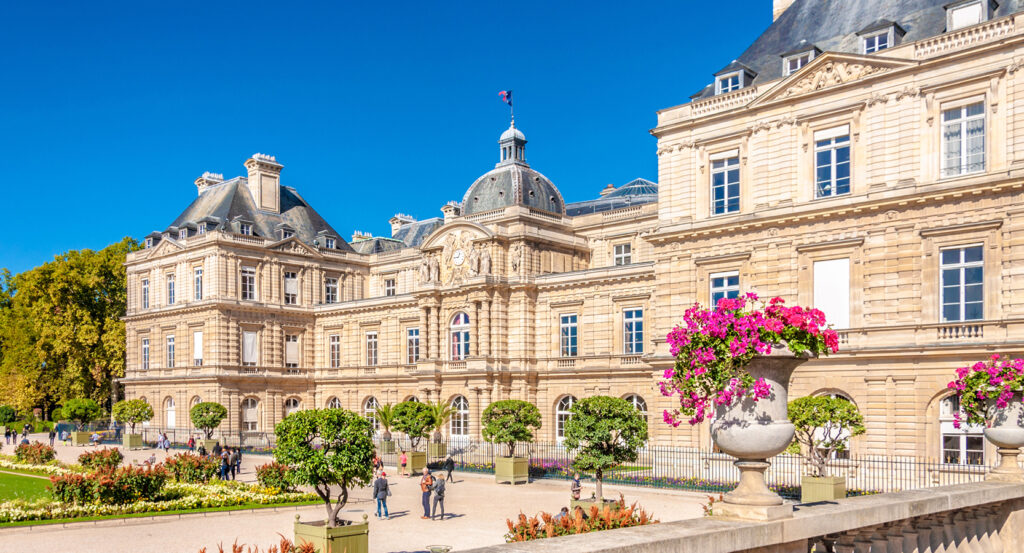
Begin at Palais du Luxembourg, where the former royal residence commissioned by Marie de' Medici establishes the extraordinary historical setting before wandering through the gardens to experience Medici Fountain. Continue to Jardin du Luxembourg, whose tree-lined promenades, formal parterres, sculptures, and ornamental basins reinforce why the gardens remain among Paris's most cherished public spaces. Conclude at Musée du Luxembourg, where acclaimed rotating exhibitions provide a fitting cultural finale celebrating art, history, and the creative legacy that has defined this distinguished quarter for centuries. The progression moves naturally from royal architecture to tranquil Renaissance-inspired landscape before concluding through two defining cultural treasures, revealing why Medici Fountain remains one of Paris's most rewarding places for quiet contemplation.
Where your story begins.
Foresyte Travel reveals places that feel extraordinary long before you arrive.
Experience premium editorial crafted for luxury travelers.














































































































