
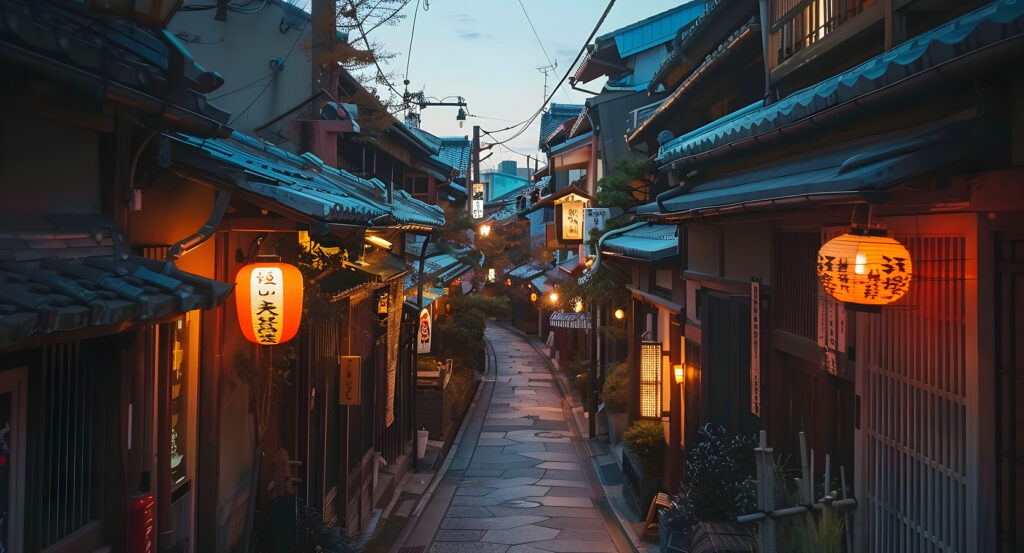
Why you should experience Mitsui Garden Hotel Kyoto Kawaramachi Jokyoji in Kyoto, Japan.
Mitsui Garden Hotel Kyoto Kawaramachi Jokyoji is Kyoto experienced through contrast and coexistence, where contemporary city life and living Buddhist tradition occupy the same physical and resonant space.
Situated directly within the grounds of Jokyoji Temple along Kawaramachi, the hotel does something genuinely rare in Kyoto: it does not borrow atmosphere from history, it shares it. Arrival is quietly arresting. You move from one of Kyoto's busiest commercial arteries into a threshold where the city's noise does not disappear, but reorganizes itself. The presence of the temple is not symbolic or decorative. It is active, lived, and integral to the site. Architecture here is restrained but intentional, allowing temple structures, stone paths, and greenery to remain the resonant center while the hotel frames them with contemporary clarity. Public spaces feel composed. Materials are modern and durable, but their restraint allows the surrounding spiritual context to breathe. Sightlines frequently return your attention to the temple grounds, creating moments of pause. The hotel does not ask you to slow down artificially. It allows slowness to occur naturally through proximity and repetition. Guest rooms reflect this balance with disciplined design and quiet confidence. Rooms are well proportioned for Central Kyoto and feel settled. Beds are substantial and supportive, encouraging real recovery after long days walking dense streets, shrine corridors, and river paths. Windows frame either the temple grounds or the surrounding city, reinforcing the hotel's dual identity. Furniture is minimal but resolved. Desks support genuine use, seating invites rest without ceremony, and storage allows you to unpack fully and inhabit the space rather than treat it as a stopover. Lighting is warm, controlled, and forgiving, supporting early mornings and late evenings. Bathrooms are clean, comfortable, and quietly refined. Layouts prioritize ease of movement, water consistency, and reliability over visual performance. Daily routines feel smooth and grounded, which matters in a hotel that sits at the intersection of intensity and calm. Dining and shared amenities extend this theme of coexistence. Meals are presented with clarity and restraint, allowing the act of eating to feel integrated. Common areas function as transitional zones between city engagement and inward pause, places to reset. Service throughout the hotel is composed and respectful. Interactions feel aware rather than scripted, with staff attuned to the unique context of the property. Guidance offered reflects lived understanding of the surrounding neighborhoods, including how crowds shift along Kawaramachi, when temple grounds feel most present, and how to navigate the city. The hotel attracts travelers who appreciate nuance: repeat visitors to Kyoto, independent explorers, couples seeking depth without seclusion, and anyone curious about how modern life and spiritual continuity can coexist without friction. Mitsui Garden Hotel Kyoto Kawaramachi Jokyoji does not package Kyoto as heritage or performance.
What you should know about Mitsui Garden Hotel Kyoto Kawaramachi Jokyoji.
This property was conceived around the idea that context should not be simulated, and that hospitality can coexist with religious life.
Rather than building adjacent to Jokyoji Temple or referencing it symbolically, the hotel was integrated directly into the temple grounds through careful collaboration and spatial planning. Architectural decisions were guided by respect for continuity. Modern structures were deliberately restrained in height, tone, and material so that they would not dominate the site visually. Public spaces were arranged to preserve sightlines and walking paths that honor the temple's daily rhythms, allowing guests to encounter living practice. Guest room layouts were developed with awareness that this is an active urban site layered with meaning, resulting in interiors that feel settled, quiet, and inwardly focused. Lighting was carefully calibrated to avoid visual intrusion into temple spaces while still supporting comfort and usability. Bathrooms and private areas were designed to feel grounding and private, offering separation. Operational culture reflects this sensitivity. Staff training emphasizes discretion, contextual awareness, and respect for the site's spiritual function. Interactions are measured and thoughtful, reinforcing the idea that this is a place of coexistence. Over time, the hotel has become a model for how contemporary hospitality can inhabit historic and religious spaces without flattening them into theme or performance. In a city where many accommodations trade on proximity to temples, Mitsui Garden Hotel Kyoto Kawaramachi Jokyoji stands apart by sharing space.
How to fold Mitsui Garden Hotel Kyoto Kawaramachi Jokyoji into your trip.
Mitsui Garden Hotel Kyoto Kawaramachi Jokyoji works best when you allow it to function as a daily point of contrast, where immersion and retreat alternate.
Begin mornings early, walking through the temple grounds before the city fully accelerates, letting stillness register before stepping back onto Kawaramachi. Use the hotel's central position to move efficiently between districts, crossing the Kamo River into Gion, heading north toward quieter streets, or west into shopping corridors. Because the property sits directly within an active zone yet maintains internal composure, returning midday feels grounding. Use the room to reset briefly, then reenter the city with steadier energy. Afternoons are ideal for layered exploration: galleries, side streets, river walks, and smaller shrines reveal themselves when you are not rushing. Evenings carry a particular resonance here. Returning at night, the contrast between illuminated streets and the quiet presence of the temple grounds becomes more pronounced, offering a sense of closure that feels earned. Mitsui Garden Hotel Kyoto Kawaramachi Jokyoji pairs especially well with repeat visits, longer stays, and travelers who want to experience Kyoto as a place where daily life and spiritual continuity overlap. By the time you leave, the city will feel less polarized between noise and calm, and the hotel will feel like the structure that allowed those states to coexist. In a destination defined by layers of meaning and constant movement, this hotel offers something rare and honest: proximity without dilution, presence without performance, and a stay that respects Kyoto's complexity instead of simplifying it.
Where your story begins.
Foresyte Travel reveals places that feel extraordinary long before you arrive.
Experience premium editorial crafted for luxury travelers.

















































































































