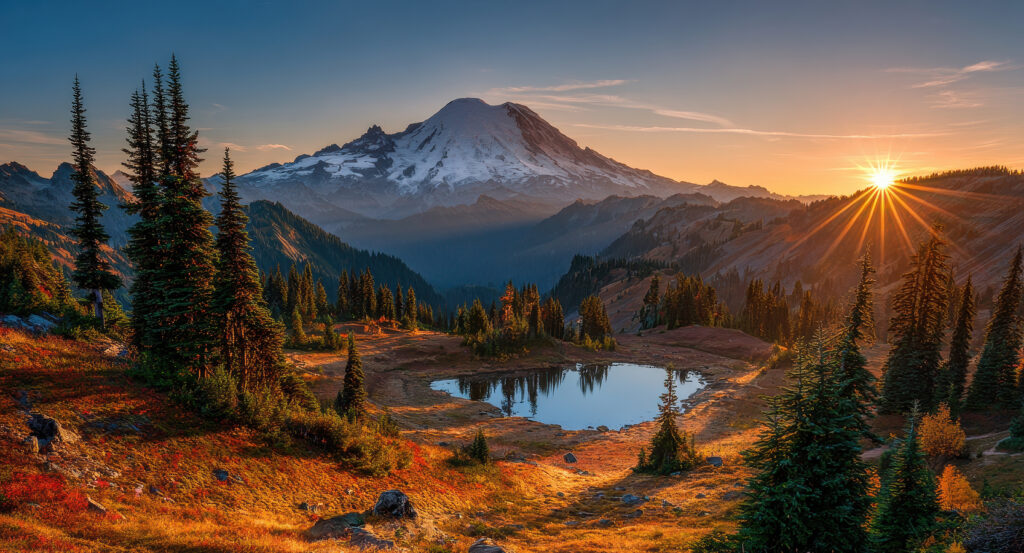
Why you should experience Mount Rainier National Park in Washington.
Rising 14,410 feet above the evergreen skyline is the beating heart of Washington's wilderness, a place where scale defies comprehension and beauty feels almost divine.
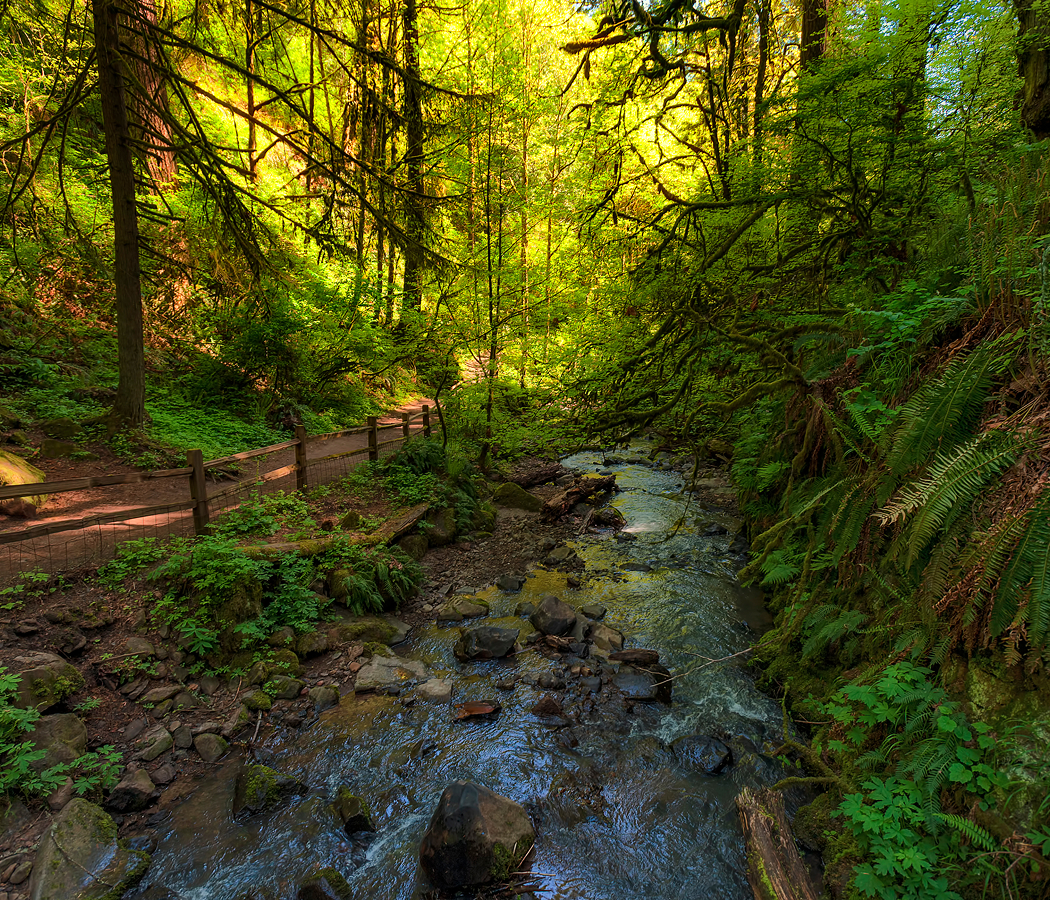
The park's centerpiece, the snow-capped Mount Rainier, is not only an active stratovolcano but a symbol of the Pacific Northwest itself, its massive form visible from over a hundred miles away on clear days. Entering the park feels like crossing a threshold into another world, one where glaciers carve valleys, waterfalls tumble through ancient forests, and alpine meadows burst into color with every shade of wildflower. The mountain's sheer size dominates the horizon, but its true magic lies in the details: the fragrance of fir and cedar, the quiet of a forest trail blanketed in moss, the glint of sunlight on crystalline snowfields. Whether you're a hiker, photographer, or daydreamer, every path seems to lead to revelation, the kind that makes you feel both small and infinite at once.
What you didn't know about Mount Rainier National Park.
Designated in 1899 was the fifth national park in the United States, predating the National Park Service itself.
It preserves not only one of America's most majestic mountains but also one of its most dynamic ecosystems, home to more glaciers than any other peak in the contiguous U.S. The park boasts 25 named glaciers, including the mighty Emmons Glacier, which spans more than four square miles. Rainier's landscape is a living record of geological transformation, shaped by fire and ice over half a million years. Despite its serene beauty, the mountain remains active, its geothermal vents still breathe heat beneath the snow, and scientists monitor it constantly for signs of movement. The park's ecosystems range dramatically with elevation: from old-growth forests teeming with Douglas fir and western hemlock, to subalpine meadows glowing with lupine, paintbrush, and heather, to barren volcanic ridges where nothing grows but stone and sky. Wildlife thrives here too, elk graze in the meadows of Paradise, black bears forage in the forests of Longmire, and marmots whistle from boulder fields near Sunrise. Fewer visitors realize that Rainier is also a mountaineer's proving ground: more than 10,000 people attempt to reach its summit each year, battling icefalls, avalanches, and altitude in one of North America's most challenging climbs. The park's name itself comes from British explorer George Vancouver, who named the peak after his friend Rear Admiral Peter Rainier, though many locals and Indigenous communities prefer its original name, Tahoma or Tacoma, meaning “the mountain that was god.”
How to fold Mount Rainier National Park into your trip.
Exploring Mount Rainier National Park demands both awe and intention, it's not a place you simply visit, but one you surrender to.
Start your journey at the Paradise Visitor Center, on the mountain's southern flank, where trails lead directly into fields of wildflowers framed by glaciers above. The Skyline Trail is a must, a moderately challenging hike that rewards you with sweeping views of the Nisqually Glacier, Mount Adams, and even Mount St. Helens on clear days. For something gentler, wander the Trail of the Shadows near Longmire, where bubbling springs and mossy forests recall the park's earliest settlement. The Sunrise area on the northeast side offers the park's highest drivable point at 6,400 feet, with panoramic views that make sunrise and sunset unforgettable. For campers, sites like Ohanapecosh and Cougar Rock immerse you in the symphony of rushing rivers and wind through cedar boughs. If you're not staying overnight, consider driving the Chinook Scenic Byway, a 92-mile loop that weaves through old forests, canyons, and alpine passes, each turn revealing another face of Rainier. Visit in July or August for peak wildflower blooms, or in September for crisp air and solitude. Always pack layers, the weather can shift from sunshine to fog in minutes, and take a moment to simply stand still, breathe, and look up. Mount Rainier National Park is more than Washington's crown jewel; it's a living cathedral of earth and sky, where every vista whispers the same truth, that nature, in its purest form, needs no translation.
Hear it from the Foresyte community.
Just enough life around you not to be overwhelming. Right pace.
Where your story begins.
Start your planning journey with Foresyte Travel.
Experience immersive stories crafted for luxury travelers.