Why Musée Océanographique de Monaco matters.
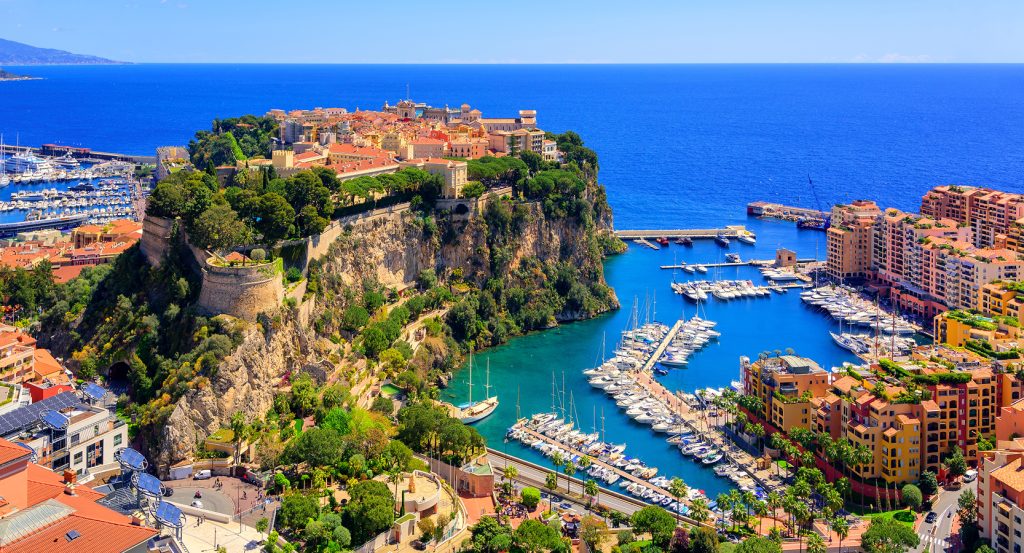
Musée Océanographique de Monaco is an expansive marine-science museum where Monaco-Ville's fortified Mediterranean coastline meets Prince Albert I's pioneering oceanographic expeditions, the scientific legacy of Jacques-Yves Cousteau and more than a century of research into the world's oceans.
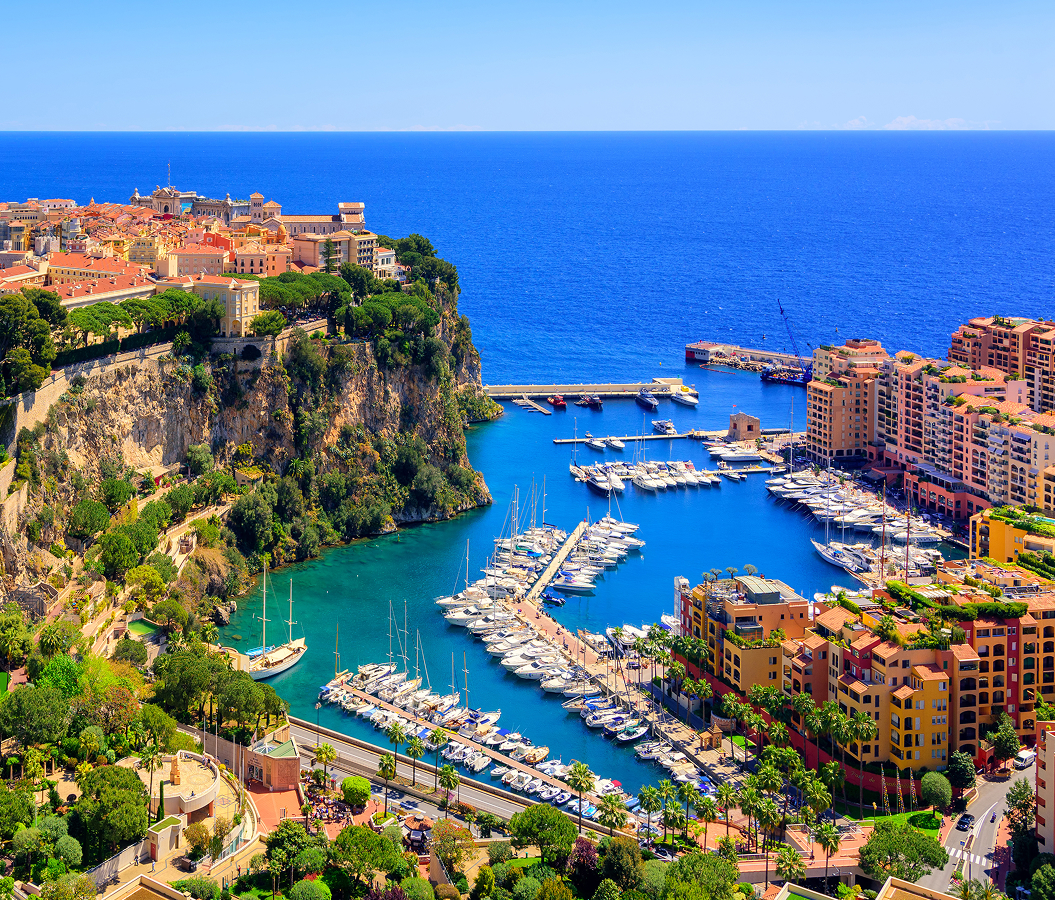
Occupying the southeastern cliffs of the Rock of Monaco, the museum rises above the Mediterranean between Saint-Martin Gardens and the historic streets surrounding Monaco Cathedral, with its seaward elevation descending toward the rocky coastline below. Its 100-meter-long façade combines pale limestone, expansive arched windows, sculpted marine ornament and an imposing central entrance beneath an elaborate composition of classical and neo-Gothic architectural elements. The building extends more than 85 meters from its foundations to its uppermost architectural features, incorporating massive retaining structures anchored directly into the steep coastal rock. Inside, an expansive entrance hall opens toward broad stone staircases, vaulted galleries, polished floors and exhibition chambers arranged across several levels, with decorative carvings and architectural details referencing the marine world. The result is an expansive scientific institution whose cliffside engineering, ceremonial architecture and extensive exhibition spaces establish an enduring physical connection between Monaco's sovereign ambitions and the exploration of the Mediterranean Sea.
What defines Musée Océanographique de Monaco.
Musée Océanographique de Monaco is best known for transforming Prince Albert I's pioneering scientific expeditions into a permanent institution dedicated to oceanography, marine biology and the international conservation of marine environments. Its origins developed through the prince's growing commitment to scientific exploration during the final decades of the nineteenth century, when oceanography was emerging as a distinct field of investigation. Albert I began undertaking systematic marine expeditions in 1885, introducing scientific instruments and specialist researchers aboard vessels equipped to investigate the physical and biological characteristics of the sea. His first research vessel, Hirondelle, became the foundation of an increasingly ambitious program that extended from the Mediterranean into the Atlantic Ocean and the waters surrounding the Azores. The expeditions incorporated deep-sea sampling, biological collection, temperature measurements and the investigation of marine currents, contributing to the development of modern oceanographic methods. Albert subsequently commissioned Princesse Alice, a steam-powered vessel that expanded the geographical range and technical capabilities of his research operations. The ship's scientific equipment supported increasingly sophisticated investigations into deep-sea organisms and the physical conditions of marine environments. The prince's research program developed through collaboration with leading European scientists, including zoologist Jules Richard, whose expertise contributed substantially to the organization and interpretation of the expedition collections. Richard became one of the prince's most important scientific collaborators, supporting the classification of specimens and the development of institutional resources for future research. Albert's expeditions also involved marine biologist Jules de Guerne, whose work contributed to the scientific investigation of pelagic organisms and deep-sea ecosystems. The prince's research subsequently expanded through the construction of Princesse Alice II, which entered service in 1898 and introduced additional laboratory facilities and advanced scientific equipment. The vessel supported investigations across the Atlantic and Mediterranean, including the collection of organisms from substantial ocean depths. These expeditions contributed to important discoveries concerning deep-sea biodiversity, the distribution of marine organisms and the physical characteristics of oceanic environments. Albert's scientific program ultimately encompassed twenty-eight oceanographic campaigns undertaken between 1885 and 1915, establishing one of the most sustained privately financed marine research initiatives of its period. The growing collections created a need for a permanent institution capable of preserving specimens, supporting scientific investigation and communicating the results of oceanographic research to a wider audience. Albert commissioned architect Paul Delefortrie to design a substantial museum on the Rock of Monaco, selecting a location whose geographical position established a direct relationship between the institution and the sea. Construction began in 1899, introducing an ambitious engineering project that required the stabilization of steep limestone cliffs and the creation of substantial foundations above the Mediterranean. Contractors Fontana and Gamba contributed to the construction program, undertaking the technical work required to establish the building's expansive structural composition. Delefortrie's architectural design combined ceremonial exhibition spaces with laboratories, scientific collections and public galleries, establishing a comprehensive institutional program devoted to marine science. The building's decorative scheme incorporated extensive references to the ocean, including sculpted fish, shells, seaweed, waves, ropes and maritime equipment. Sculptor Louis Gustave Dussart contributed two expansive allegorical figures to the principal façade, representing Progress assisting Humanity and Truth revealing the forces of the world to Science. Each figure reaches eight meters in height, establishing a symbolic connection between scientific discovery and the advancement of human knowledge. The façade also incorporates the names of twenty scientific research vessels selected by Albert I from a list prepared by Jules Richard, preserving the international development of oceanographic exploration within the building's architectural decoration. The prince established the Oceanographic Institute in 1906, creating a permanent institutional foundation for the museum and an associated center of oceanographic education in Paris. The organization received recognition as a public-interest foundation under French law, strengthening its ability to support research, scientific communication and educational activities. The museum was inaugurated on March 29, 1910, establishing a permanent public institution devoted to the investigation and interpretation of marine environments. Its opening introduced an extensive collection of scientific specimens, expedition instruments, maritime artifacts and biological displays accumulated through Albert's research program. Jules Richard became the museum's first director, contributing to the development of its collections and the organization of its scientific activities. The museum subsequently became an important center for international marine research, supporting the exchange of scientific knowledge among European institutions and the continued investigation of oceanographic subjects. The associated Oceanographic Institute opened its Paris headquarters in 1911, extending the educational and institutional reach of Albert's scientific foundation. Following the prince's death in 1922, the museum continued operating under the institutional structure he had established, preserving his collections and expanding its public educational functions. The development of aquarium technology introduced an increasingly important component of the museum's work, allowing living marine organisms to be maintained and studied under controlled conditions. During the 1930s, the aquarium began presenting tropical fish alongside coral skeletons, introducing visitors to marine environments beyond the Mediterranean. The museum subsequently developed more sophisticated systems for maintaining seawater quality, regulating temperature and supporting the biological requirements of different marine species. Prince Rainier III strengthened the institution's international profile through the appointment of Jacques-Yves Cousteau as director in 1957. Cousteau had already achieved international recognition through his underwater exploration, documentary filmmaking and development of modern diving equipment. His collaboration with engineer Émile Gagnan contributed to the development of the Aqua-Lung during the Second World War, substantially expanding the possibilities of underwater exploration. Cousteau's research vessel Calypso subsequently became internationally associated with marine exploration through scientific expeditions, documentary films and televised programs. His leadership at the museum connected its historical scientific mission to the emerging international movement for marine conservation. During his directorship, the institution expanded its public engagement with underwater ecosystems and strengthened its reputation as a center for the communication of marine science. Cousteau remained director until 1988, establishing a thirty-one-year period of leadership that contributed substantially to the museum's international recognition. The aquarium's scientific development continued through advances in the maintenance and reproduction of tropical marine organisms, including the successful cultivation of living corals beginning in the late 1980s. These techniques contributed to the development of long-term coral husbandry and the reduction of dependence on specimens collected from natural reefs. The construction of the large tropical aquarium in 2000 introduced a substantial new environment capable of supporting reef-associated species within a carefully regulated system. Prince Albert II subsequently strengthened the institution's conservation mission through initiatives addressing climate change, marine biodiversity and the protection of vulnerable ocean ecosystems. The Prince Albert II of Monaco Foundation, established in 2006, developed international environmental programs that complemented the Oceanographic Institute's educational and scientific activities. The museum expanded its public conservation work through the development of a sea turtle rescue and rehabilitation center, providing veterinary care and recovery facilities for injured marine turtles. Contemporary exhibition projects also introduced digital technologies, interactive installations and multimedia presentations capable of communicating complex environmental processes through direct visitor participation. Artist Mark Dion developed Oceanomania, a substantial cabinet of marine curiosities that reinterpreted the museum's historical collections through contemporary artistic presentation. The institution subsequently introduced Monaco and the Ocean, an exhibition connecting the scientific and environmental contributions of Albert I, Rainier III and Albert II. The Mediterranean 2050 exhibition, introduced in 2025, extended the museum's educational program through a four-part interactive exploration of the Mediterranean's past, present and possible ecological future. The museum's collections now contain more than 60,000 scientific, natural-history, artistic and ethnographic objects, preserving an extensive record of marine exploration and scientific investigation. Its historical significance emerges from the sustained relationship between princely scientific patronage, international oceanographic research, public education and the conservation of marine ecosystems across successive generations.
How Musée Océanographique de Monaco fits.
Musée Océanographique de Monaco works as the culminating destination for an exploration connecting the political history of the Grimaldi dynasty, the religious heritage of Monaco-Ville and the nineteenth-century development of the principality's landscaped public spaces.
Begin at Prince's Palace of Monaco, the historic sovereign residence occupying the western summit of the Rock. Its origins developed through the construction of a Genoese fortress beginning in 1215, establishing a strategically important military position above the surrounding Mediterranean coastline. François Grimaldi seized the stronghold on January 8, 1297, initiating the family's enduring political association with the principality. The medieval fortress subsequently developed into a princely residence through substantial Renaissance and Baroque architectural transformations, introducing ceremonial courtyards, elaborate reception rooms and extensive decorative programs. Its continuing function as the official residence of Monaco's sovereign preserves the relationship between dynastic history and contemporary state government. Continue to Monaco Cathedral, the principal Roman Catholic church of the principality and the burial place of successive members of the Grimaldi dynasty. Construction began in 1875 on the site of the earlier Church of Saint Nicholas, establishing a substantial new religious building within the historic center of Monaco-Ville. Architect Charles Lenormand developed the cathedral in a Romanesque-Byzantine style, incorporating pale limestone, rounded arches and an expansive façade inspired by medieval ecclesiastical architecture. The building was completed in 1903 and consecrated in 1911, establishing its position as the principal church of the principality. Its interior incorporates an elaborate altar, religious paintings and the tombs of Prince Rainier III and Princess Grace, connecting the cathedral's religious functions to the modern history of the ruling family. Conclude at Saint-Martin Gardens, the landscaped public gardens extending along the southeastern cliffs of the Rock. Their development began in 1816 under Prince Honoré V, who introduced a public employment program during a period of economic hardship following the Napoleonic Wars. The gardens occupied previously undeveloped land near the historic defensive walls, creating one of the principality's earliest public recreational spaces. Their landscaped terraces incorporate Mediterranean trees, ornamental shrubs, winding pathways and sculptures positioned above the steep coastal cliffs. A major redevelopment undertaken between 1983 and 1986 introduced additional horticultural improvements, strengthening the gardens' relationship with the surrounding urban landscape. The site preserves an important connection between public welfare, nineteenth-century princely government and the development of Monaco's landscaped coastal environment. The progression moves from Prince's Palace of Monaco's dynastic political history through Monaco Cathedral's religious heritage and culminates in Saint-Martin Gardens' landscaped coastal environment, establishing the historical and geographical context for the museum's scientific mission.
Where your story begins.
Foresyte Travel reveals places that feel extraordinary long before you arrive.
Enjoy editorial crafted for luxury travelers.