Why you should experience Sanmon Gate in Kyoto, Japan.
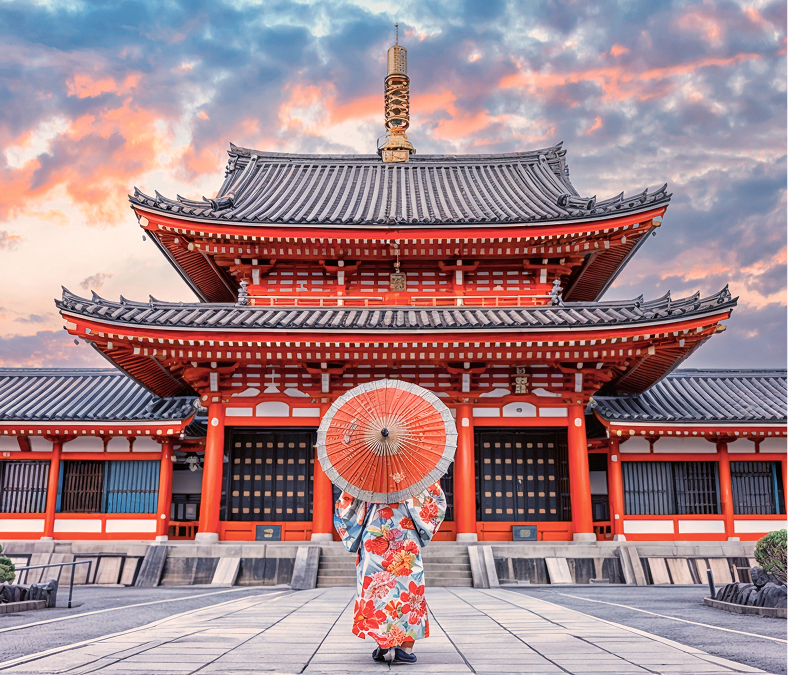
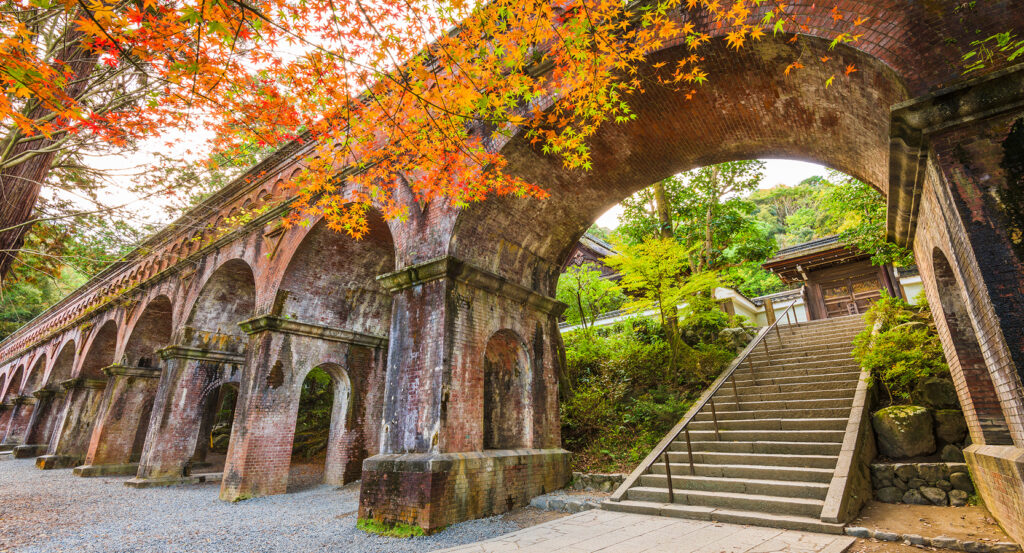
The Sanmon Gate at Nanzen-ji Temple is Kyoto's passage between worlds, a wooden mountain of silence where impermanence meets eternity.
Standing at thirty meters tall, it commands both reverence and stillness, its massive beams darkened by centuries of sun and incense. The gate rises from a grove of maples and pines, its symmetry both monumental and graceful. From below, it feels immovable, a fortress of enlightenment; from above, it reveals the fragile expanse of Kyoto stretching toward the horizon. Climb its steep steps, and each one feels like a meditation: the air cools, the light softens, and the noise of the city fades into the rustle of leaves. At the top, you're met with a panoramic view that feels timeless, tiled roofs, temple courtyards, and the faint blue outline of the Higashiyama hills. This is where Kyoto exhales. To stand beneath the Sanmon is to feel history pressing down and peace rising up, all in the same breath.
What you didn't know about Sanmon Gate.
The Sanmon Gate you see today was built in 1628 under the patronage of Todo Takatora, the feudal lord and master castle architect who also designed several of Japan's most formidable fortresses.
It was dedicated to the souls of samurai who perished in the Osaka Campaign, granting them spiritual passage to enlightenment. The word Sanmon translates to “Three Gates,” representing the three paths to liberation in Zen Buddhism, emptiness, formlessness, and non-action. Passing through the gate is not merely physical; it is symbolic, a quiet initiation into freedom from worldly illusion. The gate's upper story, known as the Gohōjō, contains enshrined statues of Shakyamuni Buddha and sixteen Arhats, enlightened disciples who protect the Dharma. From this elevated hall, monks once conducted ceremonies overlooking the city, bridging the sacred and the mundane. The architecture itself embodies paradox: monumental yet weightless, austere yet intricate. Its joinery, crafted without nails, locks vast timbers together through pure precision, a feat of both engineering and devotion. Few visitors realize that the gate also inspired art and legend; it was immortalized in the 18th-century kabuki play Sanmon Gosan no Kiri, where the outlaw Ishikawa Goemon delivers his famous line, “What a view of the spring sky!” while looking out from its terrace. That moment, the merging of defiance and beauty, still lingers here.
How to fold Sanmon Gate into your trip.
To experience the Sanmon Gate fully, you must approach it with reverence, not haste.
Begin at the lower path leading through Nanzen-ji's towering trees. As the gate comes into view, pause, let its scale register against the quiet. Walk beneath its vast eaves and look upward; the beams seem to dissolve into shadow, their weight softened by light. When open to visitors, climb the narrow wooden staircase to the upper platform. The ascent is steep, but the view rewards the breath it takes. From the terrace, Kyoto unfolds like a living mandala, temples glinting between trees, canals threading through rooftops, mountains fading into haze. If you visit in spring, cherry blossoms drift across the horizon like a silent snowfall; in autumn, the foliage burns crimson against the dark wood. Sit for a moment before descending. Listen to the wind moving through the rafters, the faint ring of a temple bell, the rhythm of your own heartbeat echoing through the wood. As you step back through the gate, you'll notice that everything feels lighter, your mind, your breath, even the air. That is the purpose of the Sanmon: not to impress, but to release. It is Kyoto's grandest doorway into peace, standing for centuries as both guardian and guide.
Hear it from the Foresyte community.
Just enough life around you not to be overwhelming. Right pace.
Where your story begins.
Start your planning journey with Foresyte Travel.
Experience immersive stories crafted for luxury travelers.