Why you should experience Meiji Kotokan Hall at Kyoto National Museum in Kyoto, Japan.
The Meiji Kotokan Main Hall is Kyoto's bridge between centuries, a red-brick testament to Japan's moment of awakening, when tradition met the modern world.
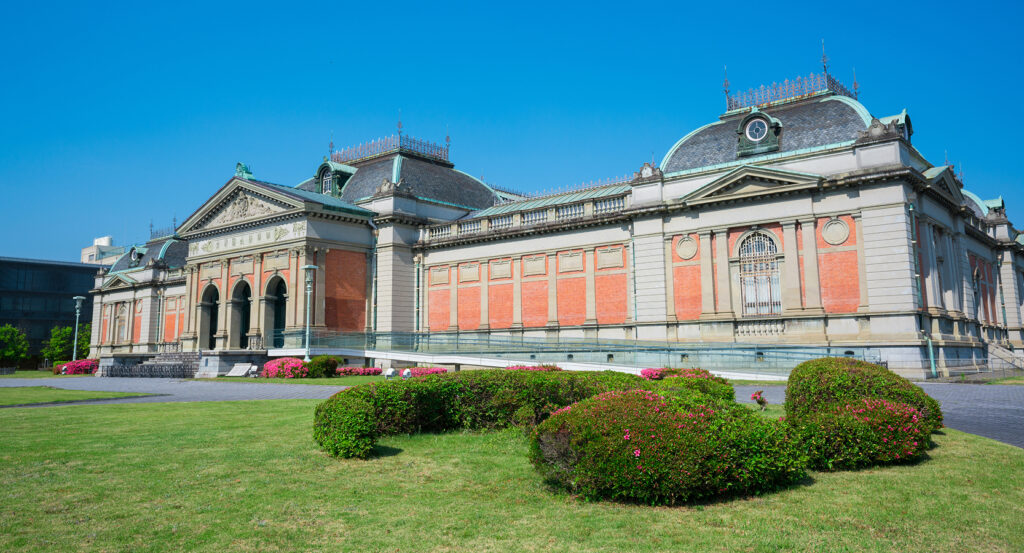
Standing proudly at the center of the Kyoto National Museum grounds, the hall commands quiet reverence: symmetrical, stately, and softly glowing under the afternoon light. Its arched windows and white granite accents frame a building that feels both Western and profoundly Japanese. As you approach, the rhythmic pattern of its brickwork draws your eye upward, a harmony of texture and proportion that reflects an age discovering its new voice. Step inside, and the atmosphere changes. The high ceilings and polished floors capture the hush of a cathedral, yet the galleries themselves retain an intimacy that encourages quiet thought. Here, ancient scrolls, Buddhist sculptures, and ceramics are displayed not as relics, but as conversations between artisans across time. The Meiji Kotokan is more than a museum building, it's a declaration of faith in beauty itself.
What you didn't know about Meiji Kotokan Hall at Kyoto National Museum.
Completed in 1895 and opened to the public two years later, the Meiji Kotokan was one of Japan's first purpose-built museums, a physical expression of the Meiji government's drive to modernize while preserving national identity.
Its architect, trained under Josiah Conder, the British architect often called “the father of modern Japanese architecture.” Katayama's design married the structure of European Renaissance palaces with the restraint of Japanese aesthetics: classical columns softened by curved roofs, stone pediments balanced by timber eaves. The building's red brick was sourced from Osaka kilns, while its decorative elements, carved lotus motifs, floral medallions, and bronze ornaments, subtly reference Kyoto's temples. During its early years, the hall served as the Imperial Museum of Kyoto, housing treasures transferred from temples and shrines across the region. Even its orientation was symbolic: facing Sanjusangendo Temple across the avenue, the hall was meant to stand not in opposition to religion, but in dialogue with it, art and devotion in balance. Few visitors realize that the central dome of the Kotokan conceals a steel framework imported from England, one of the earliest uses of Western engineering in Japan. After sustaining damage during wartime air raids, it was meticulously restored in the 1950s, preserving every cornice and balustrade. In 1969, it was designated an Important Cultural Property, ensuring its protection as both architecture and philosophy.
How to fold Meiji Kotokan Hall at Kyoto National Museum into your trip.
Visiting the Meiji Kotokan is like stepping into Kyoto's architectural turning point, the moment Japan learned to translate beauty across languages.
Begin outside in the museum courtyard, where the building's symmetry mirrors the mountain ridges beyond. Approach from the south gate to see how the façade catches morning light; the bricks shift from deep rust to rose gold as the sun climbs. Inside, move slowly through the galleries, they're quieter than the modern wing, and their vaulted ceilings create a kind of meditative echo. Study the details: the brass fittings on the stair rails, the embossed floral tiles near the entrance, the delicate plasterwork framing each window. Visit in the afternoon if possible, when sunlight filters through the western windows and spills across the marble floors like liquid amber. After exploring the exhibits, step outside and look across to Sanjusangendo; the pairing of sacred temple and secular museum captures Kyoto's enduring balance between devotion and design. Before leaving, walk once around the perimeter, from each angle, the hall reveals a new layer of proportion and grace. The Meiji Kotokan doesn't shout its importance; it hums it, quietly, continuously, through the language of light and brick.
Hear it from the Foresyte community.
Just enough life around you not to be overwhelming. Right pace.
Where your story begins.
Start your planning journey with Foresyte Travel.
Experience immersive stories crafted for luxury travelers.