Why Vatnajokull matters.
Somewhere between ice and infinity, the heavens begin to move.
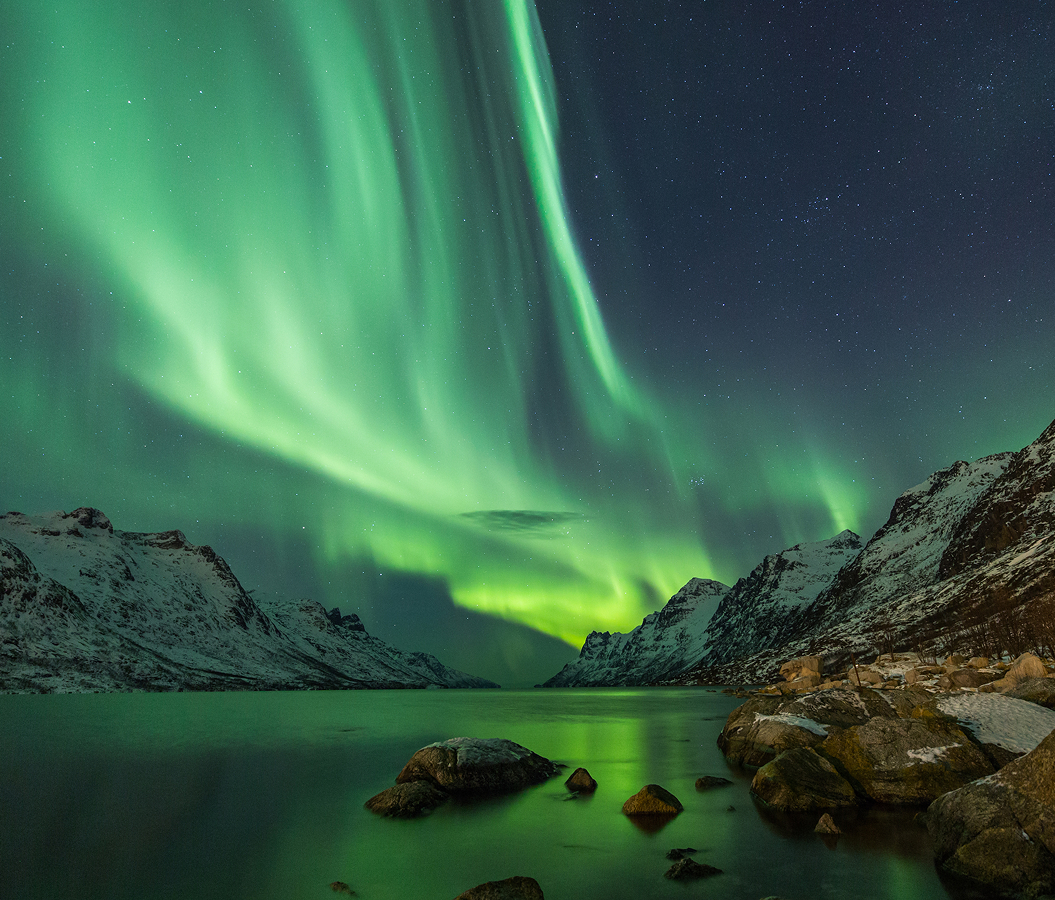
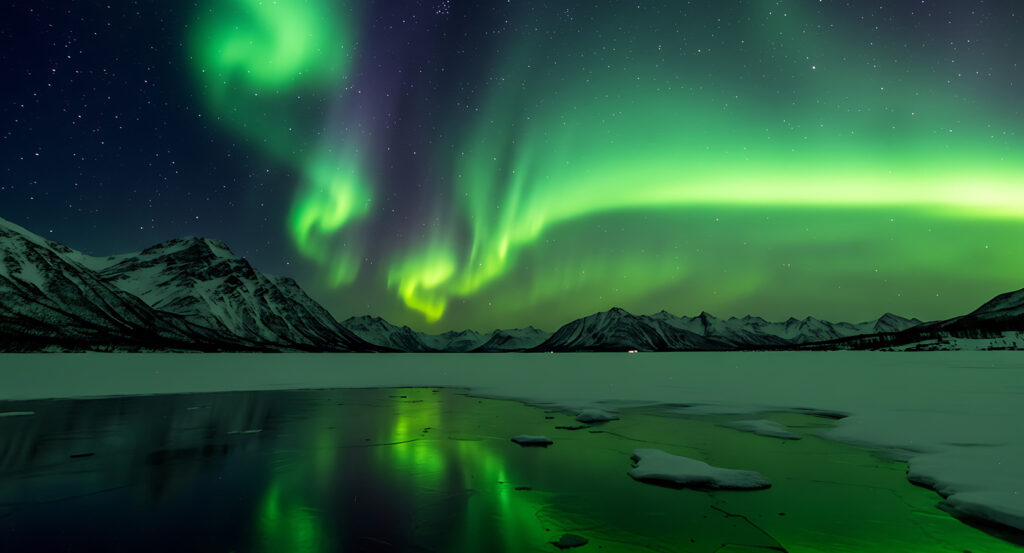
At Vatnajokull - Europe's largest glacier and the crown jewel of Iceland's wilderness, the aurora borealis transforms the frozen world into a living cathedral of light. Beneath the weight of ten-thousand-year-old ice, the night sky flares in bands of green, violet, and gold, reflecting across snowfields that stretch farther than the eye can see. The silence here feels immense, so complete that when the aurora ripples, you almost imagine hearing it hum. Standing on the edge of this glacier, surrounded by creaking ice and the distant whisper of wind, the Northern Lights don't just appear above you, they inhabit the landscape itself. Each color dances across ridgelines, climbs the icy peaks, and descends again into mirrored lagoons, as though the sky and glacier are speaking in fluent light. Nowhere else in Iceland feels so unearthly, so close to the edge of creation. Vatnajokull isn't simply a backdrop for the aurora, it's a participant in the performance, shaping, amplifying, and echoing every flicker of the cosmos.
What defines Vatnajokull.
The magic of Vatnajokull lies in its duality, its immensity and fragility.
Covering eight percent of Iceland's landmass, the glacier's icy expanse contains volcanoes, ice caves, and geothermal rivers sealed beneath its frozen crust. When the aurora flares above it, these hidden worlds refract the light in unexpected ways. Crystals embedded in the ice act like prisms, scattering green and pink hues across the frozen surface until the entire glacier seems to breathe color. In Jokulsárlón, the glacial lagoon at its southern edge, icebergs drift like ghostly sculptures, catching the aurora's glow as they move. On nights of calm water, the reflection is perfect, doubling the sky until you can't tell which way is up. The blend of fire and ice beneath the aurora adds another layer of wonder: beneath the glacier, subglacial volcanoes simmer quietly, reminders that even the stillest beauty in Iceland is alive with motion. The aurora over Vatnajokull often coincides with crisp Arctic air and little moisture, a combination that creates unusually sharp visibility and saturation of color. Scientists call it “high-definition aurora,” but locals just call it sacred. To them, this place isn't just a glacier, it's the Earth dreaming in light.
How Vatnajokull fits.
To see the aurora at Vatnajokull is to surrender to nature's rhythm.
Base yourself in the small towns that fringe the glacier, Höfn to the east or Skaftafell to the west, where local guides lead night excursions onto safe vantage points away from light pollution. Bundle up in layers, and if you can, join a guided snowmobile or super-jeep tour that takes you into the glacier's heart, where the lights fill the horizon from end to end. The most striking views often come from Jokulsárlón Lagoon or the nearby Diamond Beach, where ice fragments scattered along the shore reflect the aurora like molten glass. Bring a headlamp, but switch it off as soon as you arrive, your eyes will need time to adjust to the raw luminescence. If clouds roll in, spend the night in a cozy guesthouse near the ring road; weather changes fast here, and patience often turns frustration into transcendence. For those seeking something even more surreal, book a night tour through one of Vatnajokull's ice caves during winter, the interior glows blue and alive, and when the aurora breaks above, the ice itself flickers with trapped starlight. When you emerge into the open night again, the lights may still be dancing, silent but insistent, whispering that this, this moment between sky and ice, is what eternity looks like when it remembers to shimmer.
Where your story begins.
Foresyte Travel reveals places that feel extraordinary long before you arrive.
Enjoy editorial crafted for luxury travelers.
Foresyte may earn a commission when you book.