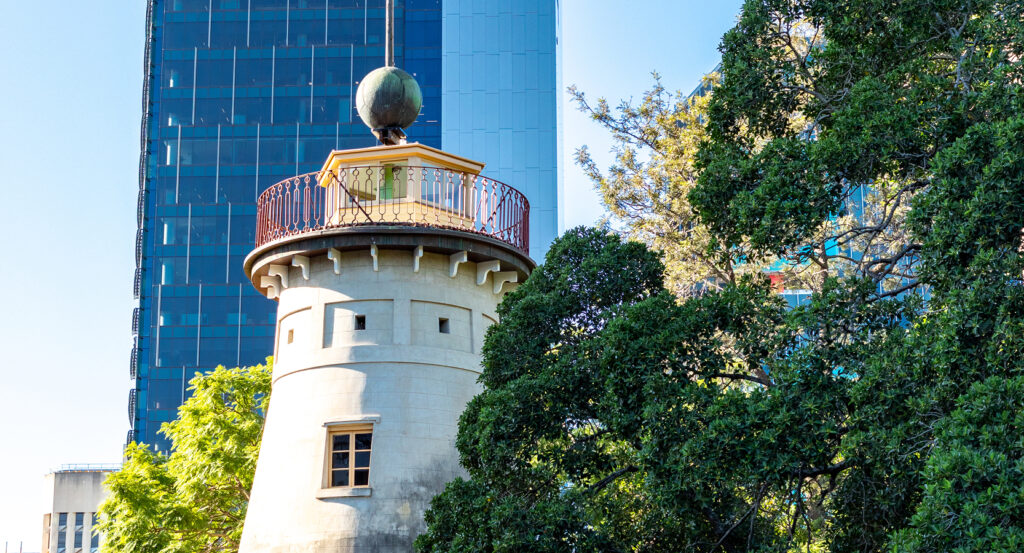
Why The Old Windmill matters.
The Old Windmill is Queensland's oldest surviving convict-built structure where Spring Hill's colonial heritage, architectural endurance, scientific innovation, and civic history converge within one of Australia's most significant historic landmarks.
Set atop Wickham Terrace within Wickham Park near Turbot Street and just steps from King Edward Park, this cylindrical stone tower rises above Brisbane's skyline through simple Georgian proportions, thick masonry walls, and commanding hilltop views that have witnessed nearly two centuries of the city's transformation. Carefully preserved stonework, elevated surroundings, and an unmistakable silhouette establish an enduring landmark that reflects Brisbane's earliest European settlement. Every perspective reinforces the remarkable survival of one of Australia's oldest colonial buildings. The result is a historic monument defined by exceptional heritage value, architectural resilience, and one of Queensland's most important cultural landmarks.
What defines The Old Windmill.
The Old Windmill is best known for being constructed in 1828 by convict labor under the direction of Commandant Patrick Logan, making it Queensland's oldest surviving convict-built structure and the oldest surviving building in Brisbane. Built to grind grain produced by the Moreton Bay Penal Settlement, the tower initially operated as a traditional windmill before unreliable winds led to the installation of a treadmill powered by convicts, who were required to walk continuously to drive the milling machinery. The structure became associated with some of the settlement's harshest punishments, as prisoners assigned to the treadmill endured physically exhausting labor that became symbolic of the penal colony's strict disciplinary regime. Following the closure of the penal settlement in 1842, the windmill served numerous civic purposes including a signal station, fire observation tower, weather observatory, and scientific facility as Brisbane developed into the capital of Queensland. Between 1922 and 1924, the site entered broadcasting history when pioneering radio engineer Thomas Elliott and the Queensland Radio Experimenters' League conducted some of Australia's earliest radio and wireless transmission experiments from the tower, contributing directly to the development of regular broadcasting in Queensland. The landmark later played a significant role in early television, with experimental television transmissions undertaken from the site during the 1930s, reinforcing its importance within Australia's communications history. Today The Old Windmill is entered on the Queensland Heritage Register and remains one of the state's most historically significant buildings, preserving nearly two centuries of Brisbane's evolution from remote penal outpost to modern international city through a single extraordinary architectural survivor.
The tower's architecture reflects the functional simplicity of early colonial engineering through locally quarried stone masonry, deeply recessed openings, thick load-bearing walls, and a cylindrical form designed to withstand both mechanical operation and Queensland's subtropical climate. Its commanding hilltop position ensured visibility across the growing settlement while later adapting naturally to communications and observation functions as technology evolved. Careful conservation has preserved the structure's original fabric while allowing successive generations to appreciate its remarkable continuity across multiple phases of Brisbane's history. Every element demonstrates how colonial engineering, scientific advancement, heritage conservation, and adaptive reuse combine to preserve one of Australia's most historically significant buildings.
How The Old Windmill fits.
The Old Windmill works as the historical centerpiece of an exploration through Brisbane's earliest colonial landmarks.
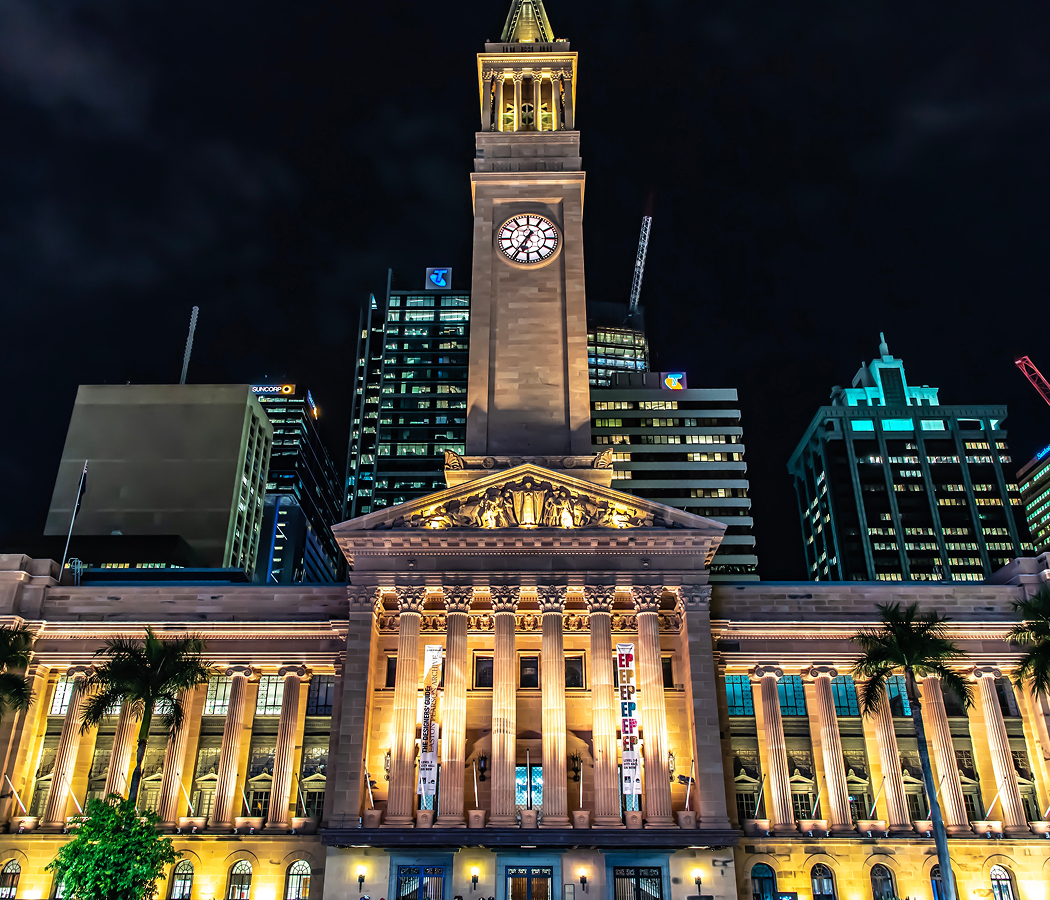
Begin at King Edward Park, where elevated gardens and sweeping city views establish the historic landscape surrounding the tower before continuing to The Old Windmill. Continue to Museum of Brisbane, whose exhibitions naturally expand the story of the city's evolution from penal settlement to modern metropolis. Conclude at Brisbane City Hall, where one of Queensland's greatest civic buildings provides a memorable finale celebrating the remarkable growth of Brisbane across nearly two centuries of history. The progression moves naturally from historic parkland to Queensland's oldest surviving building before concluding through Brisbane's defining civic landmark, revealing why The Old Windmill remains among Australia's most important colonial monuments.
Where your story begins.
Foresyte Travel reveals places that feel extraordinary long before you arrive.
Enjoy editorial crafted for luxury travelers.
Foresyte may earn a commission when you book.