Why Palazzo Litta matters.
Palazzo Litta is a theatrical Baroque palace where Magenta's aristocratic history, Milanese court culture, architectural performance and performing arts converge behind one of the city's most vivacious eighteenth-century facades.
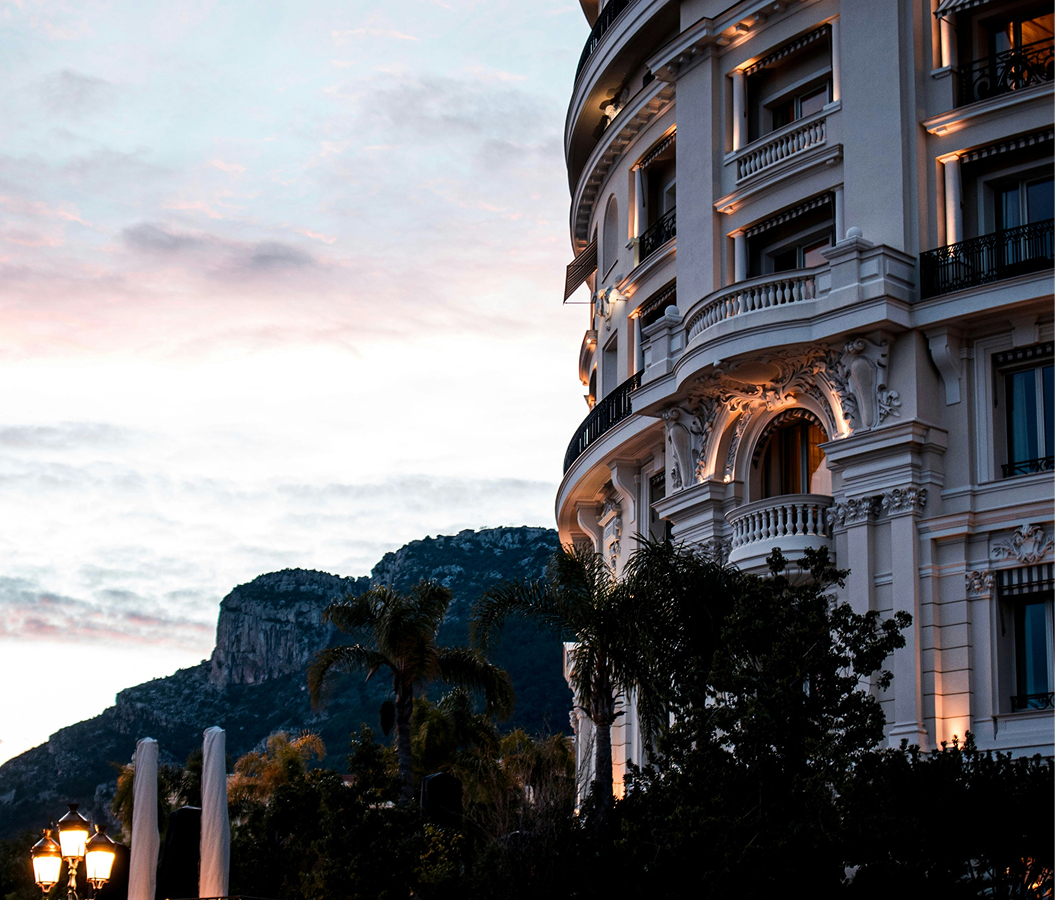
Set along Corso Magenta near Via Brisa and just steps from San Maurizio al Monastero Maggiore, the palace occupies a corridor where Roman imperial remains, Renaissance monasteries and patrician residences accumulated along the western approach to Central Milan, placing its aristocratic architecture within an unusually concentrated sequence of the city's historical layers. Bartolomeo Bolli's seventeenth-century courtyard leads toward a grand staircase whose paired flights, balustrades and sculptural decoration turn circulation through the residence into a ceremonial experience. The later street facade intensifies that effect through an undulating composition of pilasters, elaborate window surrounds, balconies and a projecting entrance whose ornament announces the social ambitions once contained behind it. The result is a Baroque palace where architecture was conceived as performance long before the complex acquired an actual theater.
What defines Palazzo Litta.
Palazzo Litta is best known for the striking Baroque facade Bartolomeo Bolli added in 1752 to a residence whose development had begun a century earlier for Count Bartolomeo Arese, among the most powerful political figures in seventeenth-century Milan. Arese became president of the Senate of Milan in 1660, and his residence grew into an architectural expression of a family operating near the summit of Spanish-era government and aristocratic society. Francesco Maria Richini participated in the earlier design before his death in 1658, with Bolli continuing the complex through the grand courtyard and staircase. Arese died in 1674 without male heirs, and the palace passed through his daughter Margherita to the Visconti Borromeo Arese family. Giulio Visconti Borromeo Arese subsequently commissioned Bolli's new Corso Magenta frontage, replacing the restrained exterior of the seventeenth-century residence with the richly modeled facade that now defines the building. Carlo Giuseppe Merlo contributed to the interiors during the same eighteenth-century campaign, expanding a decorative program shaped by stucco, fresco, mirrors and ceremonial rooms. The transformation converted an already important senatorial residence into one of Milan's most ambitious aristocratic environments.
Pompeo Litta Visconti Arese brought the family name permanently associated with the palace after inheriting the property through the Visconti Borromeo Arese line during the nineteenth century. Long before that succession, the residence had become a stage for European court society: Archduchess Maria Anna of Austria stayed there in 1649 during her journey to marry Philip IV of Spain, and later generations received festivities associated with Habsburg Milan. Napoleon's arrival introduced another political world, with the palace entering the social orbit of the French administration and the Kingdom of Italy. A purpose-built family theater opened within the complex in 1763, establishing a cultural function that outlived the aristocratic household and developed into the present Teatro Litta. The building entered state ownership in the twentieth century and later became associated with regional cultural administration, allowing restoration and public use to recover spaces previously organized around private dynastic power. Palazzo Litta's progression from Arese political residence through Visconti and Litta patronage into a surviving theatrical and cultural complex gives its architecture an unusually continuous relationship with performance, ceremony and public life.
How Palazzo Litta fits.
Palazzo Litta works as the anchor for a daytime progression through Renaissance monastic painting, Milan's Roman imperial defenses and a residence that preserves Leonardo da Vinci's most intimate surviving connection with the city.
Begin at San Maurizio al Monastero Maggiore, where an early Christian religious site developed into Milan's principal Benedictine convent before a major Renaissance rebuilding began in 1503 under Gian Giacomo Dolcebuono and Giovanni Antonio Amadeo. Bernardino Luini and his sons transformed the interior through an extensive sixteenth-century fresco program, with the partition separating the public church from the nuns' hall creating two richly painted environments inside the same architectural shell. Luini's work for aristocratic patrons connected the convent directly with the families whose residences filled the surrounding Magenta district. Continue to Torre di Ansperto, a surviving component of Milan's late Roman defensive system incorporated into the former Monastero Maggiore complex. Imperial expansion of the walls under Maximian enlarged Mediolanum toward the west as the city became one of the principal centers of the tetrarchic empire, and later medieval adaptation preserved portions of those defenses inside religious construction after their original military purpose disappeared. Conclude at Casa degli Atellani, the fifteenth-century residence that Ludovico il Moro gave to the Atellani family as he reshaped the neighborhood around Santa Maria delle Grazie. Its gardens became inseparable from Leonardo da Vinci after Ludovico granted the artist a nearby vineyard in 1499, creating a personal holding for the painter of The Last Supper during his Milanese years. Senator Ettore Conti later commissioned Piero Portaluppi to restore and substantially reorganize the Atellani residence during the 1920s, joining Renaissance remnants with one of twentieth-century Milan's most distinctive architectural careers. The progression moves from Dolcebuono, Amadeo and Luini transforming a medieval convent through imperial fortifications surviving inside the same district into Ludovico, Leonardo and Portaluppi connecting Renaissance patronage with modern restoration, revealing the exceptional concentration of artistic and political history surrounding Palazzo Litta.
Where your story begins.
Foresyte Travel reveals places that feel extraordinary long before you arrive.
Enjoy editorial crafted for luxury travelers.
Foresyte may earn a commission when you book.