Why Pavyllon Monte-Carlo matters.
Pavyllon Monte-Carlo is a MICHELIN-starred contemporary French restaurant where Carré d'Or's Belle Époque hospitality heritage meets Yannick Alléno's pioneering research into modern sauces, the agricultural and maritime resources of the Mediterranean and an open-counter approach to fine dining.
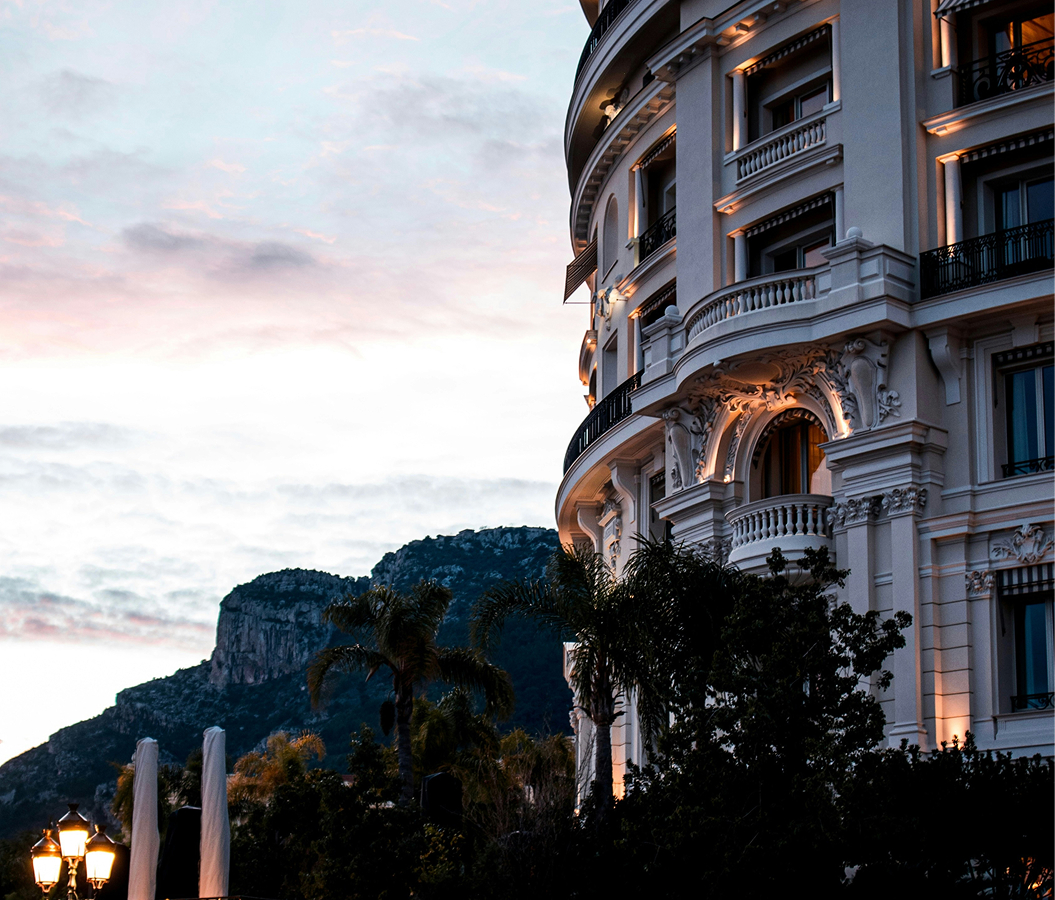
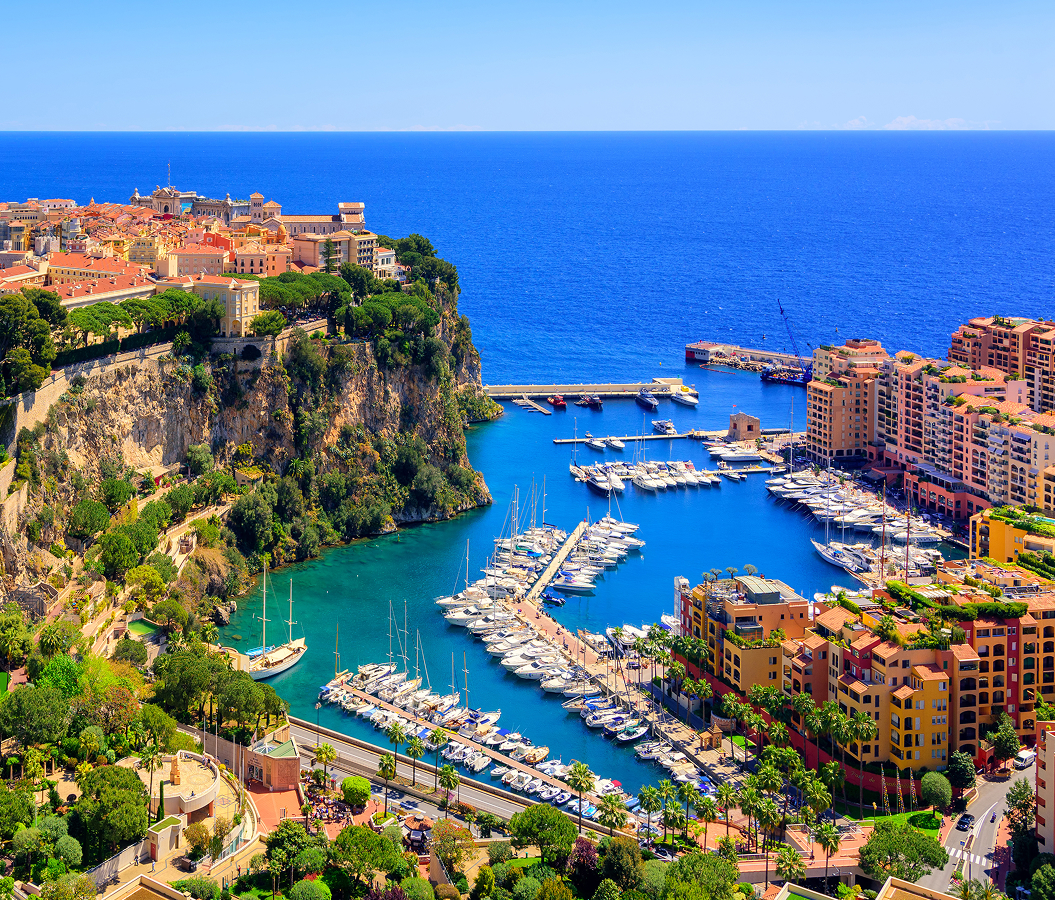
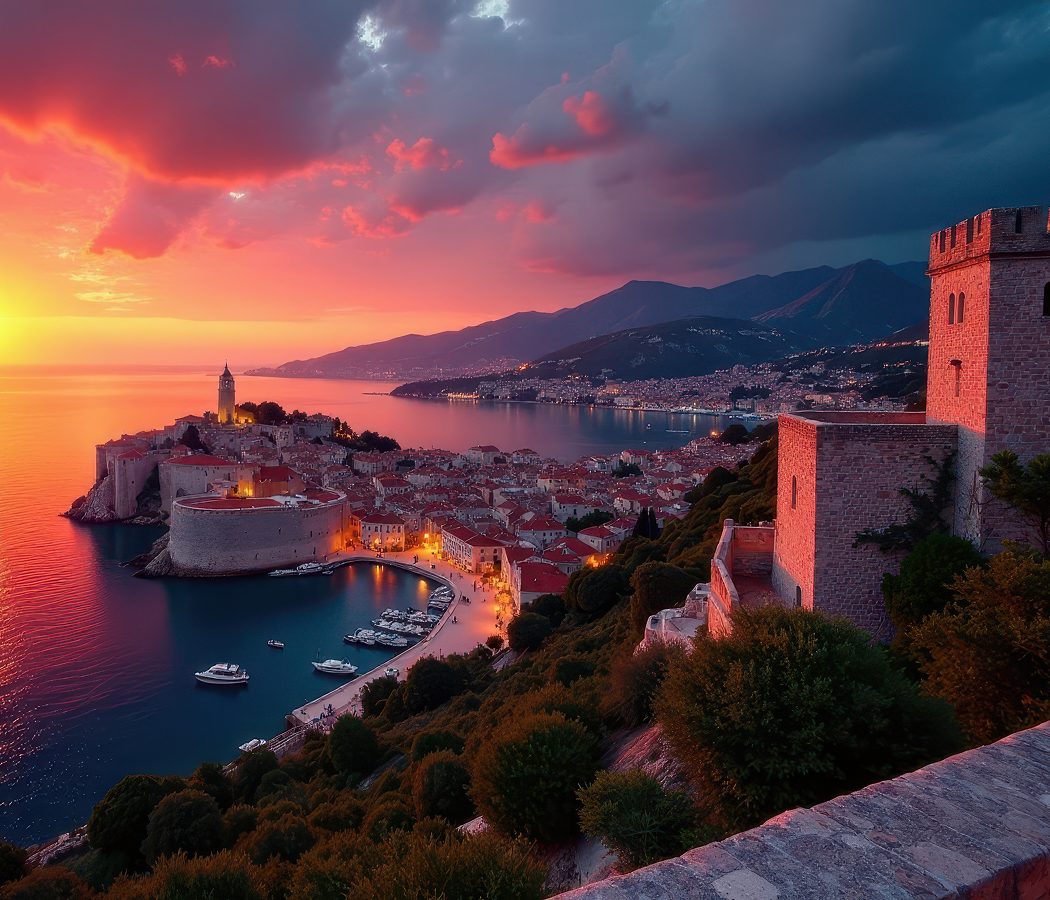
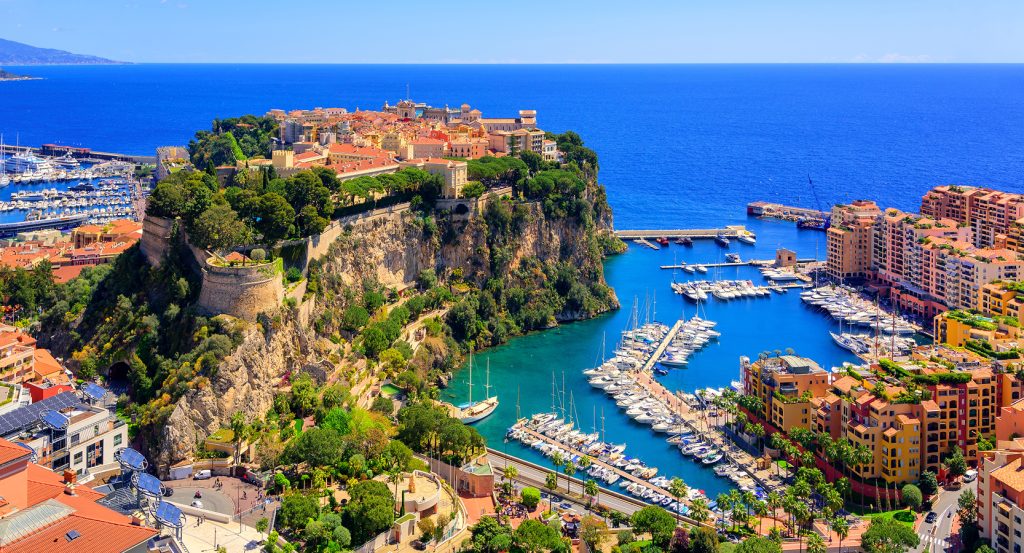
Occupying a garden-facing dining space within Hôtel Hermitage Monte-Carlo, the restaurant sits between the architectural ensemble surrounding Place du Casino and the elevated terraces overlooking Port Hercule. Its interior centers on a long, curved dining counter finished in metallic wood, with seats arranged directly opposite the open kitchen to establish an unusually close relationship between diners and the culinary brigade. Interior designer Chahan Minassian developed a restrained decorative composition incorporating blue tones, polished surfaces, contemporary furnishings and floor-to-ceiling windows that connect the principal dining room to the surrounding landscape. The adjoining Mediterranean garden terrace introduces pale stone paving, ornamental vegetation, shaded dining arrangements and elevated views extending across the harbor toward the Rock of Monaco. The result is a contemporary gastronomic setting whose counter-centered architecture, intimate kitchen sightlines and panoramic garden terrace establish a distinctive interpretation of fine dining within Monte-Carlo's historic luxury district.
What defines Pavyllon Monte-Carlo.
Pavyllon Monte-Carlo is best known for introducing Yannick Alléno's gastronomic counter concept to Monaco, extending a culinary program developed through decades of research into French sauces, fermentation and the extraction of flavor. The restaurant emerged from Alléno's professional relationship with Monte-Carlo Société des Bains de Mer, the hospitality company established in 1863 under Prince Charles III and entrepreneur François Blanc. Its location within Hôtel Hermitage connected the project to one of the principality's most historically significant hospitality properties. The hotel developed during the final decade of the nineteenth century under architect Jean Marquet, whose Belle Époque architectural program established an elegant alternative to the grander resort buildings surrounding the casino. 1900, the property underwent a substantial transformation into a luxury residence serving the expanding international clientele of Monte-Carlo. Its decorative program incorporated contributions from Gabriel Ferrier, the French painter who received the Prix de Rome and a gold medal at the 1889 Exposition Universelle. Ferrier designed the painted ceiling of the hotel's Salle Belle Époque, drawing inspiration from the decorative traditions associated with François Boucher and Jean-Honoré Fragonard. The hotel's Winter Garden introduced another important architectural feature through a metal-and-glass dome developed by craftsmen associated with Gustave Eiffel's engineering school. These architectural commissions established the property's connection to the technical and decorative achievements of late-nineteenth-century France. The building subsequently entered the portfolio of Monte-Carlo Société des Bains de Mer in 1928, strengthening the company's concentration of luxury accommodation around the principality's principal entertainment district. The hotel developed an important gastronomic reputation during the twentieth century, supported by its ceremonial dining rooms and extensive hospitality facilities. Le Vistamar opened in 1999, establishing a seafood-focused restaurant whose terrace became an important component of the property's dining program. Its culinary direction emphasized Mediterranean ingredients and the relationship between regional seafood and the surrounding coastal landscape. The subsequent appointment of chef Benoît Witz contributed to the restaurant's development, followed by the arrival of chef Joël Garault, whose work helped establish Le Vistamar's reputation within Monaco's gastronomic community. The restaurant subsequently received a MICHELIN star, strengthening the hotel's position within the principality's increasingly competitive fine-dining sector. Yannick Alléno entered this established culinary environment with a professional background that had already transformed his position within contemporary French gastronomy. Born in Puteaux in 1968, he developed an early familiarity with restaurant operations through his parents' involvement in Parisian bistros. His professional training began in the hospitality industry during adolescence, followed by experience under chefs including Gabriel Biscay and Roland Durand. He subsequently worked with Louis Grondard at Drouant, developing the technical foundations that would support his later approach to French haute cuisine. In 2003, Alléno received responsibility for the restaurant at Hôtel Le Meurice in Paris, establishing the position that would bring him international recognition. The restaurant received three MICHELIN stars in 2007, consolidating his reputation among France's leading contemporary chefs. His culinary research increasingly concentrated on the development of sauces through techniques capable of extracting and preserving the aromatic compounds of individual ingredients. This work led to the establishment of Extraction®, a proprietary approach to the controlled recovery of flavor from vegetables, herbs and other culinary products. Alléno subsequently developed research into fermentation and cryoconcentration, introducing additional methods for concentrating flavor through carefully controlled biological and physical processes. His collaboration with scientist Bruno Goussault contributed to the refinement of modern cooking techniques, particularly those involving precise temperature control and the preservation of ingredient texture. The chef's professional development also included the creation of a substantial international restaurant organization, with establishments operating across Europe, Asia and the Middle East. In 2014, he assumed responsibility for Pavillon Ledoyen in Paris, transforming the historic Champs-Élysées restaurant into a major center of contemporary French gastronomy. The establishment received three MICHELIN stars in 2015, strengthening Alléno's position within the international restaurant industry. The development of Pavyllon Paris in 2019 introduced a different interpretation of his culinary approach through a restaurant organized around a substantial counter facing the kitchen. The concept drew on his family's bistro heritage, combining the direct relationship between cooks and diners with the technical standards of MICHELIN-starred gastronomy. Interior designer Chahan Minassian contributed to the Parisian establishment, developing an architectural setting that supported the counter-centered dining format. The concept subsequently became the foundation for Alléno's expansion into Monaco. His relationship with Hôtel Hermitage developed through an invitation from general manager Louis Starck, leading to an initial guest-chef collaboration and the assumption of responsibility for Le Vistamar in May 2021. The appointment established a transitional period during which Alléno introduced his culinary methods into the existing restaurant operation. The establishment closed in January 2022 for an extensive renovation intended to transform its interior organization and kitchen facilities. The reconstruction introduced a substantial open kitchen, the signature curved counter and a decorative program developed in collaboration with Minassian. Pavyllon Monte-Carlo opened on April 15, 2022, establishing the first Monegasque expression of Alléno's counter-based gastronomic concept. The restaurant was formally presented to the press during an event held on April 23, 2022, introducing the renovated establishment and its Mediterranean culinary direction. Its opening established a new relationship between the historic hotel and contemporary French gastronomy, extending the property's established restaurant heritage through a more direct form of culinary interaction. The restaurant received one MICHELIN star, recognizing the technical standards of its cooking and the consistency of its gastronomic program. Alléno subsequently expanded his Monaco operations through L'Abysse Monte-Carlo, a Japanese fine-dining restaurant developed within Hôtel Hermitage and opened in July 2024. The project extended his collaboration with the hospitality group into a specialized culinary discipline centered on sushi and Japanese craftsmanship. Pavyllon continued developing through seasonal menus, collaborations with regional producers and participation in the Festival des Étoilés Monte-Carlo, the principality's annual program of gastronomic events. Its culinary organization also incorporated head sommelier Franck Damatte, whose professional background included work with Alain Ducasse, Alain Senderens, Gordon Ramsay and sommelier Philippe Faure-Brac. Damatte's experience contributed to the restaurant's development of a wine program designed around the changing structure of Alléno's modern sauces and seasonal preparations. The establishment's subsequent evolution strengthened its position within the international Pavyllon network, which expanded to London and additional destinations. Its significance emerges from the convergence of a historic Monaco hotel, an internationally influential chef's technical research and the transformation of formal French gastronomy through direct interaction between the kitchen and dining counter.
How Pavyllon Monte-Carlo fits.
Pavyllon Monte-Carlo works as the culminating dining destination for an exploration connecting the architectural heritage of Monte-Carlo's historic casino district, the formal landscaping of its nineteenth-century resort development and the cultural ambitions of its celebrated opera house.
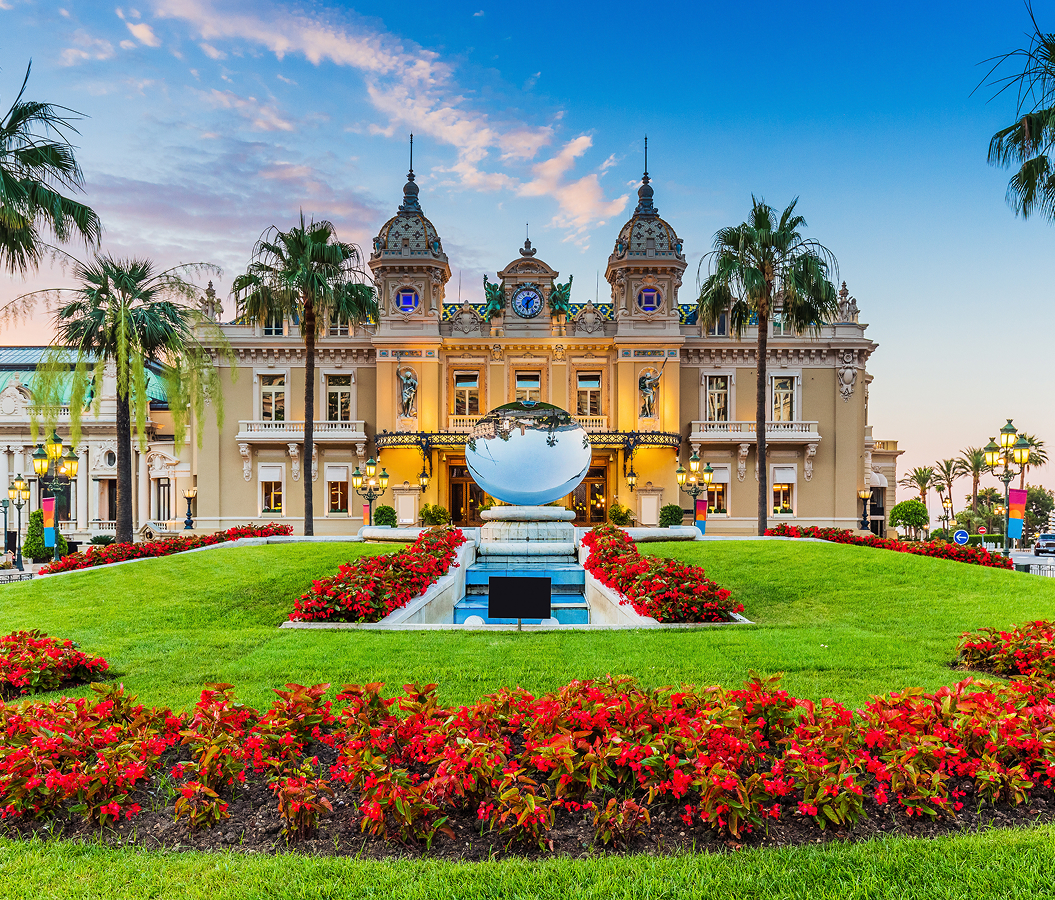
Begin at Casino de Monte-Carlo, the expansive Belle Époque gaming establishment whose development transformed Monaco into an internationally recognized resort destination. The casino emerged through the commercial ambitions of Prince Charles III and entrepreneur François Blanc, whose gambling concession established the foundation for Monte-Carlo Société des Bains de Mer in 1863. Its principal architectural transformation occurred during the late nineteenth century, when Charles Garnier developed the adjoining opera house and associated entertainment spaces. The complex incorporates expansive entrance halls, gilded gaming salons, elaborate chandeliers and a decorative program associated with the architectural grandeur of European aristocratic entertainment. Its historical importance derives from the relationship between casino revenues, luxury hospitality and the economic development of the principality. Continue to Jardins des Boulingrins, the formal landscaped gardens occupying the western approach to the casino district. Their development formed part of the nineteenth-century transformation of the Plateau des Spélugues into a fashionable winter resort, introducing carefully arranged horticultural displays into an area previously characterized by relatively sparse Mediterranean vegetation. Landscape architect Édouard André contributed to the development of the surrounding gardens, combining formal French planting arrangements with subtropical species adapted to the region's climate. The gardens incorporate symmetrical lawns, flowerbeds, fountains and carefully organized pathways that direct attention toward the expansive buildings surrounding Place du Casino. Their name derives from the French adaptation of the English term bowling green, preserving the influence of British visitors on the social traditions of the Riviera. Conclude at Opéra de Monte-Carlo, the historic performance venue occupying the eastern wing of the casino complex. Designed by Charles Garnier and inaugurated in January 1879, the opera house developed as an important cultural institution serving Monaco's expanding international clientele. Its auditorium incorporates richly decorated balconies, gilded ornament, sculptural details and an expansive painted ceiling, establishing a close architectural relationship with Garnier's celebrated Paris opera house. The institution developed an important reputation through performances by internationally recognized singers, composers and ballet companies, including the Ballets Russes associated with Sergei Diaghilev. Its historical significance also derives from the premieres of important operatic works, including Jules Massenet's Don Quichotte in 1910 and Maurice Ravel's L'Enfant et les sortilèges in 1925. The progression moves from Casino de Monte-Carlo's nineteenth-century entertainment architecture through Jardins des Boulingrins' formal resort landscaping and culminates in Opéra de Monte-Carlo's artistic heritage, connecting the architectural, horticultural and cultural development of Monaco's principal luxury district.
Where your story begins.
Foresyte Travel reveals places that feel extraordinary long before you arrive.
Enjoy editorial crafted for luxury travelers.