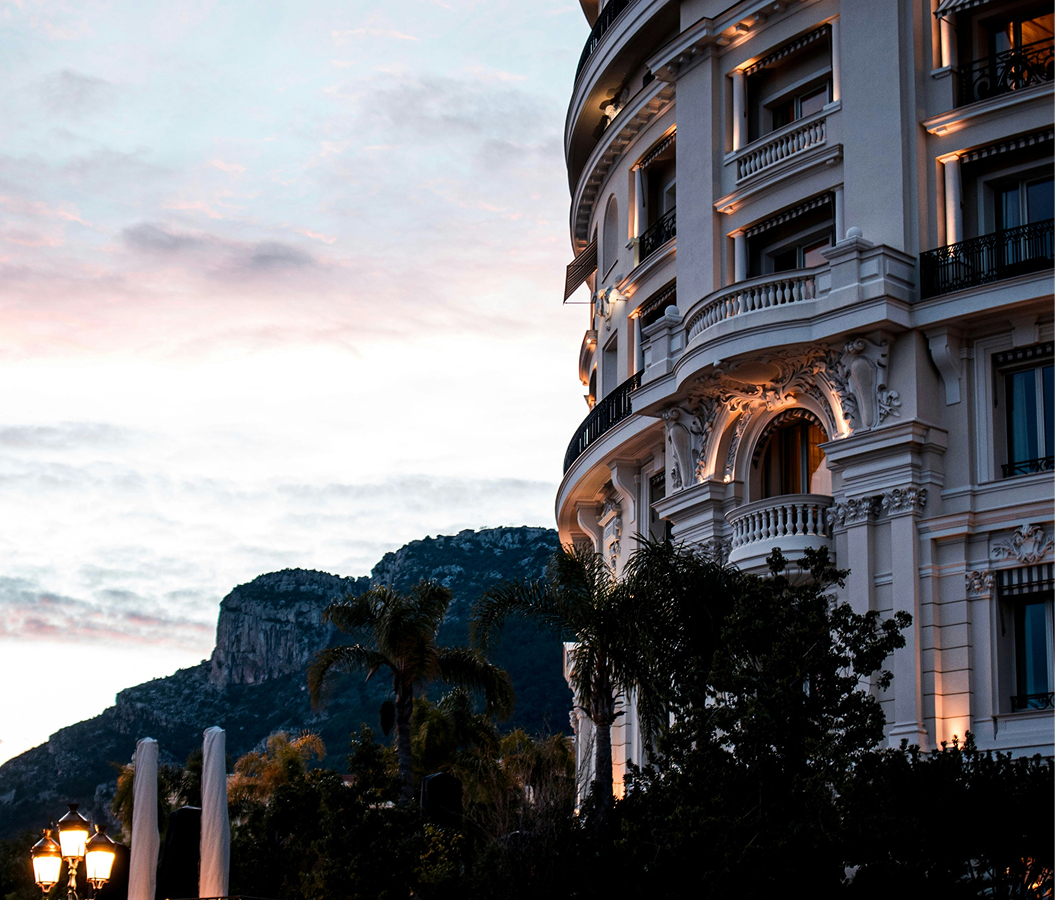
Why Piazza della Scala matters.
Piazza della Scala is an imposing civic square where Scala's theatrical character meets Milan's nineteenth-century remaking, Luca Beltrami's architectural imprint and a public ensemble joining opera, municipal government and the city's central covered passage.
Set along Via Alessandro Manzoni near Via Verdi and just steps from Via Santa Margherita, the piazza occupies a formal opening where Teatro alla Scala, Palazzo Marino, former banking palaces and the northern entrance of Galleria Vittorio Emanuele II create four sharply differentiated architectural fronts around a planted center. Giuseppe Piermarini's theater anchors the northwest side with a restrained Neoclassical facade as Palazzo Marino presents its ornate stone frontage directly opposite. The Galleria entrance opens the southern edge into a covered perspective toward Piazza del Duomo, extending the piazza beyond its physical perimeter through one of Central Milan's strongest pedestrian axes. Pietro Magni's Leonardo da Vinci monument occupies the planted center, breaking the surrounding stone enclosure with trees and a sculptural group aligned close to the Galleria axis. The result is a square whose compact dimensions bring theater, government, nineteenth-century urban planning and architecture into unusually concentrated physical contact.
What defines Piazza della Scala.
Piazza della Scala is best known for taking shape in 1858 when demolition of the dense block standing between Teatro alla Scala and Palazzo Marino created an open square where no comparable public space had existed. Piermarini's theater had opened in 1778 facing the narrow Contrada della Scala, so its principal facade originally operated at street scale without the broad frontal view established eighty years later. Clearance fundamentally altered that relationship by exposing the theater across a new open ground and placing Palazzo Marino on the opposite side of the emerging composition. Milan transferred its municipal headquarters to Palazzo Marino in 1861, adding civic authority to a space already dominated by the city's principal opera house. Construction of Giuseppe Mengoni's Galleria Vittorio Emanuele II during the 1860s then opened a covered connection from the new square directly to Piazza del Duomo, making Piazza della Scala one end of a major post-unification intervention across the historic center. Pietro Magni added the Central Monumento a Leonardo da Vinci in 1872, placing Leonardo above four pupils, Giovanni Antonio Boltraffio, Marco d'Oggiono, Cesare da Sesto and Gian Giacomo Caprotti, known as Salaì. Early photographs show fir trees surrounding the sculpture before lindens replaced them, and electric lighting installed by Edison supplanted gas illumination in 1885. Luca Beltrami subsequently became the architect most responsible for completing the piazza's perimeter, reconstructing the Palazzo Marino frontage toward the square between 1888 and 1890 and giving the building a new principal entrance aligned with the public space. His work continued through the paired Banca Commerciale Italiana buildings erected between 1907 and 1911, completing an architectural ensemble assembled across more than half a century. Piazza della Scala developed through a chain of interventions in which the 1858 clearance enabled the Galleria connection, the Leonardo monument established a central focus and Beltrami completed the surrounding fronts.
Beltrami's work on Palazzo Marino developed from a much older building whose original orientation faced Piazza San Fedele. Genoese financier Tommaso Marino commissioned Galeazzo Alessi during the sixteenth century, and construction resumed in 1561 before the deaths of both patron and architect in 1572 left portions unfinished. Financial collapse among Marino's heirs led to transfer of the palace to the state, beginning centuries of institutional use before the Comune established its headquarters inside. Beltrami's late nineteenth-century intervention reconstructed the previously incomplete side toward Piazza della Scala and introduced a new entrance modeled on architectural forms associated with the older Piazza San Fedele frontage. The alteration reversed Alessi's intended hierarchy by making the newly created square a principal point of arrival. Beltrami extended his influence across the piazza through the Banca Commerciale Italiana commission, using architectural language calibrated to Palazzo Marino and the surrounding historic center. The resulting buildings closed sections of the perimeter without breaking the visual relationship among the theater, municipal palace and Galleria entrance. Piazza della Scala acquired its mature architectural form through this extended campaign, turning an opening created by demolition into a coordinated civic composition dominated by structures originating in three different centuries.
How Piazza della Scala fits.
Piazza della Scala works as the anchor for a daytime exploration through the adjoining Scala and Quadrilatero territory using three nearby sites that move from a sculptor's sixteenth-century residence through Carlo Borromeo's Jesuit building campaign into a nineteenth-century collector's private home converted for permanent public access.
Begin at Casa degli Omenoni, created by sculptor Leone Leoni after Emperor Charles V granted him a Milanese house in 1546 following his appointment as sculptor of the imperial mint. Leoni required a residence capable of accommodating both domestic rooms and the foundry used for imperial commissions, and possession of the property followed during the opening years of the 1550s. Eight immense stone figures attributed to Antonio Abondio support the facade, giving the narrow Via degli Omenoni frontage a sculptural scale far beyond that of a conventional residence. Giorgio Vasari visited Leoni in Milan in 1566 and admired the house, connecting the building directly with one of the century's major artistic chroniclers and with a sculptor whose career extended through the court of Charles V. Continue to San Fedele, where the Jesuits secured the earlier church in 1567 after arriving in Milan four years earlier with Carlo Borromeo's support. Pellegrino Tibaldi prepared the replacement building, and construction began in July 1569 around a longitudinal single nave with lateral chapels, a plan that gained wide influence across Lombard religious architecture. Carlo Borromeo consecrated the first completed portion in 1579; Francesco Maria Richini later directed construction of the choir between 1629 and 1643, and Andrea Biffi began the cupola in 1684. The long building campaign carried Tibaldi's original conception across successive generations of Milanese architects. Conclude at Museo Poldi Pezzoli, created from the Via Alessandro Manzoni home and collection of Gian Giacomo Poldi Pezzoli. His collecting expanded after he inherited the family fortune in 1846, supported the Milanese uprising of 1848 and encountered contemporary collecting practices during subsequent travel through Switzerland, France and England. Giuseppe Balzaretto remodeled the apartment between 1851 and 1853, as Giuseppe Bertini, Luigi Scrosati and Filippo Peroni developed historically themed interiors for paintings, arms and decorative arts. Poldi Pezzoli established the future public institution through his 1871 testament, and the museum opened on April 26, 1881 during Milan's first national exhibition. The progression moves from Leoni's fusion of residence, sculpture and imperial patronage through Tibaldi and Borromeo's Jesuit architectural program into Poldi Pezzoli's conversion of private collecting into a public museum, extending Piazza della Scala's concentration of major cultural institutions through three distinct episodes of Milanese patronage.
Where your story begins.
Foresyte Travel reveals places that feel extraordinary long before you arrive.
Enjoy editorial crafted for luxury travelers.
Foresyte may earn a commission when you book.