
Why Plénitude matters.
Plénitude is a three-MICHELIN-starred gastronomic restaurant where Saint-Germain-l'Auxerrois's historic Seine waterfront meets Arnaud Donckele's reinvention of French sauce-making, Maxime Frédéric's acclaimed pâtisserie and one of Paris's most consequential contemporary culinary collaborations.
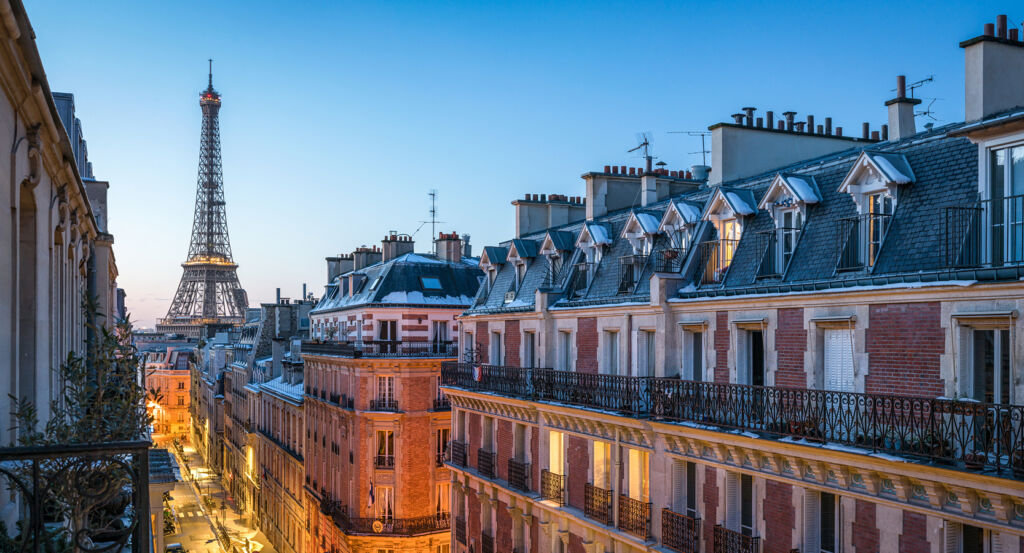
Occupying the first floor of Cheval Blanc Paris above Quai du Louvre, Plénitude overlooks the Seine near Pont Neuf, with Rue de la Monnaie extending toward Rue de Rivoli and the Louvre's eastern approaches defining the surrounding Saint-Germain-l'Auxerrois quarter. The dining room occupies an intimate river-facing setting within the restored Samaritaine complex, where Peter Marino's interiors combine sculptural woodwork, curved architectural forms and restrained lighting. Etienne Moyat's carved wooden ceiling extends the decorative treatment of the wine cellar into the restaurant, creating a continuous composition between the two spaces. A discreet dining arrangement places Donckele's elaborate sauces at the center of a carefully sequenced meal, with their individual aromatic compositions introduced through a dedicated collection of named blends. The result is a restaurant whose architectural intimacy and highly specialized culinary techniques give classical French gastronomy an unusually concentrated setting above the Seine.
What defines Plénitude.
Plénitude is best known for Arnaud Donckele's transformation of classical French sauce-making into an independent culinary discipline, culminating in three MICHELIN stars during the restaurant's first year and a place among the world's ten highest-ranked restaurants in 2026. Born in Rouen in 1977 to a family of charcutiers and farmers, Donckele developed his early fascination with cooking through his family's agricultural background before beginning his apprenticeship at Goumard Prunier in Paris. His subsequent training brought him into the kitchens of Michel Guérard at Les Prés d'Eugénie, Alain Ducasse at Le Louis XV in Monaco and Plaza Athénée in Paris, and Jean-Louis Nomicos at Lasserre, where he became a close collaborator of the chef. Donckele assumed leadership of La Vague d'Or in Saint-Tropez in 2005, developing a deeply personal interpretation of Mediterranean cooking that earned its second MICHELIN star in 2010 and third in 2013, making him one of the youngest chefs to achieve the distinction. His growing professional stature brought the World Chef Summit's peer-selected best-chef distinction in 2018 and Gault&Millau's Chef of the Year recognition for 2020. The Paris project introduced an unusually ambitious departure from conventional gastronomic composition, with Donckele spending more than three years developing a repertoire in which sauces determine the accompanying ingredients and structure of individual dishes. He organized these creations into a collection of one hundred preparations called Absolutes, complex aromatic assemblages composed through the techniques of a perfumer, sometimes combining twelve ingredients across successive layers of flavor. Plénitude opened within Cheval Blanc Paris in September 2021, bringing Donckele's established Mediterranean career into a new restaurant specifically conceived around this extensive repertoire of sauces. The MICHELIN Guide awarded Plénitude three stars in March 2022, an exceptionally uncommon achievement for a restaurant within its first year of operation and Donckele's second three-star distinction alongside La Vague d'Or. The culinary project also brought together Donckele and fellow Norman Maxime Frédéric, whose childhood on his grandparents' dairy farm preceded professional training at Le Meurice with Camille Lesecq and Cédric Grolet and subsequent leadership of pastry across the MICHELIN-starred restaurants of Four Seasons Hotel George V. Frédéric joined Donckele's developing Cheval Blanc Paris team in 2019, establishing a dessert program grounded in French dairy traditions, pastry technique and direct relationships with agricultural producers, including eggs supplied through his family's farm in Normandy. His professional achievements culminated in The World's Best Pastry Chef award from The World's 50 Best Restaurants in 2025, extending the restaurant's distinction beyond savory cooking. Donckele's sauces organize the meal through categories including Préludes, Eaux Salines et Douces, Prés et Terres and Parfums Sucrés, with Alexandre Larvoir directing a service team trained to present the individual aromatic compositions that accompany the dishes. The restaurant's physical conception developed through Donckele's collaboration with architect Peter Marino and wood sculptor Etienne Moyat, whose curved ceiling and carved cellar doors contribute a distinctive architectural treatment to the intimate dining environment. Plénitude entered The World's 50 Best Restaurants ranking at number 36 in 2023, advanced to number 18 in 2024 and number 14 in 2025, then reached number 10 in the 2026 edition, becoming the only Paris restaurant among that year's top fifty. Its significance rests on the convergence of Donckele's extensive apprenticeship, two separate three-star achievements, the technical elevation of sauces, Frédéric's pastry expertise and a restaurant conceived around an unusually specialized interpretation of French gastronomy.
How Plénitude fits.
Plénitude works as the evening culmination of a Central Paris exploration connecting contemporary art patronage, seventeenth-century academic architecture and the royal craftsmanship that shaped the expansive institutions along the Seine.
Begin at Bourse de Commerce - Pinault Collection, the contemporary art museum occupying a circular building whose history reaches through centuries of Parisian trade and architectural experimentation. The site preserves a surviving column associated with Catherine de Médicis's sixteenth-century residence and elements of the eighteenth-century Halle au Blé, whose iron dome became an important engineering achievement in 1812. The building underwent another major transformation into the Bourse de Commerce in 1889 before François Pinault commissioned Tadao Ando, NeM and Pierre-Antoine Gatier to adapt the structure for his contemporary art collection. Its 2021 reopening introduced Ando's concrete cylinder within the historic rotunda, creating a striking architectural encounter between centuries of construction and contemporary exhibition design. Continue to Institut de France, occupying the former Collège des Quatre-Nations conceived through Cardinal Mazarin's 1661 tribute to educate students from territories incorporated into the French kingdom. Louis Le Vau designed the complex facing the Louvre across the Seine, organizing its sweeping curved façade around a domed chapel intended to accommodate Mazarin's tomb. Construction began in 1663 and continued after Le Vau's death, reaching completion in 1688. The Institut de France assumed the building in 1805, transforming the former college into the ceremonial home of France's learned academies and preserving the great cupola as a setting for their formal assemblies. Conclude at Monnaie de Paris, where Louis XV commissioned a royal mint whose architecture translated the manufacture of currency into one of the most ambitious neoclassical building projects of eighteenth-century Paris. Jacques-Denis Antoine designed the complex on the former Hôtel de Conti site, organizing expansive courtyards, sculptural decoration and specialized workshops around the production of coinage. Foundation work began in 1769, and the mint formally occupied the completed premises in December 1775. Antoine collaborated with artists including Jean-Baptiste Pigalle and his brother Jean-Denis Antoine, integrating elaborate decorative commissions into a building whose original industrial purpose survived successive technological changes. The institution's 11 Conti redevelopment subsequently opened its historic workshops and collections to wider public engagement, bringing centuries of metalworking, engraving and artistic production into direct contact with the expansive architecture of the royal mint. The progression moves from the Bourse de Commerce's transformation into a contemporary art museum through Mazarin's academic foundation at Institut de France and culminates in the artistic and technical heritage of Monnaie de Paris, tracing how patronage, craftsmanship and architectural ambition developed across the institutions surrounding the Central Seine.
Where your story begins.
Foresyte Travel reveals places that feel extraordinary long before you arrive.
Enjoy editorial crafted for luxury travelers.














































































































