
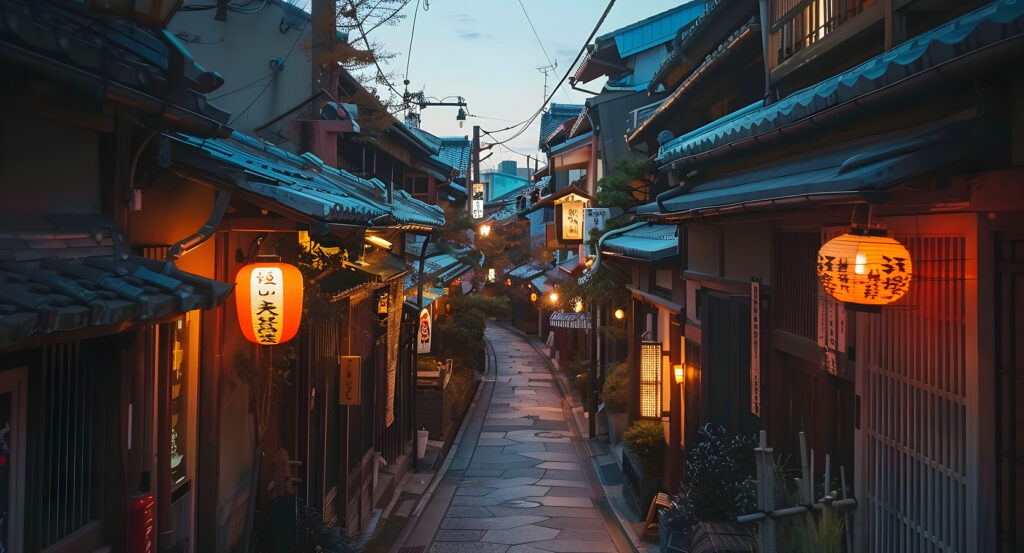
Why you should experience Pontocho Alley in Kyoto, Japan.
Pontocho Alley in Kyoto is one of Japan's most enchanting and evocative streets, a slender lane of lanterns, whispers, and tradition that feels suspended between centuries.
Running parallel to the Kamo River in the heart of the city, this narrow cobblestone passage is only a few feet wide, yet holds within it the spirit of old Kyoto. Wooden machiya townhouses line both sides, their paper lanterns glowing softly at dusk, beckoning visitors into intimate restaurants, teahouses, and bars hidden behind sliding wooden doors. As night falls, the air hums with quiet anticipation, the clinking of sake cups, the faint notes of shamisen drifting from upstairs rooms, and the rhythmic sound of sandals on stone. Every detail feels cinematic, yet unforced. This is Kyoto not as a museum piece, but as a living work of art, where modern diners and ancient traditions coexist in seamless harmony. Occasionally, if you're lucky, you might glimpse a maiko or geiko slipping silently through the alley, a fleeting vision of Kyoto's refined cultural world. Pontocho isn't loud or flashy; it captivates through suggestion, like a poem whispered under candlelight. To walk its length from Shijo to Sanjo is to trace the pulse of Kyoto's nocturnal soul, elegant, mysterious, and endlessly alluring.
What you should know about Pontocho Alley.
Though Pontocho Alley is now synonymous with fine dining and romantic ambiance, its story is one of resilience and reinvention.
Dating back to the 17th century, the district originally developed as a theater and entertainment quarter serving patrons of the nearby Kabuki stages along the river. Its name, Pontocho, comes from the Portuguese word ponto (meaning “point”) and the Japanese chō (“block” or “neighborhood”), reflecting Kyoto's early contact with European traders. Over the centuries, Pontocho evolved into one of Kyoto's five official hanamachi (geisha districts), known for its exclusive teahouses and the sophistication of its geiko culture. Unlike the tourist-oriented Gion, Pontocho retained an understated authenticity, a world where art, hospitality, and conversation intertwine in quiet ritual. During the Meiji era, it became a hub for the arts, with small theaters and music venues tucked between the dining establishments. Today, while many ochaya (teahouses) still operate privately, the alley also welcomes guests to MICHELIN-starred restaurants, kaiseki counters, and riverside terraces that overlook the Kamo River in summer. What most visitors don't realize is that Pontocho remains one of the few districts in Japan where the ancient city grid, Edo-era architecture, and traditional customs continue almost untouched. Every evening's flickering lanterns aren't nostalgia, they're continuity.
How to fold Pontocho Alley into your trip.
The best way to experience Pontocho Alley in Kyoto is not to rush through it, but to let it unfold slowly, like a chapter in an unfolding novel.
Visit at twilight, when the last light of day catches the river below and the first lanterns begin to glow. Start from the Shijo end and wander north toward Sanjo, taking time to peek down narrow side alleys that branch toward the Kamo River. Each doorway hides something different, an izakaya serving smoky yakitori, a minimalist bar with only six seats, or a kaiseki restaurant offering artfully plated seasonal dishes. In summer, many establishments open yuka, wooden dining platforms suspended above the river, where guests can dine to the sound of flowing water and cicadas. For a more intimate glimpse of Kyoto's cultural heart, visit a traditional maiko performance or tea ceremony if available through an invitation-only venue. Photography should be done respectfully, as many teahouses and guests value privacy. The alley is most atmospheric after rain, when the stone pavement gleams and lantern light shimmers in reflection. Pair your visit with a walk along the Kamogawa River or a stop in nearby Gion to deepen your sense of old Kyoto's layered charm. Pontocho Alley isn't just a street, it's a living corridor of emotion and elegance, where every step echoes centuries of grace. To walk it at night is to glimpse Kyoto's soul flickering softly in amber light.
Where your story begins.
Foresyte Travel reveals places that feel extraordinary long before you arrive.
Experience premium editorial crafted for luxury travelers.

















































































































