Why Prati matters.
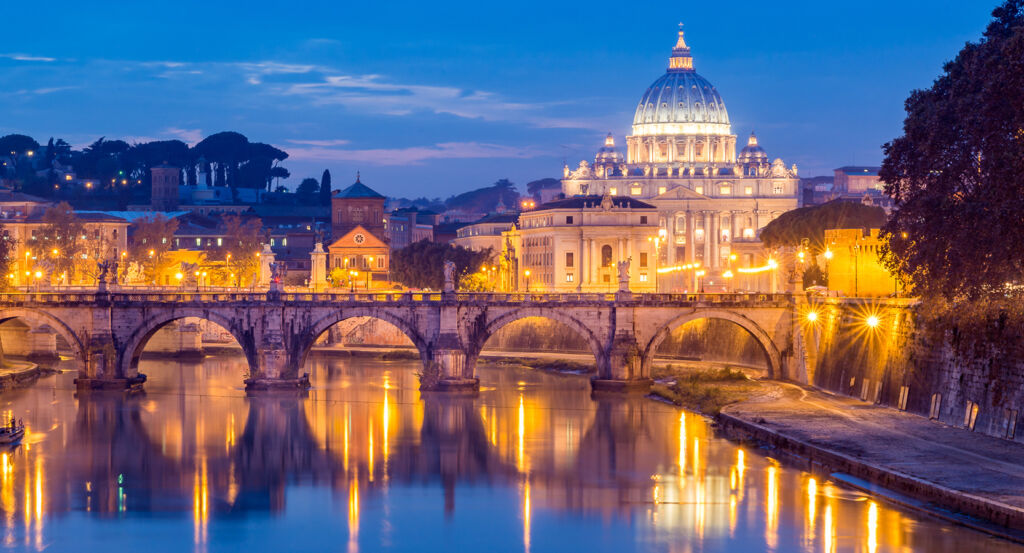
Prati is a grand district of order and elegance, where wide boulevards, civic ambition, and refined Roman living converge beside the Vatican.
Tree-lined avenues, stately apartment buildings, elegant shopping streets, neighborhood cafés, cultural institutions, historic squares, and meticulously planned streetscapes create a neighborhood unlike the winding medieval quarters found elsewhere in Rome. Developed after Italian unification and the annexation of Rome into the Kingdom of Italy, Prati emerged as one of the capital's most ambitious urban planning projects. Architects, civil servants, professionals, diplomats, and entrepreneurs helped shape a district defined by symmetry, accessibility, and modernity. Unlike many Roman neighborhoods that evolved organically over centuries, Prati was carefully designed according to a structured street grid intended to reflect the aspirations of a newly unified nation. Today, visitors encounter a neighborhood where sophistication and functionality remain deeply intertwined. The result is a neighborhood that feels polished, cosmopolitan, and unmistakably Roman. To the west, Vatican City's celebrated religious landmarks extend naturally from Prati across one of the world's most important cultural and spiritual corridors, reinforcing the neighborhood's significance within modern Rome. Every boulevard, piazza, and façade reflects a district shaped by national ambition, civic planning, and enduring elegance.
What defines Prati.
Prati is best known for being laid out on a rare geometric street grid intentionally designed to contrast with the winding medieval streets that define much of historic Rome.
Following Italian unification in the late nineteenth century, planners viewed Prati as an opportunity to create a modern district that reflected the ideals of a new national capital. Broad avenues, organized blocks, and rational urban design replaced the irregular street patterns common throughout older parts of the city. The neighborhood became a showcase for modern planning principles and represented Rome's transition from a papal city to the capital of a unified nation. Its distinctive layout remains immediately recognizable when compared to the surrounding historic districts. Today, Prati stands as one of the clearest examples of modern urban planning in Rome. Few neighborhoods possess a character so directly shaped by deliberate city-building vision.
How Prati fits.
Prati works as an exploration of the elegant boulevards, civic landmarks, and cultural destinations that define one of Rome's most sophisticated districts.
Begin at Piazza Cavour, where the neighborhood's defining connection to modern Rome and national character immediately comes into focus. Continue along Via Cola di Rienzo, whose grand scale and commercial vitality reveal the planning principles that shaped the district for generations. From there, make your way toward Castel Sant'Angelo, where centuries of history provide a broader perspective on the relationship between Prati and the expansive landmarks that continue to define the surrounding area today. Along the route, you'll encounter elegant storefronts, civic institutions, architectural landmarks, neighborhood cafés, public squares, cultural venues, and celebrated streetscapes that reveal the neighborhood's remarkable character. The progression moves naturally from civic centerpiece to grand boulevard to historic landmark, revealing the forces that shaped the neighborhood. The experience showcases a side of Rome defined by refinement, accessibility, and the confidence of a modern capital.
Where your story begins.
Foresyte Travel reveals places that feel extraordinary long before you arrive.
Enjoy editorial crafted for luxury travelers.
Foresyte may earn a commission when you book.