Why you should experience Radisson Blu Scandinavia Hotel in Oslo, Norway.
Radisson Blu Scandinavia Hotel is Oslo at full breadth, an established city landmark where Nordic functionality, international comfort, and panoramic city-to-fjord views come together in a way that feels expansive, composed, and confidently urban.
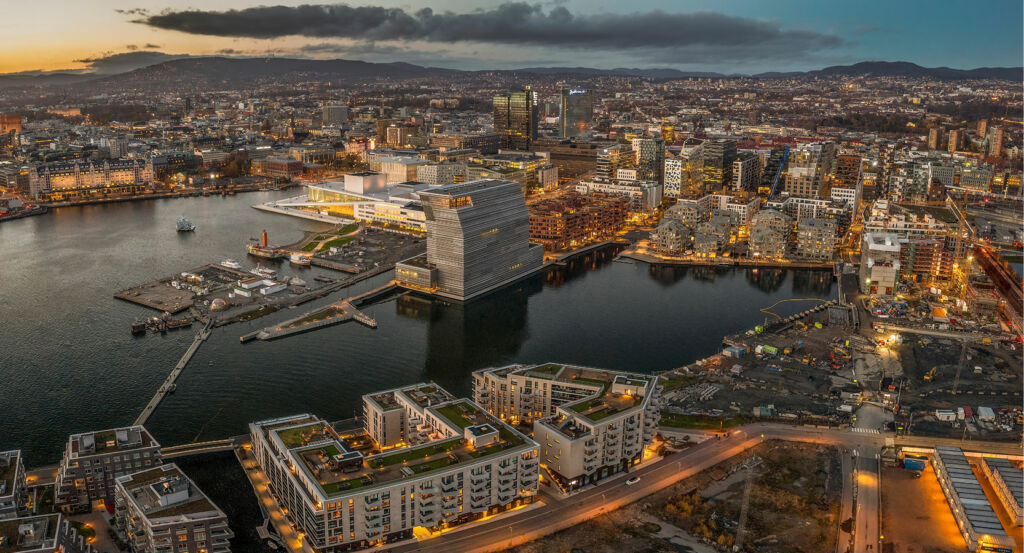
Positioned just west of Oslo's city center near the Royal Palace and the edge of Frogner, the hotel occupies one of the city's most advantageous vantage points. From the outside, its tower presence is unmistakable, less about flash and more about stature, signaling a hotel built to serve Oslo's role as a capital city. Inside, the tone is polished and purposeful. The lobby is generous and open, designed to accommodate movement. Clean lines, warm wood accents, and Scandinavian restraint create an environment that feels professional yet welcoming. This is a hotel that understands scale and longevity, catering to travelers who want clarity, consistency, and space to breathe. Guest rooms reflect this philosophy. Many sit high above the city, offering sweeping views over rooftops, parks, and the Oslofjord beyond, particularly striking during sunrise and late evening when the city softens into light and shadow. Interiors are modern, calm, and functional, prioritizing comfort over ornamentation. Expect comfortable beds with quality linens, thoughtful lighting, practical workspaces, and soundproofing that supports genuine rest. Bathrooms are sleek and well-maintained, featuring clean finishes, ample counter space, and understated fixtures that reinforce a sense of reliability. Upper-floor rooms elevate the experience further, making the view a central part of daily rhythm. Dining and social spaces add depth to the stay. The hotel's breakfast service is expansive and efficient, offering a wide selection that reflects Scandinavian quality standards alongside international options. It is designed to support both business travelers with early schedules and leisure guests easing into the day. The hotel's bar and restaurant spaces lean toward relaxed sophistication rather than trend-driven performance, making them comfortable places to meet, unwind, or quietly observe the city's flow. Wellness amenities reinforce the hotel's appeal. The swimming pool, set high above the city, offers a rare experience in Oslo: swimming with a skyline backdrop. The adjacent fitness facilities are well-equipped, supporting consistent routines. Service throughout Radisson Blu Scandinavia Hotel is professional, measured, and efficient. Staff members are experienced, calm under volume, and responsive. The experience feels international yet distinctly Nordic, direct, reliable, and quietly attentive. This is not a hotel that asks for resonant investment. Instead, it offers assurance. Radisson Blu Scandinavia Hotel centers on being exactly what it claims to be: a dependable, elevated base that places you inside Oslo's daily rhythm while offering enough height and distance to maintain perspective.
What you should know about Radisson Blu Scandinavia Hotel.
Radisson Blu Scandinavia Hotel is one of Oslo's most enduring postwar hospitality institutions, closely tied to the city's evolution as a modern European capital.
Originally opened during a period when Oslo was expanding its international footprint, the hotel was designed to meet the needs of diplomats, business travelers, and large-scale events, groups that required consistency, infrastructure, and central access. Its location near the Royal Palace and major cultural institutions reinforced its role as a natural host for official delegations and international conferences. Over time, the hotel became embedded in Oslo's civic and professional life, functioning as a meeting point for local and global communities alike. Architecturally, the building reflects late-modern Scandinavian pragmatism, functional, durable, and unpretentious. While it does not chase historical romanticism, its value lies in continuity. The hotel has undergone multiple renovations over the decades, updating interiors and systems. This layered evolution gives the property a sense of lived-in confidence. One lesser-known aspect of the hotel is how deeply its operations are tuned to high-capacity hospitality. The building was engineered to manage conferences, events, and simultaneous guest flows efficiently, a feature that continues to shape the guest experience even during quieter periods. This operational backbone ensures that service remains smooth and predictable, even when occupancy is high. The hotel's elevated amenities, particularly its upper-floor leisure spaces, were intentionally designed to counterbalance its urban density. The pool and lounge areas were conceived as places of release rather than performance, allowing guests to reset above the city rather than escape from it. Sustainability efforts have also quietly expanded over time. In line with Norwegian expectations, the hotel has implemented energy-saving systems, waste reduction initiatives, and responsible sourcing practices. These changes are integrated into daily operations rather than promoted as marketing features, reflecting a cultural preference for action over announcement. Radisson Blu Scandinavia Hotel's long-standing reputation has made it a familiar presence for repeat visitors. Many guests return not because the hotel surprises them, but because it doesn't. It offers predictability without stagnation, a balance that is increasingly rare in hospitality. In a city that values moderation, reliability, and quiet competence, the hotel's endurance is not accidental. It has remained relevant by understanding its role as a steady pillar.
How to fold Radisson Blu Scandinavia Hotel into your trip.
Radisson Blu Scandinavia Hotel works as a stable anchor, ideal for travelers who want both access and altitude while moving easily between Oslo's cultural, political, and natural landscapes.
Begin by exploring the immediate surroundings. The Royal Palace and its gardens are just steps away, offering peaceful morning walks before the city fully stirs. Nearby neighborhoods such as Frogner and Majorstuen invite exploration through cafés, boutiques, and galleries, all reachable on foot. Mornings at the hotel set a composed tone. Enjoy breakfast with a view, letting the city unfold below. If your itinerary includes meetings or events, the hotel's infrastructure supports seamless transitions between work and rest. During the day, Oslo's compact scale becomes an advantage. Museums, waterfront promenades, and cultural institutions are easily accessible, with the hotel serving as a calm midpoint between activities. Returning midday feels grounding rather than interruptive, especially when you can pause above the city for a swim or quiet moment. Afternoons offer flexibility. Use the hotel's elevated spaces to reset, or head back out to explore parks, galleries, or fjord ferries. Because the hotel sits slightly removed from the busiest transit corridors, evenings feel more measured. After dinner elsewhere in the city, returning to the hotel carries a sense of decompression. Spend time in the bar or lounge, or simply watch Oslo shift into night from above. Over multiple nights, the hotel becomes part of your internal map of the city. You begin to orient by height and distance rather than street-level detail, gaining a broader understanding of how Oslo fits together. This perspective is especially valuable for first-time visitors or travelers balancing multiple priorities.
Where your story begins.
Foresyte Travel reveals places that feel extraordinary long before you arrive.
Experience premium editorial crafted for luxury travelers.