Why Rātā Restaurant matters.
Rātā Restaurant is a MICHELIN-starred contemporary New Zealand restaurant where Queenstown's historic commercial center meets Josh Emett and Fleur Caulton's commitment to South Island produce, sophisticated cooking and the agricultural character of Central Otago.
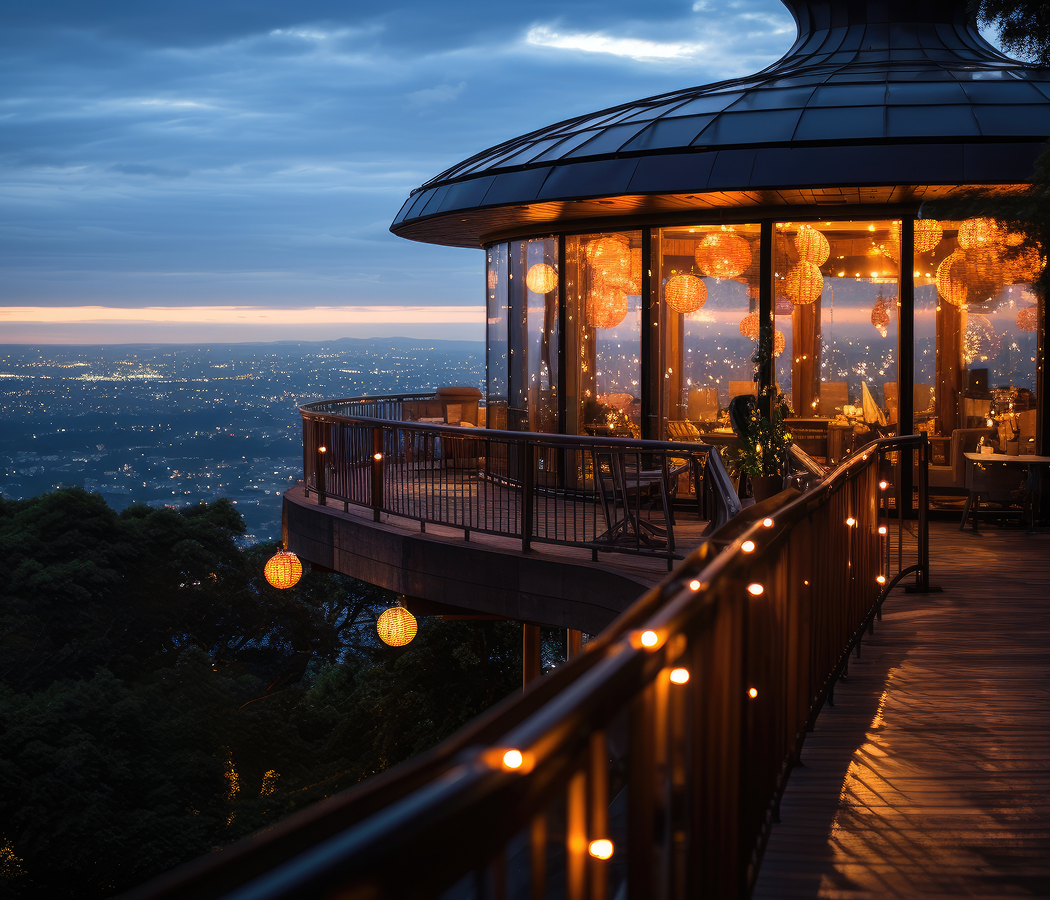
Positioned within the Te Nuku courtyard off Ballarat Street, near the intersection with Stanley Street and the historic stone buildings surrounding Queenstown's former courthouse, the restaurant occupies a sheltered setting a short distance from Queenstown Mall and the waterfront. Its recessed entrance opens into a landscaped courtyard, creating a transition from the surrounding commercial streets to an intimate restaurant organized around several interconnected dining areas. Inside, natural timber, polished stone, exposed concrete and steel detailing establish a contemporary interior whose earthy tones draw inspiration from the surrounding Otago landscape. Salvaged decorative objects, carefully selected furnishings and warm lighting soften the industrial architectural elements, giving the dining room a relaxed character suited to extended meals. The result is a restaurant whose sheltered courtyard, locally inspired materials and understated contemporary design establish a distinctive setting for modern New Zealand gastronomy.
What defines Rātā Restaurant.
Rātā Restaurant is best known for bringing Josh Emett's MICHELIN-starred international culinary background into a distinctly New Zealand restaurant developed alongside Queenstown hospitality entrepreneur Fleur Caulton. Born in Hamilton, Emett began his professional career in New Zealand before moving overseas to develop his skills in demanding international kitchens. His association with Gordon Ramsay became central to his professional development, eventually encompassing more than a decade working across the British chef's expanding restaurant group. Emett served as head chef at Savoy Grill in London, strengthening his command of classical European cooking and the operational discipline required in prestigious restaurants. His career subsequently extended to North America, where he held executive responsibilities across Ramsay's restaurants in New York and West Hollywood. He also participated in the establishment of Ramsay's first two Australian restaurants, gaining experience in the development of major international hospitality operations. His work across the group contributed to restaurants earning a combined four MICHELIN stars during his tenure. Emett subsequently became a judge on MasterChef New Zealand, extending his professional reputation into television and public culinary education. Caulton brought a complementary understanding of Queenstown's hospitality industry, having established Solera Restaurant at twenty-one before becoming general manager of Amisfield Wine Company during its early development in 2003. Her experience connected restaurant operations to the growing reputation of Central Otago's wine industry, whose international development had strengthened Queenstown's position as a culinary destination. Emett and Caulton began developing their restaurant partnership after collaborating on hospitality events, establishing a shared ambition to create a dining institution grounded in the region's produce and social character. Their project occupied premises within the former post office complex developed by Ngāi Tahu, connecting a new restaurant to the adaptation of Queenstown's historic commercial buildings. Rātā opened in May 2012, with its official opening celebration following on June 15, when 300 people attended the event. Emett and Caulton invited their mothers to cut the ceremonial ribbon, marking the culmination of two years of planning and development. The restaurant's name honors the native rātā tree, whose distinctive red flowers and ability to grow in demanding environments provided an enduring association with New Zealand's natural landscape. Its original concept combined sophisticated cooking with the accessibility of a neighborhood restaurant, establishing a culinary program supported by local producers and an extensive regional wine selection. The restaurant subsequently developed a reputation for its treatment of seasonal ingredients, particularly through slow cooking, carefully constructed sauces and the preservation of distinctive regional flavors. Rātā received one MICHELIN star in the inaugural 2026 MICHELIN Guide New Zealand, marking a significant achievement for a restaurant established during Queenstown's emergence as an internationally recognized center of contemporary New Zealand dining. Its development connects Emett's international professional training, Caulton's regional hospitality expertise and the increasing sophistication of South Island agricultural production within a restaurant that has contributed substantially to Queenstown's culinary standing.
Rātā's culinary program develops the relationship between South Island agriculture, classical European technique and the distinctive flavors of contemporary New Zealand cooking. Its approach begins with the quality of regional ingredients, drawing on small producers whose farming, fishing and cultivation practices shape the composition of seasonal menus. The kitchen's treatment of meat demonstrates the influence of Emett's professional training through prolonged cooking, carefully managed temperatures and concentrated sauces that develop the natural richness of premium livestock. Royalburn lamb shoulder provides a particularly effective example, with slow cooking transforming the connective tissue into a tender texture while preserving the meat's characteristic flavor. Prune contributes concentrated sweetness, pickled lemon introduces acidity and fried rosemary develops an aromatic counterpoint, producing a balanced preparation rooted in the agricultural character of Central Otago. Southland venison extends the kitchen's engagement with regional livestock through a leaner meat whose flavor depends on precise cooking and carefully calibrated accompaniments. Beetroot and leek contribute earthy sweetness, and a concentrated jus provides depth through the reduction of natural cooking liquids. Seafood establishes another important foundation, connecting the restaurant to New Zealand's coastal fisheries and the technical demands of preserving delicate marine ingredients. Ruakākā kingfish crudo demonstrates this precision through carefully sliced raw fish, supported by the acidity of a restrained vinaigrette and the aromatic character of pine oil. The preparation connects the freshness of premium seafood to ingredients associated with the country's coastal and forested environments, developing a clear relationship between regional provenance and modern culinary technique. Fermentation and preservation contribute additional complexity across the menu, introducing controlled acidity, savory depth and concentrated seasonal flavors that support the restaurant's reliance on small agricultural suppliers. The kitchen's use of miso, pickled vegetables and carefully prepared fruit accompaniments demonstrates the integration of international techniques into a cooking style grounded in New Zealand ingredients. Barry's Bay vintage cheddar doughnuts provide a distinctive expression of this approach, transforming a mature regional cheese into a delicate fried preparation whose richness is balanced through honey, truffle salt and jalapeño. The relationship between familiar local products and refined cooking techniques also extends into desserts, where Central Otago walnuts, seasonal fruit and carefully developed dairy preparations contribute to compositions emphasizing texture and restrained sweetness. Rātā's wine program reinforces its agricultural foundations through a substantial commitment to Central Otago producers, particularly the region's established Pinot Noir vineyards. The selection extends across other New Zealand wine regions, connecting the restaurant's cuisine to the country's broader development as an internationally recognized wine producer. Rātā's culinary distinction develops through the consistent application of professional technique to ingredients whose origins, seasonality and natural characteristics remain central to the meal.
How Rātā Restaurant fits.
Rātā Restaurant works as the concluding destination for an outing exploring the development of Queenstown's goldfields justice system, the establishment of permanent local government and the architectural ambitions of its early Anglican community.
Begin at Queenstown Courthouse, the historic judicial building whose construction accompanied the transformation of Queenstown from a temporary gold-mining settlement into an established provincial town. Architect Frederick William Burwell designed the structure, which was constructed between 1875 and 1876 using locally quarried schist and a corrugated iron roof. Its establishment followed years of makeshift judicial administration, during which goldfields wardens handled mining disputes and criminal proceedings from temporary accommodation. The building's substantial masonry and carefully proportioned architectural detailing expressed the growing authority of colonial institutions within the expanding settlement. Judicial operations continued there until 2006, preserving an exceptionally long association between the building and Queenstown's administration of justice. Continue to Lake County Council Chambers, the former local government headquarters whose construction reflected the administrative challenges created by the region's rapid nineteenth-century development. Lake County Council was established in 1876 following the abolition of New Zealand's provincial governments, assuming responsibility for local infrastructure and public administration across a geographically demanding district. Burwell received the architectural commission in 1880, designing a schist building with Romanesque detailing, rounded window openings and carefully organized exterior masonry. The chambers opened in 1881 following substantial public opposition to their cost, reflecting disagreements over municipal expenditure during a period of changing economic circumstances. Their preservation maintains an important architectural connection to the development of local government and the construction of permanent civic institutions during Queenstown's transition beyond the gold rush. Conclude at St. Peter's Anglican Church, the historic religious institution whose development traces the consolidation of Queenstown's Anglican community across successive generations. The congregation established an early church during the nineteenth century, creating a permanent center for worship as the settlement's population and civic institutions developed. Plans for a substantial replacement advanced through the generosity of Captain Thomas Hicks, whose financial contribution made the construction of a new building possible. Dunedin architect H. McDowell Smith designed the replacement church, and William McLellan Ltd. undertook its construction, bringing established professional architectural and building expertise to the project. The foundation stone was laid in June 1932, establishing a lasting memorial to Hicks and a significant architectural contribution to Queenstown's historic townscape. The progression moves from Queenstown Courthouse's establishment of permanent judicial authority through Lake County Council Chambers' development of regional government and culminates in St. Peter's Anglican Church's twentieth-century reconstruction, connecting the institutions that shaped Queenstown's transformation from a goldfields settlement into an established community.
Where your story begins.
Foresyte Travel reveals places that feel extraordinary long before you arrive.
Enjoy editorial crafted for luxury travelers.
Foresyte may earn a commission when you book.