Why you should experience Red Rock Canyon National Conservation Area in Clark County, Nevada.
Just a short drive from the neon spectacle of the Strip, Red Rock Canyon National Conservation Area feels like stepping into another world, one where silence replaces slot machines, and nature takes back the stage.
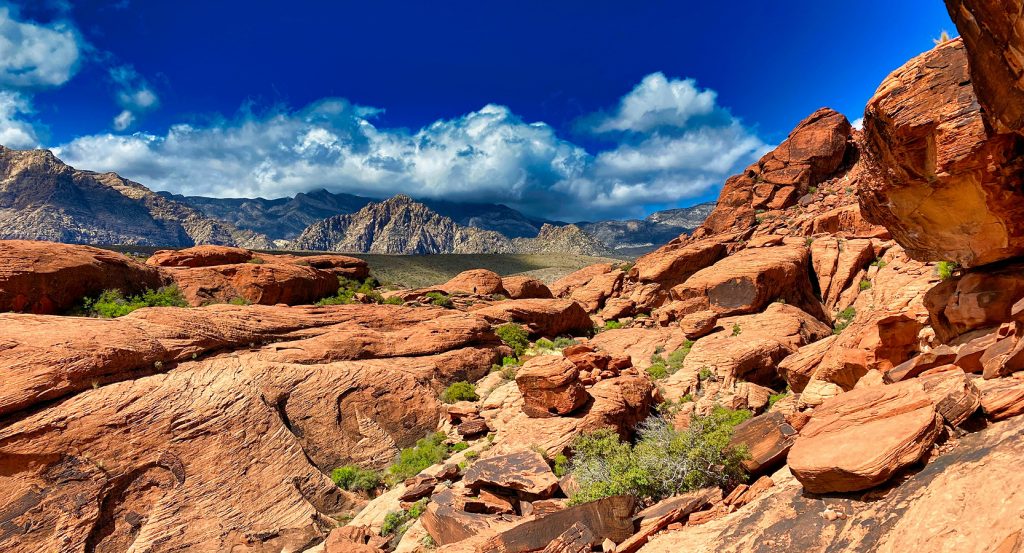
Only 17 miles west of Las Vegas, the canyon rises from the Mojave Desert in a sweep of rust-colored cliffs, striated sandstone peaks, and ancient geological layers that tell a story far older than the city's bright lights. Here, the desert breathes, wind moves through the canyons like music, and sunlight ignites the rocks into shades of crimson, amber, and violet. The contrast is striking: the chaos of Las Vegas fades behind you, replaced by stillness so vast it almost hums. Walking these trails feels like tracing the Earth's memory, formations sculpted by 600 million years of shifting seas, volcanic activity, and relentless erosion. Whether you're scaling the red walls of Calico Hills, hiking the Keystone Thrust Trail, or simply pulling over at one of the many scenic overlooks, Red Rock Canyon reminds you that the real show isn't man-made. It's eternal, raw, and breathtaking in its simplicity, a masterpiece that doesn't need applause.
What you didn’t know about Red Rock Canyon National Conservation Area.
Red Rock Canyon is more than a geological wonder; it's a living monument to time, resilience, and survival.
The area was designated Nevada's first National Conservation Area in 1990, protecting over 195,000 acres of desert wilderness. Yet its story stretches far deeper into prehistory. The towering cliffs you see today began as sand dunes nearly 180 million years ago, later compressed into Aztec sandstone. Over millennia, the movement of the Keystone Thrust Fault lifted and twisted these layers, revealing the vivid color bands that define the canyon's landscape. Long before modern visitors arrived, the Southern Paiute and Ancestral Puebloan peoples called this region home, leaving behind petroglyphs etched into stone, simple, haunting symbols that speak of water, wildlife, and celestial observation. Today, you can still find these markings hidden along trail walls, silent witnesses to lives once intertwined with the desert. Red Rock also became an important backdrop for American Westerns, filmmakers in the 1940s and 50s used its dramatic terrain to capture the untamed beauty of the frontier. But beneath its cinematic appeal lies one of the most ecologically diverse desert ecosystems in North America. The canyon is home to over 600 species of plants and wildlife, including desert tortoises, bighorn sheep, and blooming Joshua trees that seem to reach toward the sun. Rangers and conservationists continue to monitor the fragile environment closely, balancing access with preservation, ensuring that the same serenity felt today will endure for generations. And though it feels untouched, subtle clues of human innovation remain: the scenic loop road, for instance, was engineered to provide natural sightlines that unfold like a moving painting, each bend revealing a new composition of color and light.
How to fold Red Rock Canyon National Conservation Area into your trip.
Experiencing Red Rock Canyon is about slowing down and letting the desert show its rhythm.
Start your visit at the Red Rock Canyon Visitor Center, a striking modern complex that blends into the desert landscape. Exhibits here tell the story of the canyon's geology and the native cultures that once thrived among its cliffs. From there, embark on the Scenic Drive, a 13-mile one-way loop that winds through the heart of the conservation area. Each overlook offers its own revelation: Calico Hills, with its fiery red sandstone ridges; High Point Overlook, with panoramic desert views that stretch endlessly to the Spring Mountains; and Willow Springs, where desert palms cluster around hidden springs. For hikers, the options range from easy nature walks like Moenkopi Loop to the challenging Turtlehead Peak Trail, a steep climb that rewards with views sweeping all the way back to the Strip's distant glimmer. If climbing calls to you, Red Rock is world-renowned for its sandstone routes, from beginner-friendly scrambles to expert multi-pitch ascents. Wildlife enthusiasts should bring binoculars, especially around dawn or dusk, when desert bighorn sheep descend to drink from hidden pools. For photographers, the magic hour transforms everything, sunlight slides across the canyon walls, deepening the reds and purples into surreal gradients that shift by the second. End your visit at one of the shaded picnic areas near Pine Creek Canyon, where the desert breeze cools and time seems to stop. And when you drive back toward Las Vegas, the moment the skyline reappears on the horizon feels unreal, a reminder of how close wilderness and wonder can coexist. Red Rock Canyon National Conservation Area isn't an escape from Las Vegas; it's its counterpoint, proof that awe doesn't need neon to shine.
Hear it from the Foresyte community.
Just enough life around you not to be overwhelming. Right pace.
Where your story begins.
Start your planning journey with Foresyte Travel.
Experience immersive stories crafted for luxury travelers.