Why Restaurant Olo matters.
Restaurant Olo is a MICHELIN-starred Finnish restaurant where Kruununhaka's historic waterfront architecture meets the evolution of modern Nordic gastronomy, exceptional northern ingredients and Helsinki's internationally recognized fine-dining culture.
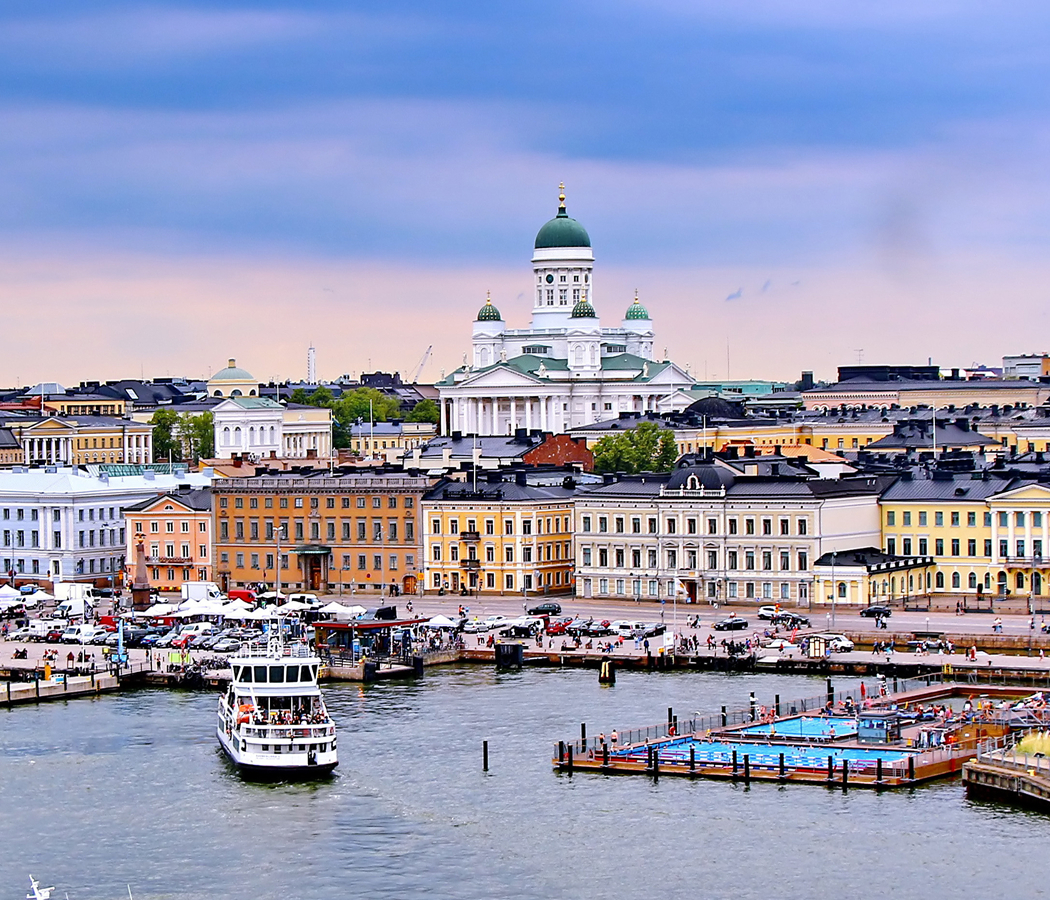
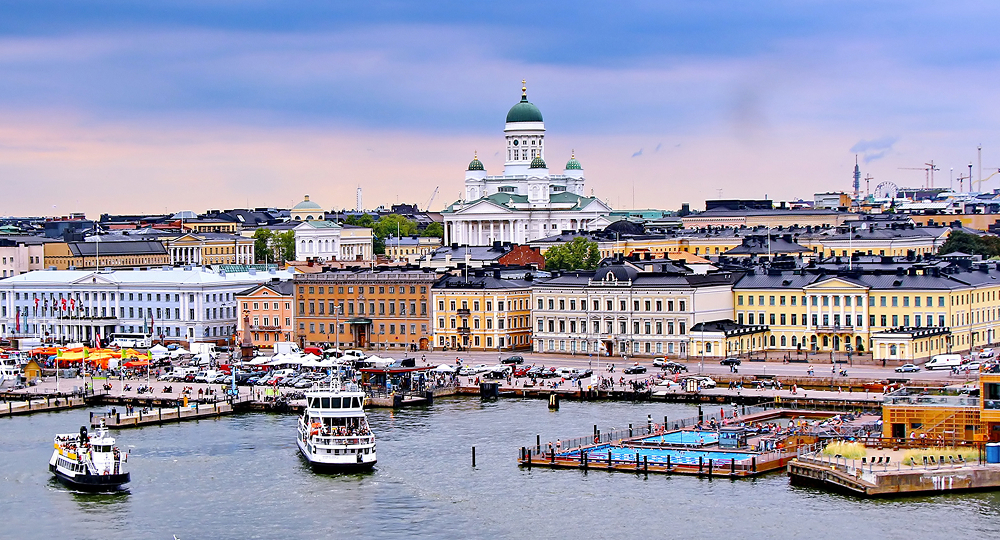
Occupying a historic yellow townhouse overlooking Helsinki's South Harbour, the restaurant stands beside the Presidential Palace and Market Square, at the eastern end of the Esplanadi boulevard. Its nineteenth-century architectural setting incorporates tall windows, traditional exterior proportions and an intimate relationship with the capital's ceremonial waterfront. Four understated dining rooms combine pale surfaces, contemporary Finnish furnishings and carefully arranged tables, creating a restrained interior that preserves the character of the historic building. The restaurant's proximity to the harbor introduces views of the maritime landscape, with passenger vessels, waterfront promenades and the historic civic buildings surrounding the eastern end of the city center. The result is an elegant dining destination whose historic architecture, contemporary Finnish design and exceptional harbor setting establish a distinguished environment for one of Finland's most influential modern restaurants.
What defines Restaurant Olo.
Restaurant Olo is best known for helping establish modern Nordic cuisine as a serious fine-dining movement in Finland, developing a culinary institution whose evolution has closely followed the international emergence of Scandinavian gastronomy. The restaurant was founded in 2006 by chef Pekka Terävä and restaurateur Petri Lukkarinen, with Mikko Heinonen and Teuvo Salminen also associated with its founding ownership. Its original premises were located on Kasarminkatu, where the founders introduced a culinary concept centered on northern ingredients, regional food traditions and contemporary cooking techniques. Terävä had developed his professional reputation within Finnish gastronomy before establishing Olo, and his ambition was to create a restaurant whose culinary character emerged directly from the ingredients and traditions of the Nordic region. The original concept challenged the prevailing expectations of Helsinki's fine-dining market, where French culinary conventions continued to exert substantial influence over prestigious restaurant kitchens. Olo's founders developed their approach during a period of growing international interest in regional sourcing, seasonal ingredients and the relationship between food production and local environments. Their commitment to Nordic cooking placed the restaurant among the early Finnish establishments developing a comprehensive culinary program around these principles. The kitchen emphasized ingredients from Finland's forests, lakes, farms and coastal waters, establishing a foundation for preparations that combined recognizable regional flavors with increasingly sophisticated technical methods. The Finnish Gastronomic Society named Olo Restaurant of the Year in 2009, providing an important national recognition of its culinary achievements. The award strengthened the establishment's reputation within Finland and marked its development into one of Helsinki's leading restaurants. Olo received its first MICHELIN star in 2011, becoming part of the small group of Finnish restaurants recognized by the international restaurant guide. The distinction represented an important milestone for the founders and demonstrated the growing international competitiveness of contemporary Finnish cuisine. Chef Jari Vesivalo played a significant role in the restaurant's early culinary development, assuming responsibility for the kitchen and menu creation as Terävä increasingly concentrated on the broader development of the business. Vesivalo's leadership contributed to the technical refinement of the restaurant's cooking and the evolution of its seasonal tasting menus. Olo subsequently relocated to its present waterfront premises in 2013, introducing a more substantial architectural setting for its expanding reputation. The move also created opportunities for the development of additional restaurant concepts within the founders' growing hospitality business. Restaurant Emo opened in the former Kasarminkatu premises, establishing a more accessible modern European dining format under the same restaurant group. Olo's relocation strengthened its position within Helsinki's central fine-dining district, placing the restaurant among the historic institutions and luxury hospitality establishments surrounding the capital's principal waterfront. The organization developed into Olo Collection, a hospitality group whose portfolio subsequently expanded to include restaurants and concepts such as Emo, Ego, Brasa, Scolare, Forza, Särkänlinna and Blanda. The group's development established an important business connection between Olo's original culinary ambitions and the wider expansion of contemporary restaurant culture in Helsinki. The company also developed Olo Creative Catering, extending its culinary expertise into private events and substantial hospitality commissions. A further expansion followed in 2017 with the introduction of Garden by Olo, an event and dining venue occupying a separate historic courtyard environment near the restaurant. The development created additional opportunities for private celebrations, seasonal events and collaborative culinary programs. Olo's kitchen became an important training environment for successive generations of Finnish chefs, with several prominent culinary professionals contributing to its development across different periods. Markus Lattunen participated in the restaurant's earliest years, followed by Ilkka Lääveri, whose tenure extended from 2010 to 2013. Eemeli Nurminen contributed to the kitchen during the following period, introducing another chapter in its development of contemporary Nordic preparations. Mikko Kaukonen worked within the restaurant's culinary leadership during the middle of the 2010s, followed by Heikki Liekola and Lari Helenius, whose contributions strengthened the restaurant's continuing technical development. These successive appointments established a substantial body of culinary experience within Olo's professional community, connecting the restaurant to the broader development of Finland's contemporary fine-dining workforce. The restaurant maintained its MICHELIN recognition through changing culinary leadership, preserving its international reputation across successive menu programs. Mikko Pakola assumed the position of head chef in 2025, bringing a new period of creative direction to the kitchen. His appointment continued the restaurant's established commitment to northern ingredients and precise contemporary techniques. Restaurant manager Katja Henttunen became an important figure in the dining room, directing a service program centered on knowledgeable hospitality, carefully coordinated pacing and a relaxed approach to formal dining. Olo celebrated its twentieth anniversary in 2026, marking the occasion with a special gathering of former chefs on October 10. The event brought together Lattunen, Lääveri, Nurminen, Kaukonen, Liekola, Helenius and Pakola for an eight-course dinner at Garden by Olo. Each chef contributed a preparation associated with their period in the kitchen, creating a retrospective of the restaurant's culinary development. Terävä completed the evening with a scallop preparation incorporating chanterelles, reaffirming his continuing position as the restaurant's founder and Olo Collection's creative director. The anniversary established a direct connection between the establishment's early experimentation with Nordic cuisine and its contemporary position within Finland's fine-dining culture. Olo's enduring significance emerges from its sustained contribution to the professional development of Finnish gastronomy, its role in establishing Nordic ingredients within an internationally recognized culinary format and its influence on the broader evolution of Helsinki's restaurant industry.
Mikko Pakola's cooking develops Olo's contemporary culinary character through the careful selection of northern ingredients, precise temperature control and combinations that balance familiar Finnish flavors with techniques drawn from international fine dining. The kitchen organizes its principal dinner service around a succession of small preparations that gradually develop from delicate seafood and vegetables toward substantial fish, game and carefully composed desserts. Seasonal availability determines the ingredients entering each menu, allowing the restaurant's cooking to respond to the changing agricultural and maritime conditions of northern Europe. The opening preparations establish the kitchen's technical approach through compact compositions whose individual components carry clearly differentiated flavors and textures. A pumpkin-seed tartlet combines the sweetness of butternut squash with the concentrated salinity of caviar, establishing an immediate contrast between cultivated vegetables and preserved marine ingredients. Potato flatbread introduces a distinctly Finnish foundation through its relationship with traditional regional baking. Närpiö cucumber and vendace roe complete the preparation, bringing together the freshness of greenhouse-grown vegetables and the delicate salinity of freshwater fish eggs. Goose liver mousse provides a richer opening component through its smooth texture and substantial savory character. Hazelnuts contribute a toasted aromatic quality, and rum-soaked raisins introduce a measured sweetness that balances the liver's richness. The progression into seafood develops through sugar-salted whitefish, a preparation rooted in the Nordic practice of curing fish with carefully controlled quantities of salt and sugar. The curing process modifies the fish's texture and concentrates its natural flavor, establishing a delicate foundation for kohlrabi and lavender. Kohlrabi contributes crisp vegetal freshness, with the lavender providing a restrained floral accent. The combination demonstrates the kitchen's interest in bringing familiar northern ingredients into contact with carefully measured aromatic components. A steamed egg custard introduces another technical dimension through the controlled coagulation of egg proteins, producing a soft and exceptionally delicate texture. Charred courgette contributes deeper roasted flavors, complemented by trout roe whose salinity and gentle bursts of texture distinguish the preparation. The kitchen's treatment of Lappish almond potatoes establishes one of its strongest connections with Finland's northern agricultural heritage. This distinctive potato variety is associated with Lapland and valued for its yellow flesh, concentrated flavor and soft texture. Smoked reindeer heart introduces a substantial regional ingredient whose character develops through traditional northern meat-preservation methods. Truffle adds an earthy aromatic component, creating a preparation that connects Lapland's agricultural traditions with ingredients associated with European luxury gastronomy. The relationship between potato, smoked meat and truffle establishes a particularly concentrated expression of the restaurant's approach to Finnish food culture. An optional lobster course develops another direction through the delicate sweetness of shellfish and the natural richness of braised carrots. Yuzu kosho introduces the citrus aroma and chili heat of a Japanese fermented condiment, demonstrating the kitchen's willingness to incorporate carefully selected international ingredients into its northern culinary foundation. The principal fish preparation centers on turbot roasted over an open fire, a cooking method that develops pronounced surface flavors through direct exposure to heat. Browned butter contributes a concentrated nutty richness, supporting the fish's substantial texture and delicate natural sweetness. The preparation depends on precise control of cooking temperature, allowing the exterior to develop roasted complexity as the interior retains its characteristic moisture. Grilled quail introduces a more substantial course through a small game bird whose flavor responds particularly well to direct heat. Wild mushrooms contribute the earthy character associated with Finland's forests, and a sauce seasoned with Timur pepper introduces citrus-like aromatic complexity. The combination develops the relationship between woodland ingredients and the more concentrated flavors of roasted poultry. Olo's dessert progression returns to the botanical ingredients of the Nordic region through preparations that explore the natural acidity and aromatic qualities of berries and leaves. Blackcurrant-leaf ice cream introduces a distinctive herbal fragrance, complemented by beetroot whose natural sweetness develops a more substantial vegetal character. The pairing draws on the aromatic properties of a plant more commonly associated with its fruit, extending the culinary use of northern garden ingredients. Milk chocolate provides a richer concluding component through its creamy texture and familiar cocoa sweetness. Hazelnuts introduce roasted depth, and gooseberries contribute the acidity necessary to balance the chocolate. A final selection of small sweets completes the meal through carefully prepared confectionery, allowing the progression to conclude with a series of concentrated flavors and delicate textures. The beverage program develops alongside the food through a wine collection incorporating established European regions and selections chosen for the changing seasonal menu. Champagne provides an opening accompaniment, with subsequent pairings selected to complement the increasing complexity of the dishes. The restaurant also prepares a substantial nonalcoholic pairing program through beverages produced in-house by its bartending team. These preparations allow the kitchen's botanical and seasonal interests to extend into the drinks, creating additional relationships between herbs, fruits, acidity and the principal ingredients of each course. The dining room's service is organized around the gradual presentation of the menu, with staff explaining the principal ingredients and culinary techniques as the evening develops. A complete tasting-menu dinner generally occupies three hours, establishing a measured progression through the kitchen's seasonal compositions. Olo's defining culinary character emerges from the sustained relationship between Finnish agricultural traditions, Nordic seafood, carefully selected international ingredients and the technical precision of contemporary fine dining.
How Restaurant Olo fits.
Restaurant Olo works as the culminating dining destination for an exploration connecting Helsinki's historic commercial waterfront, its nineteenth-century civic architecture and the cultural institutions surrounding the capital's principal harbor.
Begin at Market Square, the historic waterfront marketplace occupying the southern edge of Helsinki's central harbor. Its development became closely connected to the expansion of maritime commerce during the nineteenth century, when the harbor supported trade between Finland, Russia and other Baltic destinations. The marketplace developed into an important distribution point for agricultural produce, fish and regional food products arriving from the surrounding countryside and coastal communities. Its waterfront setting incorporates open market stalls, passenger ferry terminals and direct views toward the islands of the Helsinki archipelago. The nearby Old Market Hall, completed in 1889 and designed by architect Gustaf Nyström, preserves an important example of nineteenth-century commercial architecture through its brick façades, iron structural elements and historic food-market interior. Continue to Helsinki City Hall, the historic civic building occupying a prominent position along the capital's waterfront. Its original structure was completed in 1833 as the Seurahuone Hotel, designed by architect Carl Ludvig Engel during the development of Helsinki's Neoclassical city center. The building subsequently became the headquarters of the municipal administration, establishing a substantial connection between the capital's early hospitality industry and its later civic institutions. Its architectural composition incorporates a restrained classical façade, substantial interior spaces and a prominent relationship with the surrounding harbor district. The building underwent a major interior renovation during the twentieth century under architect Aarno Ruusuvuori, introducing modernist elements into the historic structure. Conclude at Helsinki City Museum, the municipal cultural institution occupying historic buildings near Senate Square. Founded in 1911, the museum developed to preserve the material history of Helsinki and interpret the city's transformation from a modest coastal settlement into Finland's national capital. Its exhibitions incorporate historical photographs, domestic interiors, architectural material and objects associated with the everyday development of the city. The museum's principal premises include the Sederholm House, completed in 1757 and recognized as the oldest surviving stone building in Central Helsinki. Its preserved architectural character establishes a direct connection with the city's eighteenth-century commercial development. The progression moves from Market Square's maritime trading traditions through Helsinki City Hall's nineteenth-century civic architecture and culminates in Helsinki City Museum's interpretation of the capital's historical development, establishing the geographic and cultural context for an evening at Restaurant Olo.
Where your story begins.
Foresyte Travel reveals places that feel extraordinary long before you arrive.
Enjoy editorial crafted for luxury travelers.
Foresyte may earn a commission when you book.