Why Rosewood Matakauri matters.
Rosewood Matakauri is a lakeside lodge where Closeburn's quiet rural shore meets the Robertson family's development of a defining South Island retreat.
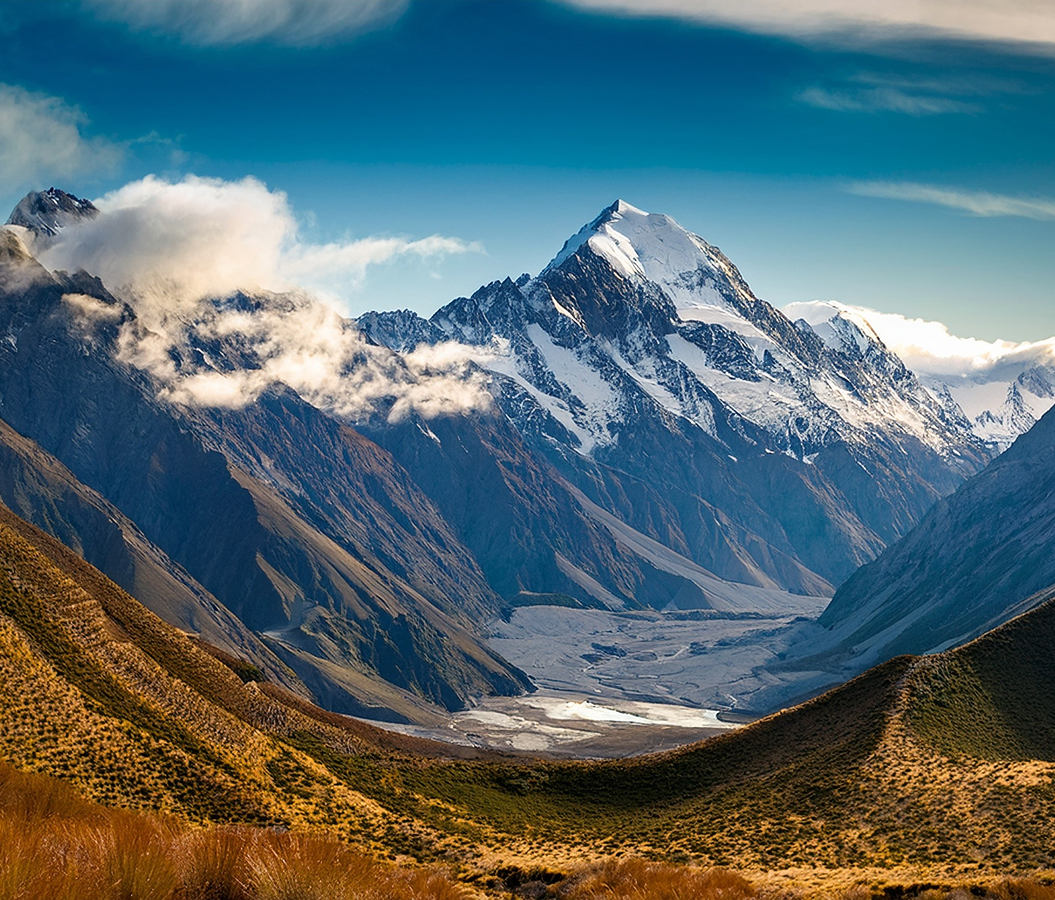
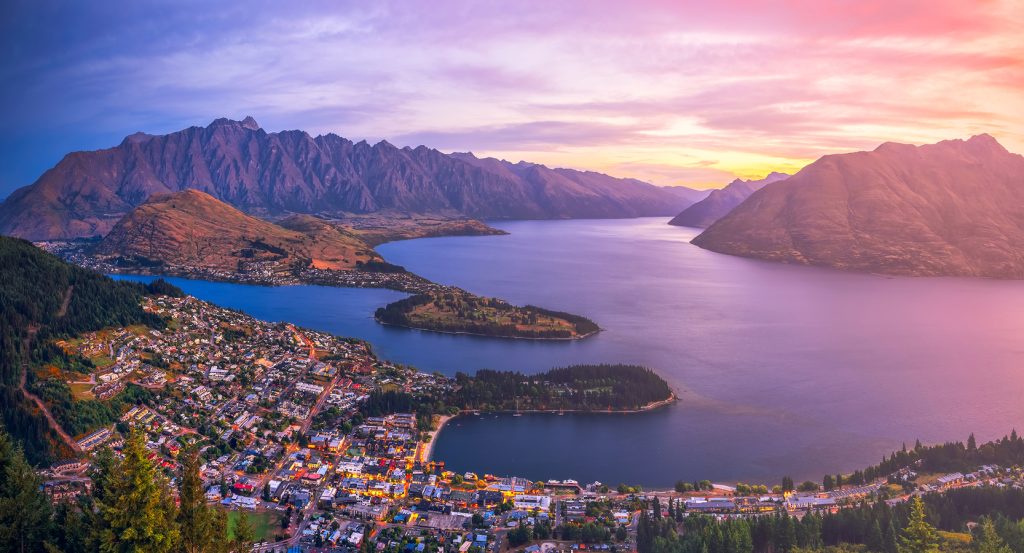
Along Glenorchy Road beyond Queenstown Bay, Rosewood Matakauri occupies a native-bush shoreline on Lake Wakatipu, framed by Cecil Peak, Walter Peak and The Remarkables as the road follows the lake's western edge toward Glenorchy. The lodge's buildings sit along a steep, wooded slope, with the main lodge, chalets, villas and owner's cottage forming a low, separated composition among trees and rising ground. Their placement allows the steep terrain to shape the approach: the structures appear against the shoreline and bush, while the mountain faces provide a broad, changing backdrop. Inside, open fireplaces, natural textures and contemporary New Zealand furnishings establish a close visual relationship with the landscape, with curated art adding a distinct local dimension to the lodge's interior. The architecture carries that relationship outdoors through terraces and wide views over the water, where the scale of the peaks sets the measure of the built spaces. Native vegetation screens the hillside behind the lodge, and the lake edge keeps the alpine outlook open toward the southern ranges. The result is an intimate lakeside retreat whose layered buildings and natural setting connect Closeburn's rural character to Queenstown's alpine landscape.
What defines Rosewood Matakauri.
Rosewood Matakauri is best known for its development under the Robertson family, its interiors by Virginia Fisher and its later management by Rosewood Hotels and Resorts. The lodge was constructed in 2000 as a contemporary New Zealand retreat near Queenstown, before Julian and Josie Robertson acquired it and undertook a substantial refurbishment. It reopened in 2010 as the third lodge in the family's New Zealand collection, joining Kauri Cliffs and Cape Kidnappers under the Robertson Lodges name. Fisher shaped the reopening interiors, bringing a contemporary style to the lodge while drawing on the textures and colors of its alpine surroundings. The Robertson family's decision established a South Island counterpart to its earlier North Island lodges and extended its hospitality portfolio into the Wakatipu region. The lodge's food program also developed a regional emphasis, with chef Dale Gartland leading the kitchen at its reopening and shaping menus around local produce, high-country lamb and lake-caught fish. In 2013, a separate owner's cottage expanded the property's architectural range. Sumich Chaplin Architects designed the addition, while Fisher developed its interiors, extending the lodge's visual language into a more private residential form. The work linked new architecture to the original lodge through local design references, timber finishes and views toward the mountains. A further refurbishment in 2018, valued at close to NZ$1 million, refreshed the interior palette and furnishings under Fisher's direction. The Lower Lounge became a dining space oriented toward the Remarkables, Cecil Peak and Walter Peak, giving the lodge's most prominent outlook a stronger role in its public interior. Rosewood Hotels and Resorts assumed management in December 2023, marking the company's entry into New Zealand and bringing Matakauri into a new international collection. The Robertson family retained ownership of the lodge as Rosewood took over its operation. That arrangement links a family-built New Zealand lodge group with a global hotel company, while the property's earlier architecture and interior development continue to shape its character. The lodge's history turns on a sequence of consequential changes: the Robertson acquisition, Fisher's major refurbishment, the Sumich Chaplin cottage, the 2018 interior renewal and Rosewood's management transition. Each chapter strengthened the lodge's connection to its alpine landscape and established Matakauri as a distinct part of the Robertson family's South Island holdings.
How Rosewood Matakauri fits.
Rosewood Matakauri works as a starting point for a Glenorchy Road outing through limestone production, alluvial gold mining and the working life of a prospector.
Begin at Bob's Cove, a sheltered inlet whose name recalls Bob Fortune, a boatman employed by early pastoralist William Rees. Fortune maintained a whaleboat used to travel between Rees's homestead and settlements around the lake, and the cove became a refuge during rough weather. In 1880, the Wakatipu Lime Company began quarrying limestone here and shipping processed lime to Queenstown. The operation built shoreline kilns, a jetty and a substantial stone dwelling, linking an isolated cove to the building needs of the developing town. Seven kiln remains survive as traces of that industry. Continue to Twelve Mile Creek, where the gorge's alluvial gravels drew miners during the Otago gold era. Chinese miners moved into the creek area in increasing numbers after 1866, joining a wider goldfield workforce along the northern lake shore. By 1870, ground and hydraulic mining supplemented the earlier search through creek-bed gravels. Races, dams and stone-revetted tailraces reshaped the valley, leaving visible evidence of the engineering required to move water and separate gold from the landscape. Mining continued intermittently through the Depression years and into the period before the Second World War. Conclude at Sam Summers Hut, built in the 1930s by gold prospector Sam Summers beside a waterfall on the Mount Crichton track. Its modest form preserves a record of prospecting life in the bush, while a rock fissure nearby served as a tailrace for mining water. The hut's association with the creek's gold workings joins practical shelter to the larger story of extraction in the valley. The progression moves from Bob's Cove's limestone trade through the engineered gold workings of Twelve Mile Creek and ends at Sam Summers Hut, linking regional industry to the people who pursued it in the surrounding hills.
Where your story begins.
Foresyte Travel reveals places that feel extraordinary long before you arrive.
Enjoy editorial crafted for luxury travelers.