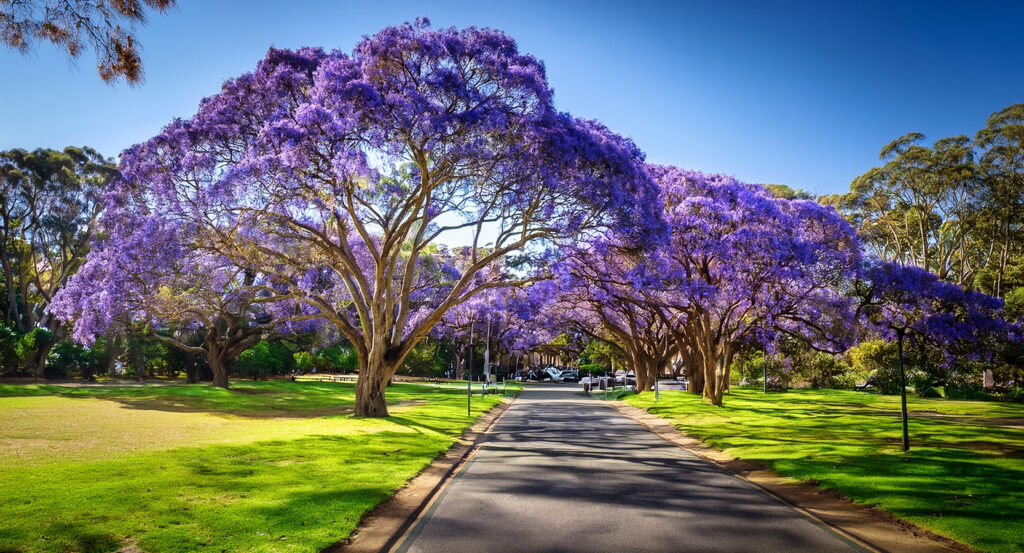
Why you should experience The Palm Grove at Royal Botanic Garden Sydney in Sydney, Australia.
The Palm Grove is the beating heart of Royal Botanic Garden Sydney, a cathedral of green where sunlight filters through fronds like stained glass and time itself seems to exhale.
Step inside and the air changes, cooler, gentler, infused with the scent of damp earth and palm resin. The grove gathers species from every corner of the tropics, towering overhead in a rhythmic dance of trunks and shadows. Each path through the grove feels like a quiet revelation: the soft crunch of gravel beneath your feet, the distant call of cockatoos, and the gentle rustle of leaves whispering secrets from centuries past. Established in the mid-19th century, The Palm Grove was among the earliest curated plant collections in Australia, originally intended as a living study in botany and colonial exploration. Today, it's a sanctuary from the city's hum, an immersive experience that feels at once ancient and alive. The palms rise like columns in a natural cathedral, their crowns weaving together to form a canopy of light. Beneath them, cycads, orchids, and bromeliads bloom in subtle layers, completing a living composition that could only have been painted by nature herself.
What you should know about The Palm Grove at Royal Botanic Garden Sydney.
The Palm Grove is more than a lush refuge, it's a living record of Australia's relationship with the natural world, and a triumph of horticultural preservation that has endured more than 150 years.
Planted during the Garden's expansion under Charles Moore in the 1860s, the grove became a testing ground for palm species sourced from across the globe, a Victorian-era experiment in acclimatization and biodiversity. Over time, it evolved into one of the most comprehensive palm collections in the Southern Hemisphere, featuring more than 100 species from Africa, South America, Asia, and the Pacific. The grove's design was never accidental: its layout reflects both aesthetic and scientific intent, using topography and microclimates to nurture species that would never otherwise coexist. Some of its oldest specimens, such as the Kentia palms from Lord Howe Island, have been here since the 1870s and now tower more than twenty meters high. Others, like the fan-leaved Livistona australis, native to New South Wales, anchor the collection in local heritage. The grove has also survived considerable challenges: storms, droughts, and pests have tested its resilience, prompting careful conservation programs that continue today. The irrigation system, upgraded in the 1990s, mimics rainforest misting patterns, and the pathways were redesigned to protect root systems while allowing accessibility. If you look closely, interpretive plaques detail the grove's role in early botanical research, including contributions to Australia's agricultural and ecological sciences. For those who know where to look, the grove conceals more than just palms, it shelters colonies of native microbats, orchids clinging to trunks, and even the descendants of specimens collected by Sir Joseph Banks during his voyages with Captain Cook. Few realize that The Palm Grove also played a social role in Sydney's evolution, hosting early outdoor concerts and garden fêtes in the 1880s, where the city's elite would promenade among the exotic greenery, parasols and all. Its legacy endures not just in its age, but in its atmosphere: this is a space where science and serenity cohabitate, where history breathes through chlorophyll and sunlight.
How to fold The Palm Grove at Royal Botanic Garden Sydney into your trip.
The Palm Grove rewards unhurried exploration, a gentle wander through shade, texture, and time.
Start the journey from the Art Gallery Road entrance of the Royal Botanic Garden, following the main path toward The Palm Grove Centre. The grove lies just beyond, its tall silhouettes beckoning like green sentinels. Visit in the early morning or late afternoon when sunlight filters low through the canopy, at these hours, the grove transforms into a living light show. Walk the looping paths slowly, pausing to notice the subtle shifts in species as you move, fan palms give way to feathered fronds, slender trunks yield to massive columnar forms. The grove's central lawn offers the perfect vantage point for quiet reflection or photography; from here, the composition of foliage and sky feels almost architectural. If you're visiting during the warmer months, you might catch one of the Garden's guided walks, where botanists share stories about the grove's global origins and ecological importance. For families, the nearby Palm Grove Centre Café makes a convenient stop for coffee or lunch beneath shaded verandas. Don't miss the interpretive signs identifying key species, each one offers a window into the global reach of 19th-century exploration and the scientific curiosity that shaped Sydney's landscape. As you leave, take the connecting path toward the Calyx Pavilion or the Rose Garden, both just minutes away; the transition from the grove's cool green to the open sunlight of the lawns feels like stepping from dream to day. Whether you linger for ten minutes or an hour, The Palm Grove will linger with you, its serenity, its scale, its quiet power to make you feel part of something vast and enduring.
Where your story begins.
Foresyte Travel reveals places that feel extraordinary long before you arrive.
Experience premium editorial crafted for luxury travelers.