
Why Canongate Tolbooth matters.
At first glance, Canongate Tolbooth looks like a time traveler that forgot to leave, a medieval sentinel standing proudly amid the flow of modern life along the Royal Mile.
Its stone façade, crowned with a clock that juts dramatically over the street, has watched centuries of history unfold below. The building's thick walls and crow-stepped gables exude a kind of civic gravitas, a reminder that this was once the beating administrative heart of the old Canongate burgh. Step closer, and you can almost hear the clang of iron keys and the murmur of councilmen gathered inside its chambers. For travelers, the Tolbooth offers something rare, a direct portal to the 16th century, still alive within the rhythm of the city. Its shadow falls across the cobblestones like a bridge between past and present, where Edinburgh's medieval pulse continues to thrum beneath the gloss of today's tourism. This isn't just an architectural marvel, it's a living monument to authority, resilience, and the uniquely Scottish balance of austerity and grace.
What defines Canongate Tolbooth.
Built in 1591 under the direction of Sir Lewis Bellenden, Canongate Tolbooth once served as a town hall, courthouse, and jail all in one.
Before the Canongate was absorbed into Edinburgh in 1865, it was its own burgh, self-governed and fiercely proud, and the Tolbooth was its center of justice and power. Criminals were tried, debts were settled, and royal proclamations were read from the steps that still greet passersby today. The projecting clock, added in the 17th century, symbolized civic order and wealth, marking Canongate as a place of influence and independence. Inside, the cells were cramped and dark, housing offenders from petty thieves to political prisoners. Today, those same chambers have been reborn as The People's Story Museum, where exhibits trace the evolution of Edinburgh's working-class life, from artisans and servants to activists and reformers. The building's blend of Gothic and Renaissance elements reflects both the ambition and turbulence of its era, and remarkably, it remains one of the oldest surviving municipal buildings in Scotland still open to the public.
How Canongate Tolbooth fits.
Canongate Tolbooth rewards those who slow down along the Lower Royal Mile, the section where history lingers longest.
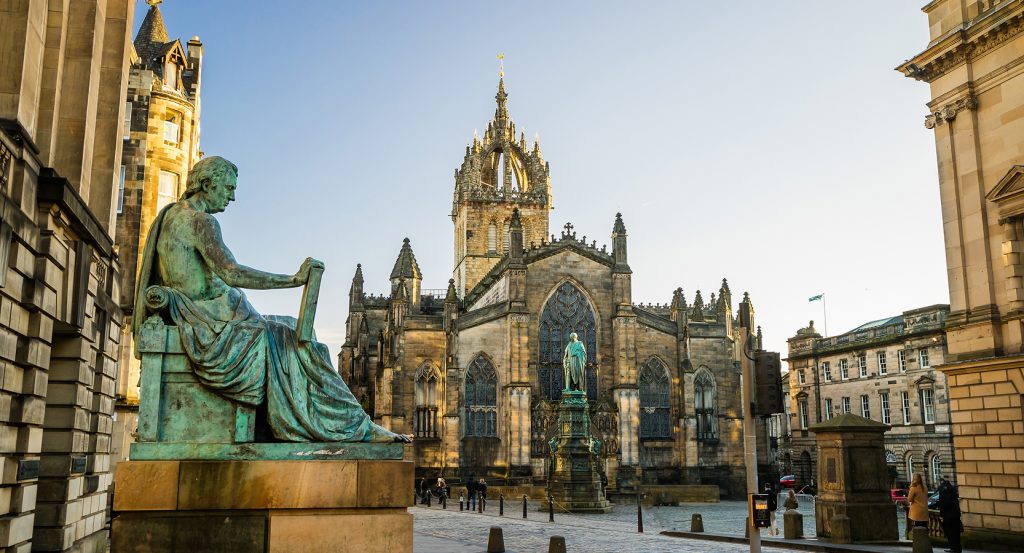
Start the walk from St. Giles' Cathedral and follow the gradual slope toward Holyrood, letting the crowds thin as the street narrows. When the Tolbooth's clock appears overhead, step back across the cobblestones to take in the full view of its tower, arched doorway, and oriel windows. Inside, explore The People's Story Museum at your own pace; its storytelling approach brings the voices of ordinary citizens to life through personal artifacts, reconstructed workshops, and handwritten testimonies. Don't miss the view from the rear courtyard, a hidden angle that reveals the Tolbooth's thick medieval foundations. Afterward, grab a coffee from a nearby café or pause at Canongate Kirk just down the street, where many of the Tolbooth's parishioners once worshipped. Visiting this landmark isn't just about admiring old stone, it's about standing in the place where Edinburgh once governed itself, and realizing that the city's greatest strength has always been the endurance of its people.
Where your story begins.
Foresyte Travel reveals places that feel extraordinary long before you arrive.
Enjoy editorial crafted for luxury travelers.
Foresyte may earn a commission when you book.














































































































