Why you should experience Artus Quellinus at Royal Palace Amsterdam in Amsterdam, Netherlands.
Artus Quellinus at Royal Palace Amsterdam is the architectural soul of the building, a luminous corridor where civic power, art, and astronomy merge into pure grandeur.
Walking into the gallery feels like entering a living sculpture. Light streams through tall arched windows, gliding across gleaming white marble floors and columns that seem to stretch toward infinity. Every surface reflects harmony and purpose, designed to embody the ideals of Amsterdam's Golden Age: reason, order, and the pursuit of human greatness. The gallery connects the palace's grand chambers with the Citizens' Hall, its proportions so precise they feel almost musical. It's not ostentatious; it's transcendent. The marble underfoot carries the faint echo of centuries, magistrates, royals, and revolutionaries alike, all passing through this space that blurs the line between art and architecture. To walk the marble gallery is to trace the city's transformation from a republic of merchants to a beacon of enlightenment, where beauty was crafted not as decoration, but as a declaration.
What you should know about Artus Quellinus at Royal Palace Amsterdam.
Artus Quellinus at Royal Palace Amsterdam was part of architect Jacob van Campen's original 17th-century vision for Amsterdam's City Hall, a civic temple.
Its marble came from quarries in Carrara, Italy, the same source Michelangelo used for his sculptures, symbolizing both artistic excellence and moral purity. The floor inlays depict celestial maps and world hemispheres, grounding Amsterdam at the heart of the universe, a reflection of its maritime empire and intellectual ambition. Sculptor Artus Quellinus contributed many of the allegorical reliefs that line the gallery, each representing virtues like Justice, Prudence, and Peace. These weren't mere embellishments; they served as moral instruction for the city's leaders who once walked these halls. When King Louis Napoleon converted the building into his palace in 1808, he preserved the marble's solemn majesty, merely softening its civic austerity with draped fabrics and chandeliers. Few visitors notice the acoustic perfection of the space, the way every footstep connects like a faint heartbeat, as if the marble itself were alive with memory.
How to fold Artus Quellinus at Royal Palace Amsterdam into your trip.
When visiting the Royal Palace in Amsterdam, linger in the marble gallery, it's where the spirit of the building reveals itself most completely.
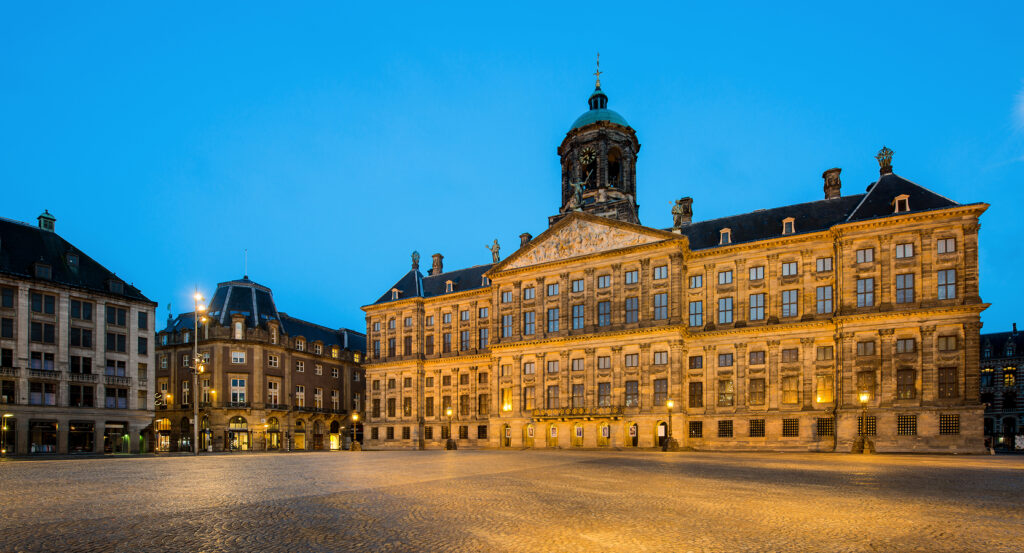
Begin in the Citizens' Hall to feel the palace's cosmic scale, then follow the marble corridors as they unfold toward the side chambers. Notice how the natural light shifts as you walk, from cold morning brightness to golden afternoon glow, transforming the marble into a living canvas. Take time to study the sculptures and carvings that line the gallery walls; each tells a story of Amsterdam's civic ideals and the Dutch reverence for balance and clarity. If you're lucky enough to visit during a quiet moment, stand still in the center and listen, the sound of footsteps fading down the corridor is almost sacred. Afterward, step out into Dam Square and look back at the palace façade; the calm elegance you see outside mirrors the measured perfection within. Artus Quellinus at Royal Palace Amsterdam isn't just a hallway, it's a declaration of light, reason, and the enduring power of design to elevate the human spirit.
Where your story begins.
Foresyte Travel reveals places that feel extraordinary long before you arrive.
Experience premium editorial crafted for luxury travelers.