
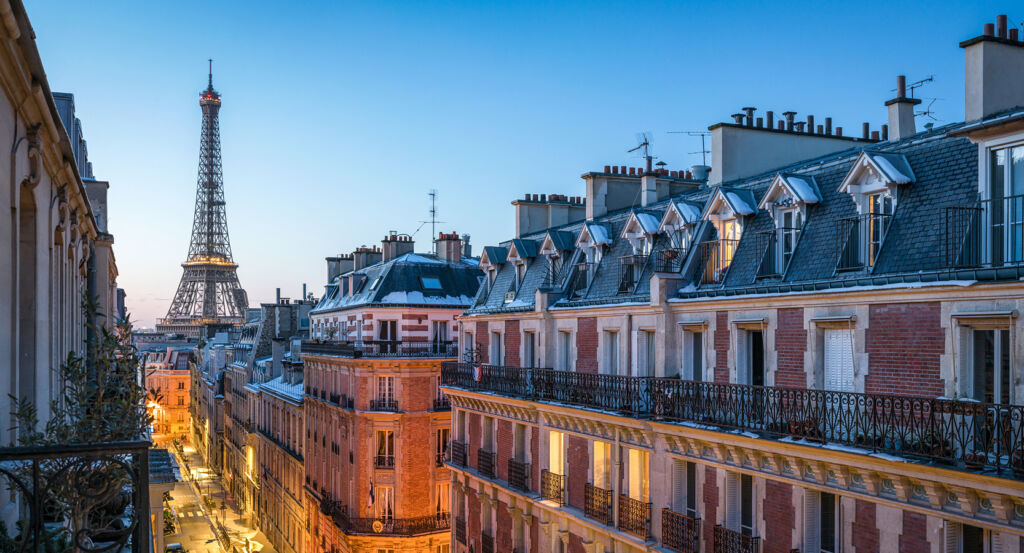
Why you should experience Rue de Buci in Paris, France.
Rue de Buci is a spirited Monnaie corridor where medieval heritage, literary culture, gourmet tradition, and Left Bank sophistication converge along one of Saint-Germain-des-Prés' most beloved streets.
Running through Monnaie between Boulevard Saint-Germain and the Seine, this lively corridor unfolds through historic cafés, celebrated food shops, elegant townhouses, thriving terraces, neighborhood markets, and beautifully preserved seventeenth and eighteenth century architecture that has defined Parisian street life for centuries. Florists, cheesemongers, booksellers, wine merchants, and independent boutiques animate the streetscape from morning until late evening, creating an atmosphere where local tradition and cosmopolitan energy coexist with remarkable ease. Every section of the corridor reflects the enduring vitality that has made Saint-Germain-des-Prés one of the world's great cultural neighborhoods. The result is a corridor defined by intellectual heritage, culinary excellence, and one of Paris' most iconic Left Bank streets.
What you should know about Rue de Buci.
Rue de Buci is best known for preserving the commercial heart of medieval Saint-Germain-des-Prés, tracing its origins to the thirteenth century while taking its name from Simon de Buci, the influential First President of the Parlement of Paris during the reign of Charles VI, whose family established lasting ties to the neighborhood. Positioned at the historic crossroads of Rue de Seine and Rue Mazarine, the corridor developed into one of the Left Bank's foremost market streets, where generations of produce merchants, fishmongers, cheesemakers, wine sellers, and booksellers supplied both the Abbey of Saint-Germain-des-Prés and the expanding scholarly community surrounding the University of Paris. During the Enlightenment and into the twentieth century, Rue de Buci became deeply woven into the intellectual character of Saint-Germain-des-Prés, frequented by writers, philosophers, publishers, artists, and journalists including Jean-Paul Sartre, Simone de Beauvoir, Boris Vian, Juliette Gréco, and Albert Camus, whose nearby cafés transformed the district into the epicenter of postwar existentialism. The avenue also preserves exceptional architectural landmarks including the seventeenth century Fontaine de Buci, designed by Louis Visconti in 1844 to commemorate the medieval Porte Buci, while surviving hôtels particuliers and historic commercial buildings demonstrate more than seven centuries of uninterrupted urban evolution.
The corridor continues sustaining one of Paris' richest traditions of neighborhood commerce through specialist food merchants, independent wine shops, artisan bakeries, and long-established cafés that preserve the character of the historic Left Bank marketplace. Medieval street patterns, nineteenth century architectural restorations, and enduring literary associations remain visible throughout the avenue, demonstrating how Rue de Buci has successfully retained its authentic character while evolving into one of Paris' most celebrated destinations for gastronomy, culture, and everyday urban life. Few streets capture the seamless relationship between scholarship, commerce, and Parisian café culture with such remarkable continuity.
How to fold Rue de Buci into your trip.
Rue de Buci works as a leisurely exploration through Monnaie's celebrated cafés, historic streets, and cultural landmarks.
Begin at Église Saint-Germain-des-Prés, where the oldest surviving church in Paris establishes the extraordinary historical depth of the neighborhood before wandering along Rue de Buci through its lively market atmosphere. Continue to Marché Saint-Germain, whose long commercial tradition reflects centuries of Left Bank food culture while introducing many of the artisan producers that continue defining the district today. Conclude at Café de Flore, where generations of writers, philosophers, and artists transformed Saint-Germain-des-Prés into one of the world's great intellectual capitals, providing a memorable finale celebrating the cultural legacy that continues distinguishing this remarkable corridor. The progression moves naturally from medieval Paris to historic commerce before culminating in literary history, revealing why Rue de Buci remains one of the capital's most rewarding streets.
Where your story begins.
Foresyte Travel reveals places that feel extraordinary long before you arrive.
Experience premium editorial crafted for luxury travelers.














































































































