
Why Rue de Sèvres matters.
Rue de Sèvres is a distinguished Notre-Dame-des-Champs corridor where Left Bank elegance, medical innovation, artistic heritage, and refined Parisian culture converge along one of the capital's most historically significant avenues.
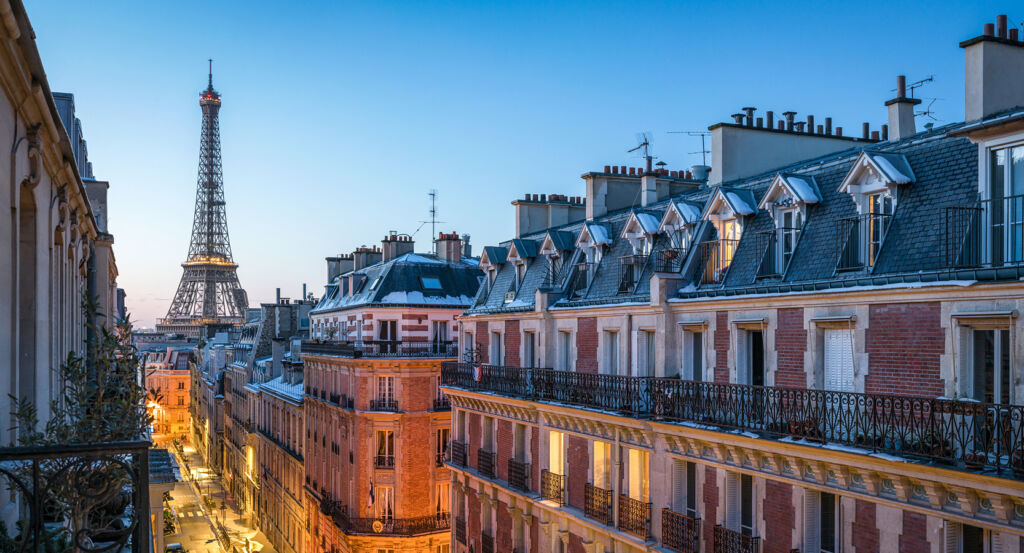
Running through Notre-Dame-des-Champs between Saint-Germain-des-Prés and the Seine's southwestern neighborhoods, this convivial corridor unfolds through landmark hospitals, celebrated department stores, prestigious institutions, elegant Haussmann architecture, and beautifully landscaped boulevards that reflect centuries of continuous urban evolution. Refined boutiques, historic cafés, grand civic buildings, and distinguished residential façades create a streetscape where intellectual life, commerce, and architectural sophistication remain seamlessly intertwined. Every section of the avenue reveals another chapter in the remarkable development of Paris' Left Bank. The result is a corridor defined by civic importance, architectural excellence, and one of the city's most enduring historic thoroughfares.
What defines Rue de Sèvres.
Rue de Sèvres is best known for following the historic road connecting Paris with the royal porcelain town of Sèvres while evolving into one of the Left Bank's foremost institutional corridors, anchored by Hôpital Necker-Enfants Malades, founded in 1778 as the world's first hospital dedicated exclusively to the treatment of children. The hospital became the workplace of Nobel Prize-winning immunologist Jean Dausset, who discovered the human leukocyte antigen system that revolutionized organ transplantation, while pioneering pediatrician Robert Debré transformed modern children's medicine through innovations developed here during the twentieth century. The corridor also became home to Le Bon Marché, founded in 1852 by Aristide and Marguerite Boucicaut, widely recognized as the world's first modern department store, whose revolutionary fixed pricing, home delivery, mail-order catalogues, and customer-centered retail model permanently reshaped international commerce. In the twenty-first century, Japanese architect Tadao Ando expanded the avenue's architectural legacy through La Grande Épicerie and the transformation of the adjacent Samaritaine-era commercial spaces, reinforcing Rue de Sèvres as a corridor where medicine, commerce, and design have continually influenced modern Paris.
The avenue's extraordinary concentration of groundbreaking institutions demonstrates how scientific discovery, architectural innovation, and entrepreneurial vision have developed side by side for more than two centuries. Monumental hospital buildings, landmark retail architecture, and distinguished civic institutions continue preserving the achievements of physicians, scientists, merchants, and architects whose influence extended far beyond France, allowing Rue de Sèvres to remain one of the capital's most historically consequential Left Bank corridors.
How Rue de Sèvres fits.
Rue de Sèvres works as an exploration through Notre-Dame-des-Champs' celebrated cultural institutions, architectural landmarks, and refined shopping destinations.
Begin at Le Bon Marché Rive Gauche, where the world's first modern department store introduces the entrepreneurial innovation that transformed global retail before following Rue de Sèvres through one of the Left Bank's most elegant corridors. Continue to Musée Bourdelle, whose beautifully preserved workshops reveal the creative legacy of one of France's greatest sculptors only moments from the avenue. Conclude at Hôpital Necker-Enfants Malades, whose remarkable medical history represents centuries of scientific progress and humanitarian care that have shaped pediatric medicine around the world. The progression moves naturally from commercial innovation to artistic achievement before concluding with one of the world's most influential medical institutions, revealing why Rue de Sèvres remains one of Paris' most remarkable historic avenues.
Where your story begins.
Foresyte Travel reveals places that feel extraordinary long before you arrive.
Experience premium editorial crafted for luxury travelers.
Foresyte Travel may earn a commission when you book through the link on this page.














































































































