
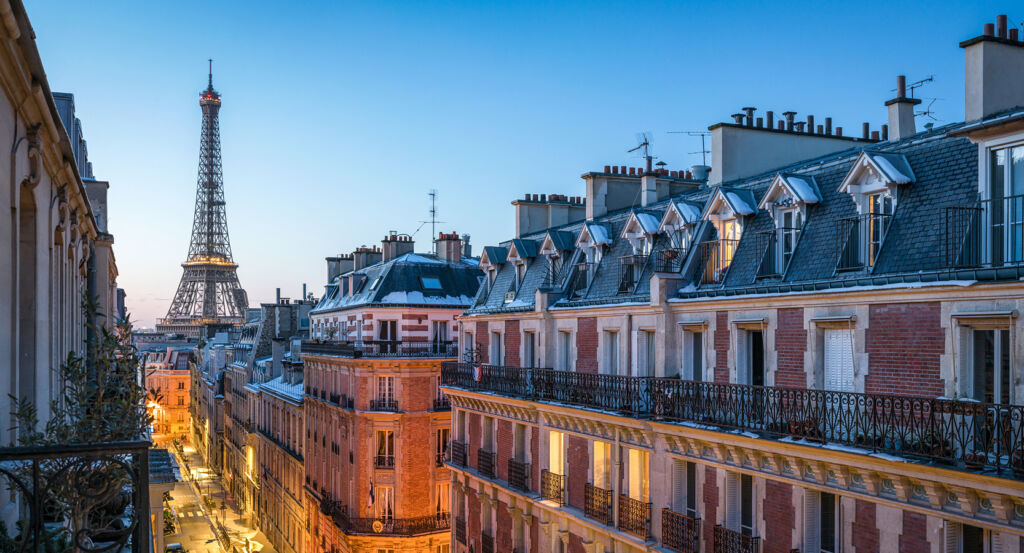
Why Rue Saint-Jacques matters.
Rue Saint-Jacques is a renowned Sorbonne corridor where Roman origins, scholarly tradition, religious heritage, and nearly two thousand years of Parisian history converge along the city's oldest surviving street.
Running through Sorbonne between Île de la Cité and Val-de-Grâce, this extraordinary historic corridor unfolds through medieval colleges, Gothic churches, distinguished academic institutions, centuries-old bookshops, elegant stone façades, and remarkable archaeological layers that preserve the evolution of Paris from the Roman city of Lutetia to one of the world's foremost intellectual capitals. Ancient alignments, sculpted portals, historic courtyards, and enduring architectural landmarks reveal a streetscape whose physical form has guided pilgrims, scholars, merchants, and residents for almost two millennia. Every block reinforces the remarkable continuity of a street that has remained central to the city's development since antiquity. The result is a corridor defined by historical significance, intellectual legacy, and one of Europe's most extraordinary urban journeys.
What defines Rue Saint-Jacques.
Rue Saint-Jacques is best known for preserving the course of the Roman Cardo Maximus of Lutetia, established during the first century AD as the city's principal north-south axis before becoming the medieval departure route for pilgrims traveling toward Santiago de Compostela, giving the street its enduring name and establishing it as one of Europe's most important historic pilgrimage corridors. The street also became the intellectual backbone of medieval Paris through its close association with the University of Paris, whose colleges, printers, booksellers, monasteries, and religious institutions transformed the corridor into one of the continent's foremost centers of scholarship, publishing, and theological learning for centuries.
Historic churches, university buildings, former colleges, and elegant residential architecture continue expressing Rue Saint-Jacques' extraordinary role in shaping the cultural character of Paris. Independent bookshops, neighborhood cafés, scientific institutions, and carefully preserved monuments sustain the scholarly atmosphere that has distinguished the corridor since the Middle Ages, while successive architectural periods demonstrate the remarkable continuity of one of the capital's most historically important streets.
How Rue Saint-Jacques fits.
Rue Saint-Jacques works as an exploration through the Latin Quarter's remarkable academic heritage, religious landmarks, and ancient history.
Begin at Panthéon, where France's greatest national monument introduces the extraordinary intellectual legacy of the Left Bank before following Rue Saint-Jacques along the route first established by Roman Lutetia. Continue to Musée de Cluny, whose internationally renowned medieval collections deepen appreciation for the centuries of scholarship and religious life that shaped the surrounding neighborhood. Conclude at Cathédrale Notre-Dame Cathedral, where one of the world's greatest Gothic masterpieces provides a grand finale celebrating the architectural, spiritual, and historical legacy of Paris. The progression moves naturally from national memory to ancient urban history before concluding through two of the city's defining medieval landmarks, revealing why Rue Saint-Jacques remains the most historically significant street in Paris.
Where your story begins.
Foresyte Travel reveals places that feel extraordinary long before you arrive.
Experience premium editorial crafted for luxury travelers.
Foresyte Travel may earn a commission when you book through the link on this page.














































































































