
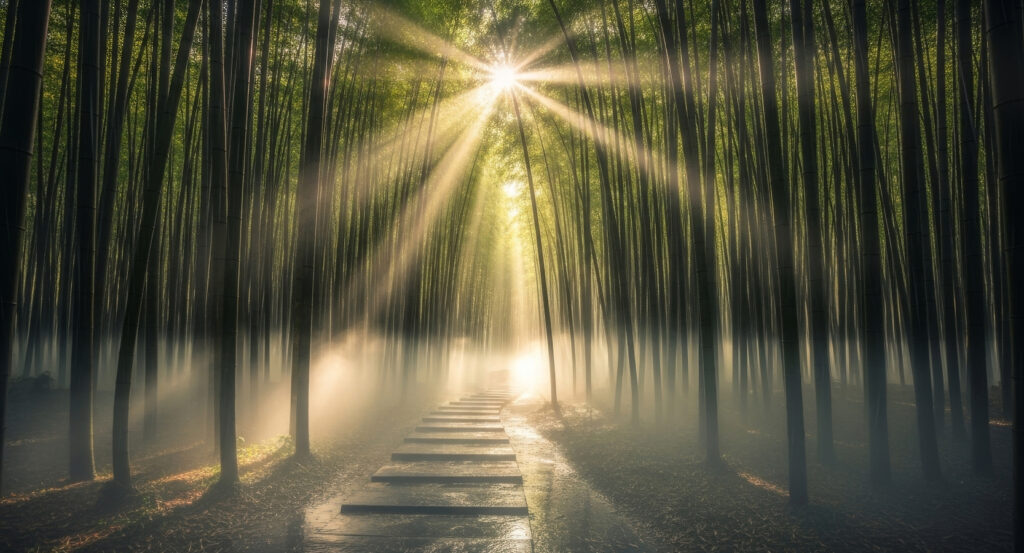
Why you should experience Ryotei Rangetsu in Kyoto, Japan.
Ryotei Rangetsu is Kyoto encountered with ancestral depth, culinary reverence, and layered intentionality, a ryokan where the type of presence it demands is the same kind that Kyoto itself cultivates over lifetimes, not hours.
Located in the quiet residential side streets near Arashiyama's river corridor, Rangetsu does not announce itself with grand facades or tourism signals. Arrival feels like stepping through a private gate into a world where heritage is not exhibited but lived. The architecture is composed rather than dramatic, infusing wood, stone, and garden with a quiet authority that never competes with nature or ceremony. Public spaces encourage slow movement. The lobby, lounges, and transitional areas are measured in scale and proportion, not volume or ornament, and they invite a psychological shift from external motion to internal tempo, the kind that is soft, reflective, and steady. Rooms at Ryotei Rangetsu extend this temperament with remarkable coherence. They are generously proportioned but never expansive for spectacle; instead, they feel deeply considered, each tatami panel, wood grain, and sliding paper screen purposeful, shaped by centuries of Japanese domestic logic. Beds and futons are set for restorative sleep, engineered to reset. Windows frame gardens, trees, and quiet streets, inviting light and shadow to interact with daily rhythm. The view is not a postcard; it is an ongoing discussion between interior calm and seasonal change. Furniture is subtle and purposeful: low tables for tea and contemplation, seating that encourages pause, work surfaces that support real use, and storage that allows you to unpack fully and settle in. Lighting is soft and intentional, calibrated not for mood effect but to support your body's rhythm from dawn through evening. Bathrooms at Rangetsu balance tradition with daily ease, emphasizing warmth, water quality, and spatial clarity. Deep soaking tubs and thoughtful circulation create a sense of private ritual. Dining at Ryotei Rangetsu is central to its identity, not as an amenity, but as a cultural and physical axis. Meals are seasonal, composed with precision and narrative, and presented with care. Courses unfold with intention, layers of flavor and texture that elevate eating into an extended act of presence. The culinary experience here aligns with Kyoto's seasonal and Zen traditions, where silence between bites matters as much as what is on the plate. Shared spaces extend the ryokan's quiet authority. Gardens, verandas, and transitional areas between rooms and landscape invite deliberate pause. These spaces are not designed for social display; they are places where you can think, reflect, read, write, or simply sit with the sound of wind, water, and quiet. Service at Ryotei Rangetsu is composed and highly practiced. Interactions are situationally aware rather than scripted, guided by timing and context rather than obligation.
What you should know about Ryotei Rangetsu.
Ryotei Rangetsu was shaped by the idea that hospitality in Kyoto is not about impression but duration, and its design, service model, and internal logic reflect that belief.
Rather than adopting stylistic motifs or curated heritage narratives, the ryokan's architecture and interiors are grounded in Japanese spatial philosophy: restraint, enclosure, translucency, and repetition. Public spaces were arranged as sequences of presence rather than destinations, transitions that ease the body and mind from the external world into internal calm. Materials were selected for tactile depth and aging quality: wood that warms and darkens with use, stone that absorbs light rather than reflects it, and textiles that silence sound rather than scatter it. Guest room layouts were developed through observation of how people actually inhabit space over multiple nights, unpacking routines, evening wind-down, early morning departures, resulting in interiors that feel intuitive. Furniture was integrated early in the architectural process to support practicality and presence. Storage, workspaces, and seating zones reflect real guest behavior rather than aesthetic checklist. Lighting systems were embedded to support circadian rhythm, using indirect sources and adjustable layers that reduce visual strain. Bathrooms were conceived as ritual spaces rather than transitional zones, emphasizing tactile finishes, water clarity, and spatial calm. Culinary spaces were envisioned as infrastructure for sustained presence rather than performance venues, reinforcing Kyoto's character of nourishment as ritual rather than event. Operational culture echoes this architectural intent. Staff training emphasizes cultural fluency, contextual awareness, and adaptive responsiveness. Interactions feel rooted in situation rather than protocol, enabling service that feels genuinely supportive rather than imposed upon you. Over time, the hotel has cultivated a loyal following among travelers who return not for novelty, but because the experience remains coherent and grounding under repeated stays. In a city where many accommodations oscillate between heritage signal and international neutrality, Ryotei Rangetsu stands apart by honoring context through presence, not performance.
How to fold Ryotei Rangetsu into your trip.
Ryotei Rangetsu works best when you allow it to function as a temporal anchor for your Kyoto experience, a place to return to with intention, rather than a waypoint you pass through.
Begin mornings early and quietly, stepping out into Kyoto's quieter precincts while noise is still low and light is soft. Walk nearby temple paths and garden routes before crowds peak, letting the slow clarity of the ryokan follow you outward. Because Ryotei Rangetsu sits slightly removed from the densest tourist corridors yet remains accessible, returning midday feels like restoration. Come back to rest, read, reflect, or sit in the garden before heading out again. Afternoons lend themselves to sustained exploration: quieter shrines, galleries, and side streets reward unhurried attention. Evenings unfold with coherence. Dine thoughtfully at the ryokan, attend cultural performances nearby, or walk tree-lined streets as lantern light softens into dusk before returning to a space that absorbs energy. Late nights feel grounded because the ryokan's interior language mirrors the city's descent into quiet. Ryotei Rangetsu pairs especially well with extended stays, repeat visits, cultural immersion, and itineraries focused on presence.
Where your story begins.
Foresyte Travel reveals places that feel extraordinary long before you arrive.
Experience premium editorial crafted for luxury travelers.

















































































































