Why you should experience National Military Museum Egypt in Cairo, Egypt.
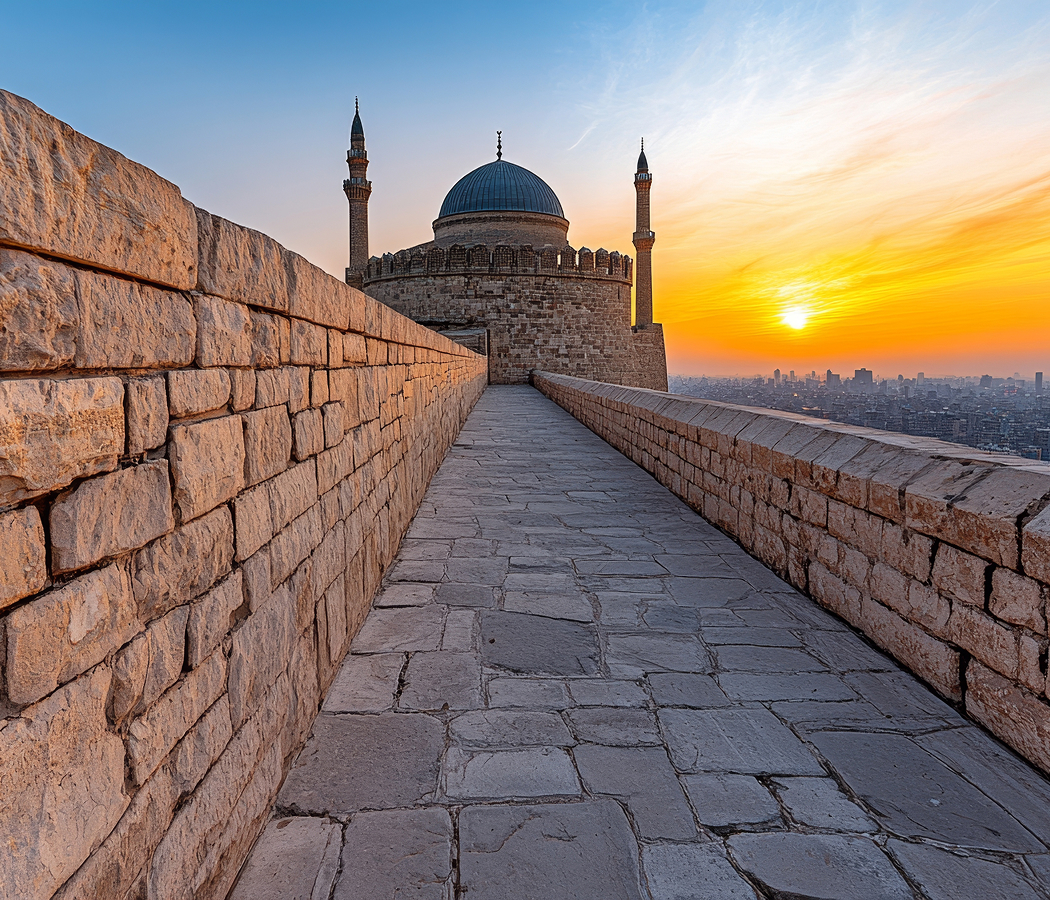
National Military Museum Egypt is Cairo's mirror of power, a vaulted gallery within the Saladin Citadel where seven centuries of conflict, courage, and nation-building converge into one living chronicle.
Housed within the Harem Palace of Muhammad Ali Pasha, this museum does more than display relics; it stages Egypt's transformation from medieval empire to modern statehood. Cannon barrels line the marble courtyard like silent witnesses, frescoes blaze with scenes of valor, and beneath ornate Ottoman ceilings hang the stories of armies that shaped civilizations. The air smells faintly of brass and history, and through arched windows, Cairo unfurls below, a living city still defined by the rhythm of defense and rebirth. To stand here is to feel the heartbeat of Egypt's endurance, rendered not in myth, but in iron and marble.
What you should know about National Military Museum Egypt.
National Military Museum Egypt at Saladin Citadel occupies the Harem Palace, originally built in the early 19th century as part of Muhammad Ali's vision for a modernized Egypt.
It was officially converted into a museum in 1949, marking one of the earliest efforts to centralize Egypt's military heritage in a single national archive. Yet the building itself is history, its walls lined with Turkish tiles, marble floors inlaid with Ottoman motifs, and high ceilings adorned with gilded medallions that once reflected candlelight from royal banquets. Inside, the museum is organized chronologically, tracing Egypt's military evolution from the Pharaonic era to the October War of 1973. Exhibits span thousands of years: bronze-age daggers from Thebes, Mamluk sabers engraved with Qur'anic script, Napoleonic muskets captured after the French campaign, and the sleek uniforms of Egypt's modern officers. The Pharaonic Hall features replicas of war chariots and depictions of the Battle of Kadesh, among history's first recorded peace treaties, signed between Ramses II and the Hittites. The Mamluk Gallery showcases curved swords and shields etched with verses for divine protection, while the Ottoman section holds artillery forged in Egypt's earliest foundries. The Modern Warfare Hall tells a more recent story, from the 1952 Revolution that ended monarchical rule to the Arab-Israeli conflicts, demonstrated through maps, propaganda posters, and personal artifacts from Egyptian soldiers. Among the museum's most moving exhibits is the preserved uniform of President Anwar Sadat, worn during the October War, displayed beside his handwritten field notes. A newly added wing commemorates Egypt's participation in UN peacekeeping missions, underscoring the nation's enduring role on the world stage. Together, these rooms trace not only the evolution of warfare but the evolution of national identity, from the sword to the flag.
How to fold National Military Museum Egypt into your trip.
National Military Museum Egypt is among the crown jewels of the Saladin Citadel, and visiting it deepens your understanding of Cairo's layered past, where faith, architecture, and defense intertwine.
You'll find it at the southern end of the citadel complex, adjacent to the Mosque of Muhammad Ali. Allocate 90 minutes to two hours to fully experience its extensive galleries. Start in the central courtyard, where early cannons and anti-aircraft guns stand beneath the open sky, their placement intentionally aligned with Cairo's horizon. Inside, follow the chronological order, beginning with the ancient warfare displays on the ground floor, then progressing upward through the Mamluk and Ottoman halls toward the 20th-century exhibits. Don't miss the dioramas reconstructing major battles, from Acre to El Alamein, rendered with astonishing detail. On your way out, pause at the large portrait of Muhammad Ali Pasha, his gaze stern yet visionary, as though he still commands the citadel he transformed into a beacon of modernity. The museum's rooftop terrace, often overlooked, offers a panoramic view that rivals even the citadel's southern bastion, domes, spires, and the Nile unfolding in every direction. Combine your visit with a tour of the Mosque of al-Nasir Muhammad and the Well of Joseph nearby for a full sweep of the citadel's history. Mornings are best for light and crowd control, though the museum's interior remains cool throughout the day. Bring patience, curiosity, and a readiness to see beyond the battles, because National Military Museum Egypt is less about war and more about what Egypt has always fought for: sovereignty, identity, and the endurance of civilization itself.
Where your story begins.
Foresyte Travel reveals places that feel extraordinary long before you arrive.
Experience premium editorial crafted for luxury travelers.