
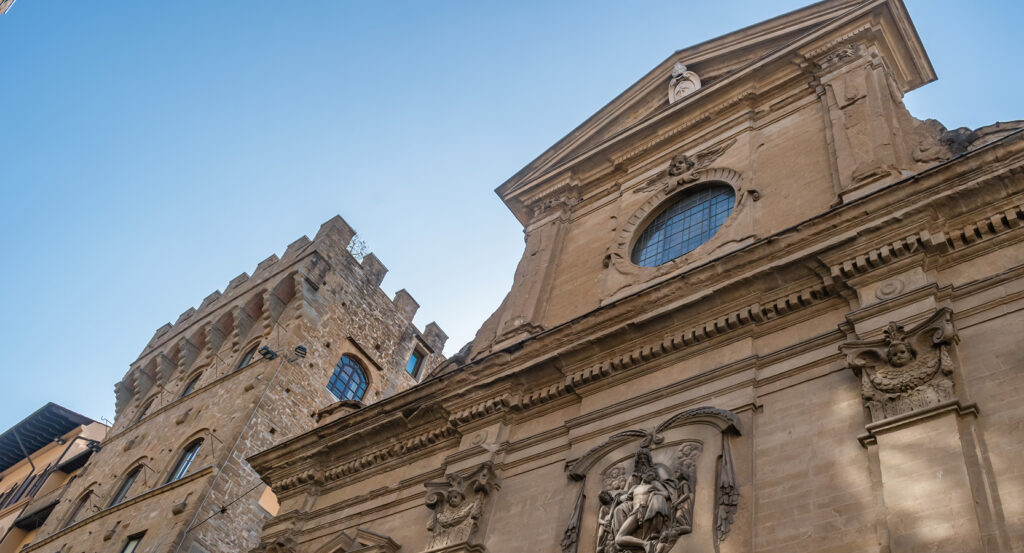
Why you should experience the Sassetti Fresco Cycle in Florence, Italy.
The Sassetti Fresco Cycle at Santa Trinita in Florence is among the Renaissance's most captivating visual narratives, a seamless blend of faith, civic pride, and human presence painted in breathtaking color.
Created between 1482 and 1485 by Domenico Ghirlandaio, this series transforms the life of Saint Francis of Assisi into a Florentine story, setting sacred events against the familiar backdrops of 15th-century Florence. Inside the small, vaulted Sassetti Chapel, every inch of wall comes alive: Ghirlandaio's figures move through the Piazza della Signoria, climb the steps of the Palazzo Vecchio, and kneel within churches that still stand today. Saints mingle with bankers, merchants, and even members of the Medici family, blurring the boundary between the divine and the civic. What makes the fresco cycle so extraordinary is its humanity, its faces, gestures, and landscapes radiate warmth and familiarity. To stand before it is to feel Florence at its most visionary: a city that painted holiness into the fabric of its own streets.
What you should know about the Sassetti Fresco Cycle.
The Sassetti Fresco Cycle isn't simply religious art, it's a declaration of Florence's character at the height of the Renaissance.
Francesco Sassetti, a powerful banker and confidant of Lorenzo de' Medici, commissioned Ghirlandaio to honor both his faith and his legacy. The artist responded with a revolutionary approach: he set the life of Saint Francis entirely within contemporary Florence, turning biblical narrative into civic allegory. The cycle's most famous scene, The Confirmation of the Franciscan Rule, unfolds before the Palazzo Vecchio, the seat of Florentine government, where Pope Honorius III is portrayed approving the Franciscan order as Florentine citizens look on. Ghirlandaio filled the composition with portraits of real people: Lorenzo de' Medici, Sassetti himself, and other prominent figures of the age. The frescoes' precise architectural renderings also preserve a visual record of Renaissance Florence, from the façade of Santa Trinita to the thriving streets around it. Above, Ghirlandaio's use of perspective and natural light demonstrates the full flowering of humanist painting, where sacred truth is found through worldly observation. These frescoes became a visual manifesto of the Medici era: faith reimagined through reason, devotion through artistry.
How to fold the Sassetti Fresco Cycle into your trip.
To experience the Sassetti Fresco Cycle fully, enter Santa Trinita with intention and allow yourself to linger in its chapel.
The frescoes line the walls and arch of the Sassetti Chapel, located to the right of the main altar. Begin by standing in the center of the space and scanning the lower registers, the Renunciation of Worldly Goods, The Trial by Fire, and The Miracle of the Stigmata, noting how each blends the miraculous with everyday Florentine life. Then lift your gaze to the grand Confirmation of the Rule, where the architectural precision and portraiture merge into a vision of civic theology. Finally, step closer to the altar and study The Adoration of the Shepherds, Ghirlandaio's crowning work in the cycle: a luminous, naturalistic nativity rendered in quiet reverence. Visit in the morning or late afternoon, when the chapel's warm light enhances the frescoes' earthy reds and soft blues. For a richer understanding, compare these scenes with Ghirlandaio's later work in the Tornabuoni Chapel at Santa Maria Novella, both capture Florence's genius for turning faith into living history. The Sassetti Fresco Cycle isn't just a sequence of paintings; it's Florence's soul in fresco, a city's belief in art as its truest prayer.
Where your story begins.
Foresyte Travel reveals places that feel extraordinary long before you arrive.
Experience premium editorial crafted for luxury travelers.




















































































































