
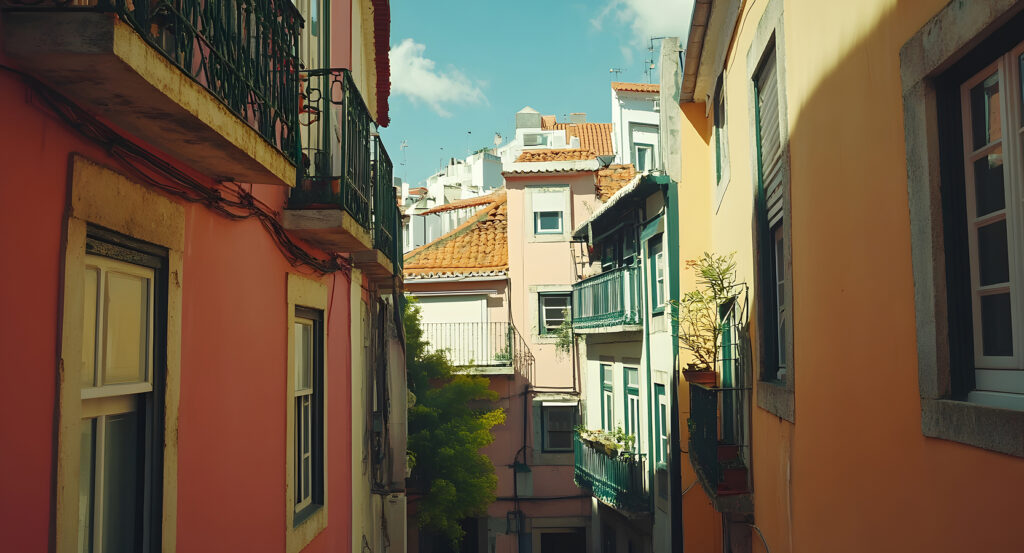
Why you should experience Santiago de Alfama - Boutique Hotel in Lisbon, Portugal.
Santiago de Alfama - Boutique Hotel is where Lisbon's ancient soul meets refined, intimate luxury, where centuries of history unfold around you in soft, elegant layers, and where stepping inside feels like being welcomed into a beautifully restored manor perched just beneath the castle, romantic, atmospheric, and deeply, unmistakably Lisbon.
Set within a 15th-century palace on Rua de Santiago, among Alfama's most storied streets, the hotel embraces its origins with quiet grandeur. The façade reflects the enduring beauty of old Lisbon, arched stone entrances, pastel tones, wrought-iron balconies, and tall windows that catch the shifting glow of Alfama's hillside light. But the moment you step inside, the world transforms into a contemporary sanctuary shaped by history and modern design. High ceilings, hand-selected antiques, soft textiles, sculptural lighting, polished wood, curated art, and sunlit sitting areas blend effortlessly to create an ambiance that feels warm, refined, and profoundly personal. Rooms and suites continue this marriage of heritage and modernity with uniquely shaped layouts, elegant furnishings, and gentle color palettes inspired by the Tagus and the terracotta rooftops outside. Expect plush bedding wrapped in crisp linens, thoughtful lighting that enhances the room's natural architecture, handcrafted décor, and windows framing Alfama's timeless cityscape, narrow stairways, cathedral towers, tiled façades, and the shimmering river in the distance. Suites offer more expansive spaces with sitting areas, sloping ceilings, original moldings, or freestanding tubs that turn your stay into an experience rather than simply a place to sleep. Bathrooms are luxuriously understated with rainfall showers, stone finishes, illuminated mirrors, refined vanities, and amenities chosen for softness, scent, and physical pleasure. The hotel's dining program elevates the experience further. A Fábrica de Santiago, the in-house restaurant, blends Portuguese tradition with contemporary culinary craft, fresh seafood, seasonal produce, local cheeses, indulgent pastries, and wines drawn from Portugal's most compelling regions. Breakfast is a highlight: artisanal breads, eggs prepared to order, fruit, yogurt, charcuterie, cakes, and rich Portuguese coffee served in a bright, elegant room with soft music and morning light pouring through tall windows. The adjoining café and bar extend the feeling of a stylish Lisbon home, cozy corners for wine, cocktails, or a quiet afternoon with a book and a breeze drifting in from the Alfama hillside. Service at Santiago de Alfama is exceptional, warm, intuitive, deeply personal, and delivered with genuine affection for the neighborhood and its history. Staff members help you navigate Alfama's labyrinth of alleys, arrange restaurant bookings, recommend fado houses, organize transfers and experiences, and ensure every moment feels effortless. Their hospitality is sophisticated yet unpretentious, making you feel like a welcomed resident of a historic Lisbon home. And the location is magnetic. The hotel sits at the heart of Alfama, Lisbon's oldest and most atmospheric neighborhood, steps from Sé Cathedral, Miradouro de Santa Luzia, São Jorge Castle, the Fado Museum, medieval stairways leading toward the river, and the winding alleys that define Alfama's soul. At night, you hear faint echoes of fado drifting from nearby taverns; in the morning, the sunlight hits the rooftops in warm, golden waves; and at all hours, you feel enveloped by Alfama's rhythm, historic, soulful, and utterly enchanting.
What you should know about Santiago de Alfama.
Santiago de Alfama stands on land layered with two millennia of human history, land tied to Roman foundations, Moorish walls, medieval legends, early Christian pilgrimages, noble residences, and even the political upheavals that shaped modern Portugal.
In Roman times, this hillside belonged to Olisipo, the early settlement that predated Lisbon. Archaeological discoveries around the hotel revealed Roman roads, pottery fragments, foundations of domestic structures, and drainage systems that once zig-zagged down the slope toward the river. When the Moors ruled Lisbon from the 8th to the 12th century, the area formed part of the fortified medina that surrounded what is now São Jorge Castle, housing soldiers, officials, artisans, and families. The twisting, narrow lanes of Alfama, still visible from the hotel's windows, trace the organic urban pattern shaped by this period. After the Christian reconquest, the area around the hotel became closely tied to the medieval Igreja de Santiago, the parish associated with St. James, patron of pilgrims. It is believed that early Portuguese pilgrims began the Camino de Santiago from this very spot. The street where the hotel stands, Rua de Santiago, preserves this ecclesiastical legacy, and historical records suggest that parts of the building may have belonged to parish residences or administrative structures tied to the church. Following the 1755 earthquake, Alfama endured less damage than most of Lisbon due to its sturdy foundations and irregular medieval layout. Still, parts of the block where the hotel sits were rebuilt or reinforced, incorporating a blend of medieval stonework, early-modern carpentry, and Pombaline engineering techniques. When the palace that became Santiago de Alfama was renovated, original beams, stone arches, lime-plaster walls, and centuries-old construction details were uncovered, revealing architectural layers spanning from the medieval period to the Enlightenment. A lesser-known historical moment unfolded right outside the hotel's door: during the Carnation Revolution of 1974, some of Alfama's streets, including those around Rua de Santiago, filled with crowds who witnessed the final hours of Portugal's dictatorship and the rebirth of the nation's democracy. This gave the neighborhood a symbolic role in the nation's modern identity. Throughout the 19th and early 20th centuries, the building housed noble families, then artists, musicians, members of Lisbon's cultural class, and later multi-family residences typical of Alfama's working-class history. Restorers carefully preserved these layers during the transformation into a boutique hotel, ensuring the property would remain historically authentic while offering modern luxury. Today, Santiago de Alfama stands as a living monument to Lisbon's layered history, carrying the touch of Romans, Moors, medieval pilgrims, aristocrats, revolutionaries, and contemporary travelers who seek beauty, heritage, and serenity under one roof.
How to fold Santiago de Alfama into your trip.
Santiago de Alfama - Boutique Hotel becomes the intimate, atmospheric heart of your Lisbon experience, where mornings begin in golden castle light, afternoons drift into panoramic hilltop wanderings, and evenings settle into fado, wine, and the quiet magic of Alfama's medieval lanes.
Start the morning with breakfast in the elegant dining room before stepping outside to Miradouro de Santa Luzia, just a short walk away. From here, Lisbon opens beneath you, terracotta rooftops, the Tagus shimmering in the distance, church towers rising above twisting alleys, and sunlight cascading across the hillside. Wander upward toward São Jorge Castle, exploring narrow stairways, hidden terraces, stone walls, and viewpoints that reveal Alfama's full beauty. Return to your room midday for a rest, then head downhill toward the Sé Cathedral and the riverfront, where Baixa's grand squares contrast beautifully with Alfama's medieval character. Spend the afternoon exploring the Fado Museum, riding Tram 28 through the hills of Graça, or wandering Chiado's bookstores and elegant streets. As evening approaches, share a drink at a rooftop terrace or enjoy golden hour from one of Alfama's miradouros before slipping into a fado house for dinner and music, raw, resonant, and unforgettable. Afterward, wind slowly through Alfama's lantern-lit alleys, quiet corners, soft guitar notes drifting from taverns, the scent of grilled sardines in the air, and the sound of distant church bells echoing through centuries of history, before returning to your serene room above the city's oldest soul.
Where your story begins.
Foresyte Travel reveals places that feel extraordinary long before you arrive.
Experience premium editorial crafted for luxury travelers.














































































































