Why Zona Arqueológica de Muyil matters.
Zona Arqueológica de Muyil is an ancient Maya ceremonial center where Muyil's tropical forest and freshwater lagoons meet the architectural achievements of a long-lived trading settlement, the maritime commerce of the eastern Yucatán Peninsula and the waterways that connected inland communities with the Caribbean Sea.
Situated south of Tulum along Federal Highway 307, the archaeological zone occupies a forested limestone landscape near Laguna Muyil, with ceremonial structures rising among tropical trees and ancient transportation routes extending toward the freshwater channels of the surrounding wetland system. Stepped pyramids, rectangular masonry buildings and raised platforms emerge from dense vegetation, preserving the spatial organization of a settlement shaped by commerce and religious activity. The site's principal architectural groups stand along cleared pathways beneath a mature forest canopy, with surviving stone structures displaying construction techniques associated with the Petén architectural tradition. The surrounding landscape contains freshwater lagoons, seasonal wetlands and interconnected channels that historically supported transportation between inland settlements and the Caribbean coastline. The result is an exceptionally significant archaeological landscape whose architectural preservation, long occupation and relationship with the surrounding waterways establish one of Quintana Roo's most important ancient Maya settlements.
What defines Zona Arqueológica de Muyil.
Zona Arqueológica de Muyil is best known for its long history of Maya occupation, its distinctive Petén-style architecture and its importance within the commercial networks connecting inland settlements with the Caribbean coast. Archaeological evidence places the settlement's origins within the Late Preclassic period, with occupation beginning several centuries before the Common Era. Its location near freshwater lagoons provided access to essential resources and established opportunities for transportation through the surrounding wetland landscape. The settlement developed within a region characterized by tropical forest, porous limestone bedrock and extensive underground freshwater systems. During the Classic period, Muyil expanded as a ceremonial and commercial center associated with the broader political networks of the eastern Yucatán Peninsula. Its inhabitants maintained connections with inland communities through established routes linking the coastal lowlands with major Maya settlements. Architectural development incorporated substantial masonry structures, stepped platforms and temple buildings associated with religious and administrative functions. The settlement's principal buildings demonstrate stylistic relationships with the Petén region of northern Guatemala, indicating cultural connections extending beyond the immediate Caribbean coast. The construction of ceremonial complexes required organized labor, access to building materials and the coordination of specialized architectural knowledge. Muyil's commercial importance increased through its relationship with freshwater channels connecting the inland lagoons to coastal waterways. These routes facilitated the movement of goods between inland settlements and maritime trading networks extending along the Caribbean shoreline. Merchants transported commodities including salt, textiles, agricultural products and valuable materials through interconnected regional markets. The settlement continued to be occupied during the Postclassic period, demonstrating an unusual degree of continuity across major political changes affecting Maya civilization. Its commercial position supported activity after the decline of several major Classic-period centers, preserving its relevance within changing regional trading networks. Spanish conquest and the disruption of established economic systems contributed to the eventual abandonment of the settlement's principal urban functions. The surrounding forest gradually covered substantial portions of the architectural remains, preserving structures beneath vegetation and accumulated sediment. Modern archaeological investigation and conservation established Muyil as an important site for understanding long-term Maya settlement, inland transportation and the relationship between ceremonial architecture and regional commerce.
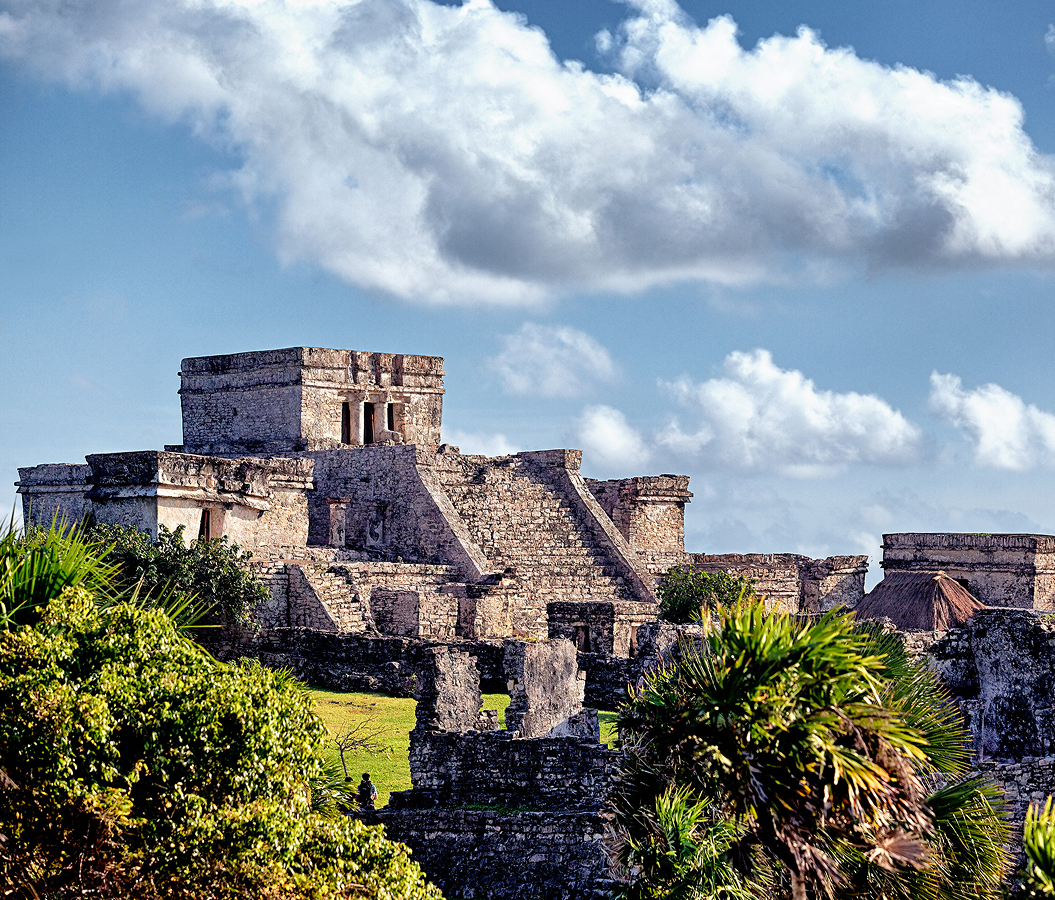
El Castillo forms the principal architectural structure within the archaeological zone, rising above the surrounding forest as a substantial stepped pyramid associated with ceremonial activity. Its design incorporates a steep central staircase, multiple construction levels and a summit temple distinguished by architectural features associated with the Petén tradition. The building's vertical proportions and carefully arranged masonry demonstrate connections with architectural practices developed in the southern Maya lowlands. The summit structure preserves elements of the ceremonial organization characteristic of major Maya temple complexes. The site's surrounding architectural groups contain smaller platforms, masonry buildings and open spaces associated with administrative, residential and ritual functions. These structures demonstrate the arrangement of ceremonial activity around a principal temple complex, establishing a hierarchical organization within the settlement. The building known as Structure 7H3 preserves distinctive architectural elements associated with the site's early development, including masonry construction techniques characteristic of the regional tradition. Surviving wall surfaces and structural remains provide evidence of multiple construction phases, indicating architectural modifications during the settlement's extended occupation. The surrounding forest contains tropical hardwoods, palms and other vegetation adapted to the limestone soils and seasonal rainfall of the eastern Yucatán Peninsula. Its dense canopy creates a distinctive archaeological setting in which ancient buildings appear among mature trees and extensive root systems. The site's relationship with the nearby lagoon system demonstrates the importance of freshwater access within the peninsula's otherwise limited surface drainage network. Ancient Maya engineers and merchants used natural waterways and modified channels to facilitate movement between settlements and coastal trading routes. These transportation connections supported commercial exchange and established links between inland ceremonial centers and the maritime economy of the Caribbean. The broader archaeological landscape includes evidence of settlement extending beyond the principal ceremonial structures, demonstrating the relationship between religious institutions and surrounding residential communities. Conservation efforts preserve surviving masonry structures and manage vegetation growth that could damage architectural remains. Zona Arqueológica de Muyil's continuing significance rests in its long occupation, distinctive architectural traditions and preservation of a Maya settlement closely connected with the freshwater transportation networks of the eastern Yucatán Peninsula.
How Zona Arqueológica de Muyil fits.
Zona Arqueológica de Muyil works as the historical anchor for a southern Riviera Maya outing connecting the freshwater landscapes of the eastern Yucatán Peninsula, the protected ecosystems of the Caribbean coast and the ancient Maya settlements that developed around regional trading routes.
Begin at Laguna Muyil, the freshwater lagoon situated near the archaeological settlement within the extensive wetland landscape of southern Quintana Roo. The lagoon occupies a shallow depression in the peninsula's limestone terrain, receiving freshwater through the surrounding groundwater and wetland systems. Its waters support aquatic vegetation, fish and numerous bird species associated with tropical freshwater environments. The lagoon historically formed part of a transportation network connecting inland settlements with coastal waterways, allowing the movement of people and commercial goods across the surrounding landscape. Its shoreline preserves the ecological relationship between tropical forest, freshwater wetlands and the ancient settlement's commercial geography. Continue to Laguna Chunyaxché, also known as Laguna de Chunyaxché, a freshwater lagoon connected with the surrounding wetland channels of the southern Riviera Maya. The lagoon forms part of a broader system of shallow waterways extending through mangrove forests and tropical vegetation toward the Caribbean coast. Its sheltered waters support fish, aquatic plants and bird species associated with freshwater and brackish environments. Ancient Maya communities used the connected waterways for transportation and commercial exchange, establishing routes through a landscape where dense forest limited overland movement. The lagoon's surrounding vegetation preserves the ecological character of the wetland environments that supported these historic activities. Conclude at Reserva de la Biósfera Sian Ka'an, the extensive protected landscape established in 1986 and inscribed as a UNESCO World Heritage Site in 1987. The reserve encompasses tropical forests, mangrove wetlands, coastal lagoons, freshwater systems and marine habitats extending along the Caribbean shoreline. Its diverse ecosystems support jaguars, crocodiles, manatees and numerous resident and migratory bird species. The protected area also preserves archaeological remains associated with ancient Maya occupation, including historic waterways and settlements connected with regional commercial networks. Its conservation structure protects the ecological processes linking terrestrial, freshwater and marine environments across the eastern Yucatán Peninsula. The progression moves from Laguna Muyil's freshwater setting through Laguna Chunyaxché's connected wetland channels and culminates at Reserva de la Biósfera Sian Ka'an's extensive tropical ecosystems, connecting Zona Arqueológica de Muyil with the natural environments and transportation routes that sustained ancient Maya civilization.
Where your story begins.
Foresyte Travel reveals places that feel extraordinary long before you arrive.
Enjoy editorial crafted for luxury travelers.
Foresyte may earn a commission when you book.