
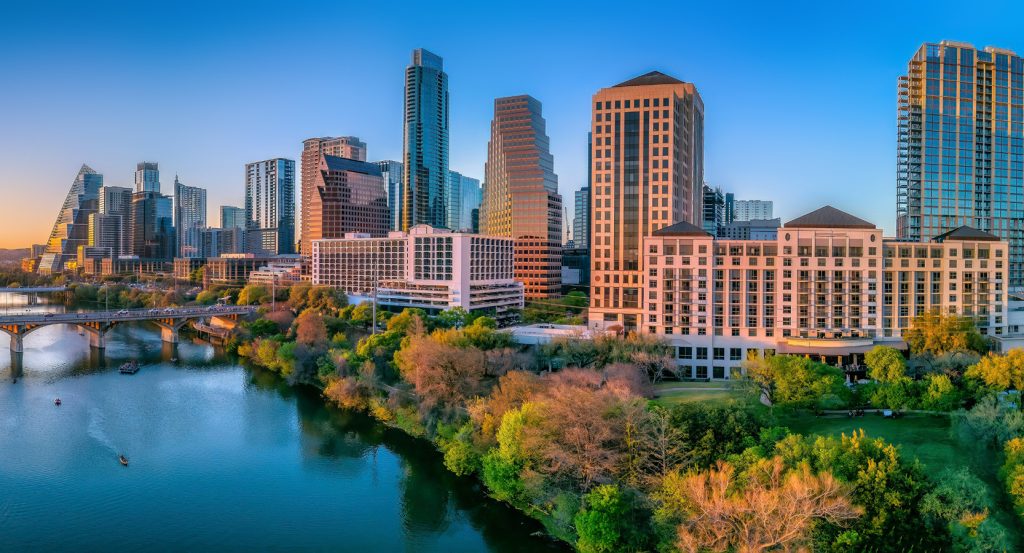
Why South Congress Avenue matters.
South Congress Avenue is a celebrated cultural corridor where South Congress's independent creative character meets Austin's historic commercial development, Texas music traditions and a distinctive concentration of restaurants, boutiques, performance venues and preserved roadside architecture.
Running through South Congress between Travis Heights and Bouldin Creek, the commercial corridor follows Congress Avenue south from the Ann W. Richards Congress Avenue Bridge toward Oltorf Street, crossing Riverside Drive, Academy Drive, Elizabeth Street and Monroe Street through successive blocks of historic storefronts, independent businesses and contemporary retail development. Low-rise brick buildings, restored neon signs and broad storefront windows preserve the architectural character of the avenue's twentieth-century commercial expansion. Sidewalk cafés, landscaped terraces and outdoor merchandise displays introduce pedestrian activity along a streetscape shaped by successive generations of local businesses. Historic motels and former automobile-oriented properties stand alongside contemporary hotels and carefully renovated retail buildings, creating a varied architectural setting beneath the avenue's mature trees. The result is a distinctive Austin thoroughfare whose independent businesses, preserved commercial architecture and longstanding musical associations have established its international reputation.
What defines South Congress Avenue.
South Congress Avenue is best known for its concentration of independent shops, restaurants, music venues and historic commercial buildings, establishing the corridor as one of Austin's most recognizable cultural destinations. The avenue originated within Austin's nineteenth-century transportation network, extending the principal north-south route beyond the Colorado River into developing residential and commercial districts. Its early importance increased as bridges and improved road connections strengthened movement between downtown and the settlements south of the river. Commercial development accelerated during the early twentieth century as automobiles encouraged the establishment of service stations, roadside businesses, restaurants and lodging properties. The corridor's position along a major transportation route supported businesses serving both local residents and travelers entering the capital. Motels, diners and automobile-related establishments introduced architectural forms associated with the expansion of American roadside commerce. The Avenue's commercial fortunes subsequently changed as suburban development and newer highways redirected traffic and investment toward other parts of the metropolitan area. During the 1970s and 1980s, independent entrepreneurs began occupying older storefronts, introducing music venues, vintage shops and restaurants into the existing commercial buildings. Their businesses contributed to the emergence of a distinctive neighborhood shopping district associated with Austin's independent cultural traditions. The Continental Club became an influential performance institution, strengthening the avenue's association with roots music, rockabilly, country and blues. Its development encouraged musicians and audiences to establish regular connections with the surrounding businesses and gathering places. The corridor experienced substantial reinvestment during the 1990s and early twenty-first century, attracting additional restaurants, boutiques and entertainment establishments. Historic preservation and commercial redevelopment subsequently introduced a combination of restored buildings and larger contemporary projects. South Congress developed into an internationally recognized destination associated with Austin's music culture, independent entrepreneurship and distinctive approach to neighborhood commerce.
The Continental Club opened in 1955 and became one of Austin's most influential live music establishments through decades of performances associated with country, rockabilly, blues and roots music. Its intimate stage and distinctive interior preserve an important connection with the city's mid-century entertainment traditions. The venue's programming has featured influential musicians including Stevie Ray Vaughan, Dale Watson and numerous performers associated with Austin's independent music community. Alview Boots established another enduring commercial presence, developing a substantial collection of Western footwear and apparel associated with Texas ranching and cowboy traditions. Its extensive displays of handmade boots introduce decorative leatherwork, traditional stitching and regional approaches to Western craftsmanship. Lucy in Disguise with Diamonds became associated with the avenue's eclectic retail culture through an elaborate collection of vintage clothing, costumes and theatrical accessories. Its colorful storefront and distinctive merchandise contributed to the corridor's reputation for independent shopping and creative self-expression. Home Slice Pizza introduced another influential neighborhood establishment, developing a substantial following through New York-style pizza and informal dining. Jo's Coffee became closely associated with South Congress through its outdoor service window and the prominent I Love You So Much mural painted on its exterior wall. The artwork developed into a recognizable expression of affection associated with Austin's public art culture. Hotel San José introduced a distinctive approach to hospitality through the restoration of a mid-century motel property into a contemporary boutique hotel. Its landscaped courtyard, restrained architecture and intimate gathering spaces contributed to the avenue's evolving accommodation offerings. The corridor's restaurant culture incorporates Texas barbecue, Mexican cooking, contemporary American cuisine and casual neighborhood establishments. Its concentration of independent businesses preserves a direct connection with the entrepreneurial traditions that shaped Austin's cultural development during the late twentieth century.
How South Congress Avenue fits.
South Congress Avenue works as the commercial anchor for a Central Austin outing connecting the city's waterfront recreation, its contemporary performing arts institutions and the preserved residential architecture associated with the development of South Austin.
Begin at Auditorium Shores, the expansive waterfront park occupying the southern bank of Lady Bird Lake. Its broad lawns extend between Riverside Drive and the water, providing substantial views of Downtown's skyline. The park has served as a major gathering place for concerts, festivals and outdoor recreation, contributing to the city's longstanding association with public music events. The Stevie Ray Vaughan Memorial honors the influential Austin blues guitarist through a bronze sculpture positioned near the waterfront. Its open landscape and adjoining pathways establish a direct connection between Austin's musical heritage and the recreational character of its central lakefront. Continue to Long Center for the Performing Arts, the major cultural institution overlooking the waterfront from the former Palmer Auditorium site. The performing arts complex opened in 2008 and incorporates architectural elements preserved from its predecessor, including a distinctive circular terrace and structural components associated with the earlier building. Its principal performance spaces accommodate opera, ballet, orchestral concerts and theatrical productions. The expansive exterior terrace provides commanding views across the water toward downtown's commercial towers. Its cultural programming contributes to Austin's established performing arts community through major productions and public events. Conclude at Big Stacy Neighborhood Park, the historic recreational landscape occupying a substantial portion of the Travis Heights neighborhood. The park developed during Austin's early twentieth-century expansion and incorporates mature trees, open lawns and established neighborhood pathways. Its spring-fed swimming pool provides a distinctive public recreation facility associated with the area's longstanding natural water resources. The surrounding landscape introduces residential architecture and established parkland within a short distance of South Congress's commercial activity. Its intimate scale and longstanding neighborhood associations establish an important connection with the residential development of South Austin. The progression moves from Auditorium Shores' open waterfront grounds through Long Center for the Performing Arts' cultural facilities and culminates at Big Stacy Neighborhood Park's established recreational landscape, connecting three distinctive dimensions of South Austin's cultural and neighborhood development.
Where your story begins.
Foresyte Travel reveals places that feel extraordinary long before you arrive.
Enjoy editorial crafted for luxury travelers.
Foresyte may earn a commission when you book.














































































































