Why you should experience South Water Street in Chicago, Illinois.
South Water Street is a distinguished corridor where the Loop's commercial heritage, Chicago's riverfront evolution, and the city's architectural ingenuity converge along one of downtown's foundational streets.
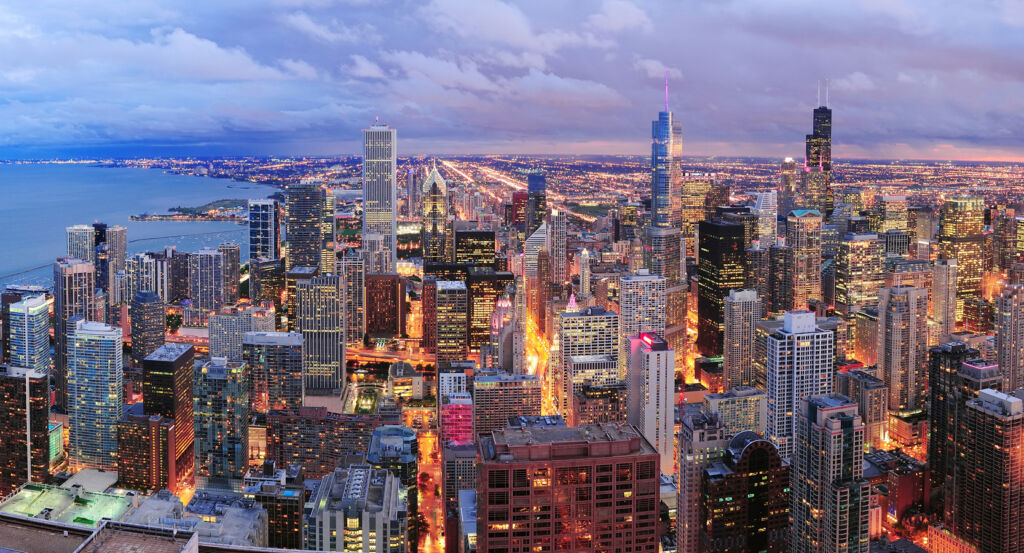
Running through the Loop between Lakeshore East and the Chicago River, the corridor links celebrated office towers, civic infrastructure, riverfront promenades, and historic commercial sites that collectively reflect nearly two centuries of urban development. Steel-and-glass skyscrapers, riverfront plazas, pedestrian connections, and carefully integrated public spaces define a streetscape shaped by engineering innovation and continual reinvention. Walking along South Water Street reveals how commerce, transportation, and riverfront planning established one of the streets that helped shape modern Downtown. The result is a corridor whose enduring character reflects the character of the Loop.
What you should know about South Water Street.
South Water Street is best known as the successor to Chicago's original South Water Street Market, the city's earliest wholesale produce district, which emerged during the 1830s along the south bank of the Chicago River and became a principal center of regional agricultural commerce. Congestion generated by wholesale trade eventually prompted relocation of the market to the South Water Market facility near South Ashland Avenue in 1925, allowing the downtown corridor to evolve into a modern business district characterized by commercial towers and civic infrastructure. Completion of surrounding buildings during the mid- and late twentieth century introduced significant examples of International Style and postmodern architecture while reinforcing South Water Street's importance within Chicago's expanding financial center. Continuing public investment in streetscape improvements, utility modernization, and pedestrian circulation has preserved the corridor's role as an important connection between the Loop and the riverfront.
Construction of Aon Center, completed in 1973 as Standard Oil Building and designed by Edward Durell Stone with Perkins & Will, accelerated commercial redevelopment surrounding South Water Street while establishing one of the city's defining office districts. The creation of the Illinois Center development by Skidmore, Owings & Merrill introduced a pioneering network of elevated plazas, below-grade service roads, and interconnected pedestrian passages that reshaped circulation east of Michigan Avenue. Successive transportation improvements led by the Chicago Department of Transportation, including bridge rehabilitation, intersection modernization, and pedestrian safety enhancements, have strengthened South Water Street's function within downtown while respecting its long-established role in the city's circulation network. Together, these architectural commissions, planning initiatives, and infrastructure investments demonstrate how South Water Street has continually adapted to changing commercial demands while preserving its historical importance within the Loop.
How to fold South Water Street into your trip.
South Water Street is best experienced through an exploration of the Loop's riverfront history, architectural innovation, and public spaces.
Begin at Chicago Riverwalk, where terraces, river overlooks, and interpretive spaces introduce the waterway that gave rise to Chicago's earliest commercial activity while establishing the historical context for South Water Street. Continue to McCormick Bridgehouse & Chicago River Museum, where exhibits on bridge engineering and river navigation deepen the story by explaining the infrastructure that allowed downtown commerce to flourish for generations. Conclude at The Plaza at Aon Center, where expansive civic space, contemporary architecture, and views across Millennium Park provide the historical and visual payoff by illustrating how the former wholesale riverfront evolved into one of Chicago's foremost corporate districts. The progression moves naturally from the river that established Chicago's commercial foundations to the engineering that sustained its growth before concluding within the modern skyline that emerged from that legacy, revealing how South Water Street chronicles the city's evolution from frontier trading post to global business center.
Where your story begins.
Foresyte Travel reveals places that feel extraordinary long before you arrive.
Experience premium editorial crafted for luxury travelers.