Why South Bank Parklands matters.
South Bank Parklands is a riverfront public landscape where South Brisbane's industrial and exhibition heritage meets the legacy of World Expo 88, the redevelopment of Queensland's former maritime infrastructure and the creation of a subtropical recreational precinct opposite Brisbane's central business district.
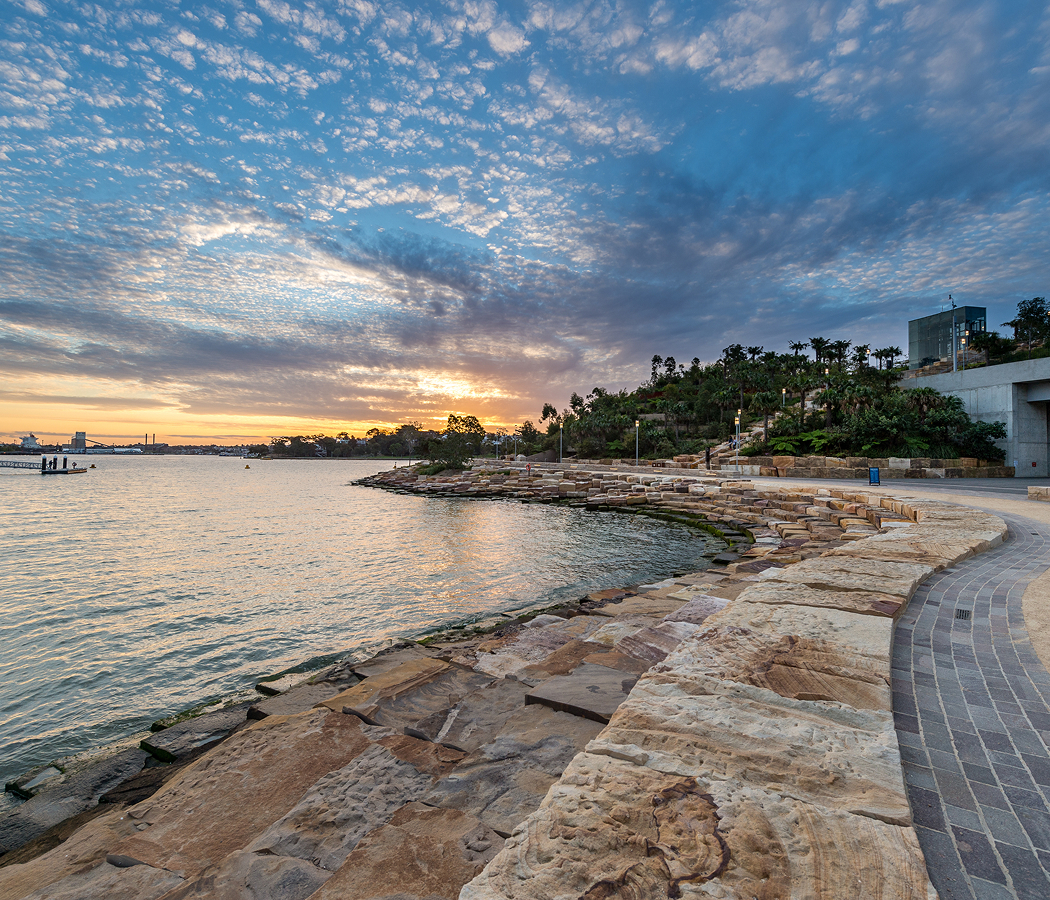
Extending along Clem Jones Promenade near Stanley Street Plaza and a short walk from South Bank railway station, the parklands occupy the southern bank of the Brisbane River between the Victoria Bridge approach and the Queensland Maritime Museum, facing the central business district across the river's broad northern bend. Landscaped gardens connect pedestrian promenades with swimming facilities, cultural spaces and waterfront terraces. Mature subtropical trees provide shade across lawns and pathways arranged between the river and surrounding streets. The shoreline incorporates constructed embankments, public gathering areas and connections to Brisbane's pedestrian bridge network. The result is a metropolitan parkland whose geography connects the city's former industrial waterfront with its international exhibition history and contemporary public recreation.
What defines South Bank Parklands.
South Bank Parklands is best known for its transformation of the World Expo 88 site into a permanent public landscape containing Streets Beach, the Arbour and extensive subtropical gardens. The southern bank of the Brisbane River forms part of the traditional Country of the Turrbal and Jagera peoples, whose communities maintained longstanding relationships with the river and its surrounding environments. European settlement brought substantial changes to the shoreline as Brisbane developed from a penal settlement into a commercial port and colonial capital. During the nineteenth century, South Brisbane became an important center of maritime trade, warehousing and industrial activity. Wharves, commercial buildings and railway infrastructure expanded along the river as the city's economy developed. The opening of Victoria Bridge strengthened connections between South Brisbane and the commercial district on the opposite bank. The area's transportation importance increased through railway development and the establishment of commercial facilities serving Queensland's agricultural and mining industries. During the twentieth century, changes in shipping practices and the relocation of industrial operations reduced the importance of the inner-city waterfront. The Queensland government selected the former industrial district as the principal site for World Expo 88, an international exposition held during Australia's Bicentenary. The exhibition opened on 30 April 1988 and attracted more than 18 million visits during its six-month operation. Its pavilions presented international cultural exhibitions, technological displays and architectural installations across the redeveloped waterfront. Following the exposition, public debate concerned the future of the substantial riverside site and the preservation of public access. The South Bank Corporation was established in 1989 to guide redevelopment of the former exhibition grounds. South Bank Parklands officially opened in 1992, establishing a permanent recreational landscape along the river. Subsequent improvements introduced additional gardens, cultural facilities and public spaces, strengthening the precinct's relationship with Brisbane's expanding metropolitan center.
Streets Beach occupies a central position within the parklands, incorporating an artificial swimming lagoon bordered by white sand and landscaped tropical vegetation. The swimming area provides a constructed beach environment beside the Brisbane River, with designated bathing zones and adjoining recreational spaces. Its design incorporates filtration systems and managed water conditions appropriate for public swimming. The Arbour extends through the parklands as a long pedestrian walkway supported by curved steel structures covered with flowering bougainvillea. Its repeated architectural frames create a continuous shaded route linking different sections of the precinct. The Nepalese Peace Pagoda preserves a structure originally constructed for World Expo 88, incorporating traditional Nepalese timber craftsmanship and elaborate carved ornamentation. The pagoda's design includes decorative roof elements, religious imagery and architectural details associated with Nepalese building traditions. Rainforest Walk contains subtropical vegetation arranged along shaded pedestrian paths, demonstrating plant communities associated with Queensland's humid environments. The parklands also contain ornamental ponds, landscaped lawns and garden spaces supporting public recreation. Clem Jones Promenade follows the riverfront, connecting viewing areas with pedestrian routes extending toward adjoining cultural and commercial districts. The Riverside Green provides open lawns overlooking the river and surrounding urban landscape. Public art installations and commemorative features occupy locations throughout the precinct, connecting the landscape with Brisbane's cultural development. The parklands' pedestrian infrastructure incorporates connections to the Goodwill Bridge and surrounding public transportation facilities. Restaurants and commercial premises occupy adjoining streets, supporting recreational use of the waterfront throughout the day and evening. The park's design combines swimming facilities, subtropical horticulture and pedestrian circulation within a former industrial site. Its continuing development preserves the public access established through the transformation of the World Expo grounds.
How South Bank Parklands fits.
South Bank Parklands works as the recreational centerpiece for a Central Brisbane itinerary connecting the city's performing arts institutions, cultural collections and the architectural development of its riverfront public precinct.
Begin at Queensland Performing Arts Centre, the cultural complex situated within the South Bank cultural precinct. Opened in 1985, the institution was developed as part of Queensland's investment in major performing arts facilities. Its architectural composition incorporates substantial performance halls and public foyers designed to accommodate opera, ballet, theater and orchestral music. The complex became a principal venue for Queensland Ballet, Queensland Symphony Orchestra and other performing arts organizations. Its development strengthened Brisbane's position as a center for major cultural productions, establishing permanent facilities for performances previously distributed across smaller venues. Continue to Queensland Museum Kurilpa, the natural history and cultural institution situated within the Queensland Cultural Centre. The museum traces its origins to 1862, when Queensland's colonial government established a public collection devoted to natural history and scientific investigation. Its collections expanded to include zoological specimens, geological objects, historical artifacts and cultural holdings associated with Queensland's development. The museum relocated to its South Bank premises in 1986, establishing a substantial exhibition facility within the emerging cultural precinct. Its exhibitions examine Queensland's biodiversity, scientific history and the cultural heritage of the state's communities. Conclude at Gallery of Modern Art, the contemporary art institution situated near the Brisbane River. Opened in 2006, the gallery was designed by Architectus and occupies a purpose-built structure incorporating substantial exhibition spaces and river-facing public areas. Its collections and exhibitions emphasize contemporary Australian, Asian and Pacific art, including painting, sculpture, installation and moving-image works. The gallery became a principal venue for the Asia Pacific Triennial of Contemporary Art, strengthening Brisbane's connections with artistic production across the region. Its architectural arrangement connects contemporary exhibition spaces with the surrounding cultural precinct and riverfront landscape. The progression moves from performing arts infrastructure through scientific and historical collections and culminates in contemporary artistic production, connecting South Bank Parklands with Brisbane's development as Queensland's principal cultural center.
Where your story begins.
Foresyte Travel reveals places that feel extraordinary long before you arrive.
Enjoy editorial crafted for luxury travelers.
Foresyte may earn a commission when you book.