Why Pala d'Oro matters.
Pala d'Oro is the heartbeat of Saint Mark's Basilica, a vision of heaven made tangible in gold.
It glows behind the high altar like an otherworldly sunrise, a mosaic of light and devotion that seems to breathe as the day passes. Step closer and the world narrows to this single masterpiece: 250 panels of gold cloisonné enamel, each one alive with blues, reds, and greens that have not faded in nearly a thousand years. The effect is transcendent, as if the saints themselves are suspended in light, their faces lit by the reflection of eternity. It's not just decoration; it's theology rendered in metal, Venice's way of turning faith into art that never dies.
What defines Pala d'Oro.
Pala d'Oro, meaning Golden Pall, began as a modest Byzantine altar panel commissioned in 976 by Doge Pietro Orseolo.
Over the next three centuries, it evolved into one of the most exquisite objects in Christian art. Venetian craftsmen expanded and embellished it with enamels imported from Constantinople, each crafted with powdered glass fused onto gold using heat and precision. The result is a luminous surface that doesn't merely reflect light, it captures and refracts it, giving the illusion of motion. The structure, completed 1345 under Doge Andrea Dandolo, contains over 1,900 precious gems, sapphires, rubies, emeralds, pearls, and amethysts, all set into gold filigree. At its center stands Christ Pantocrator, surrounded by the Archangels and Apostles, while the upper tiers depict scenes from the life of St. Mark. The enamels' origin ties Venice directly to Byzantium; many were looted from Constantinople during the Fourth Crusade, a controversial act of faith and empire that changed the course of art history. Few realize that the panel is double-sided, the back conceals a second layer of goldwork used for special ceremonies. When the Pala is opened on major feast days, it transforms the altar into a glowing vision of paradise. Its survival through centuries of floods, fires, and invasions is as miraculous as its creation, a masterpiece that captures both devotion and defiance.
How Pala d'Oro fits.
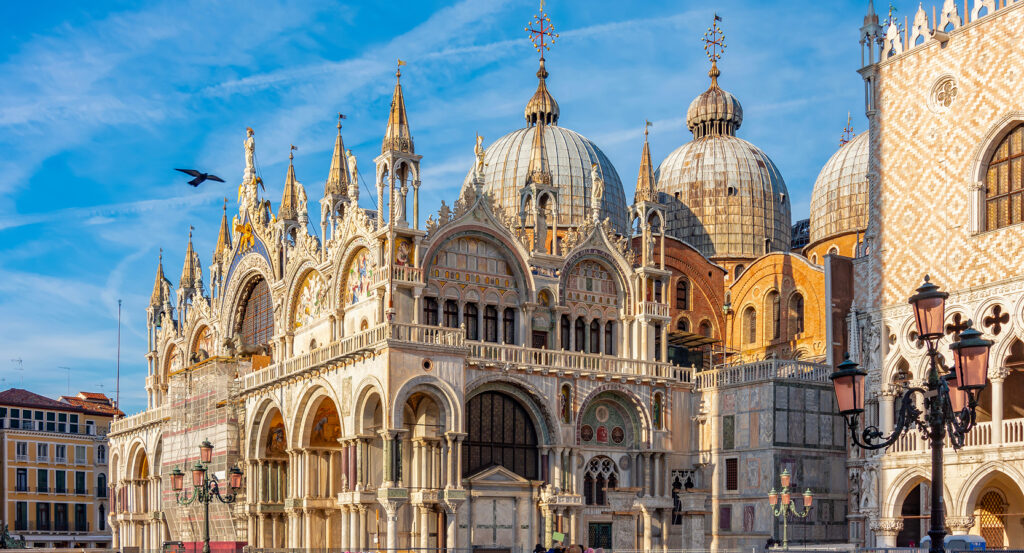
Inside Saint Mark's Basilica, move slowly toward the high altar, where Pala d'Oro waits behind a delicate screen.
A small admission fee grants you a close view, a privilege worth every cent. Approach when the basilica is quiet, ideally in the early afternoon when sunlight filters through the windows and ignites the gold in layers of flame. Take your time tracing the enamel panels, notice how each face seems slightly different, each gem intentionally placed to guide your eye upward. Step back occasionally to feel the scale; the Pala measures over 3 meters wide and 2 meters high, yet it feels infinite. If you're lucky enough to visit during a religious celebration, you may see it opened fully, revealing details hidden from ordinary view. Afterward, linger in the dim nave, your eyes will still shimmer from the afterimage of gold. When you finally step outside into the sunlit square, the marble of Venice will seem dull by comparison. Pala d'Oro isn't just the jewel of Saint Mark's Basilica, it's a glimpse of heaven's architecture, built not from stone, but from light.
Where your story begins.
Foresyte Travel reveals places that feel extraordinary long before you arrive.
Enjoy editorial crafted for luxury travelers.
Foresyte may earn a commission when you book.