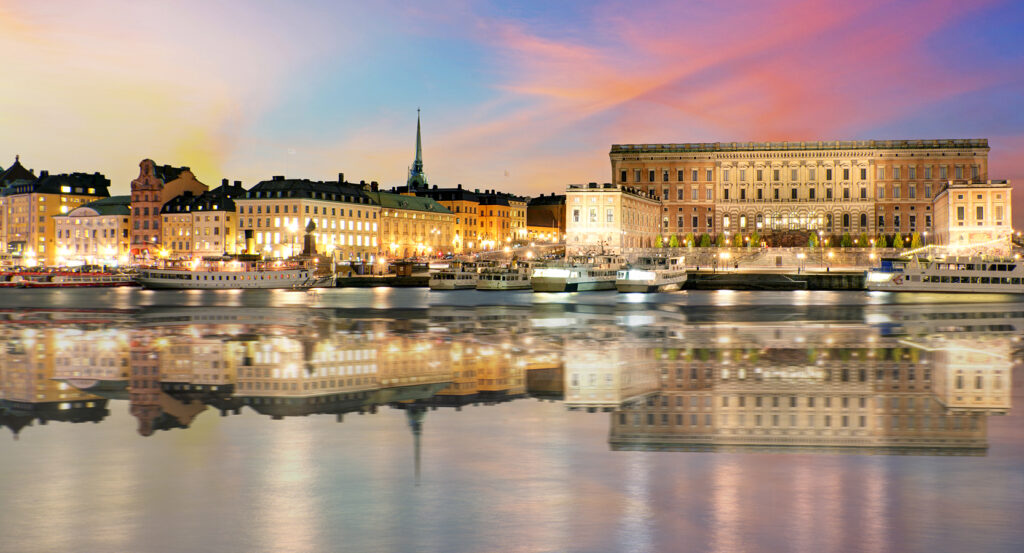
Why you should experience The Royal Armoury at The Royal Palace in Stockholm, Sweden.
Beneath the grand courtyards of the Stockholm Palace lies one of Europe's most dazzling vaults of history, The Royal Armoury, where centuries of Swedish pageantry, power, and personal stories come alive through steel, silk, and ceremony.
Stepping inside feels like entering the living memory of the monarchy itself. Gleaming suits of armor, jewel-encrusted saddles, and coronation carriages stand preserved beneath low light, each artifact whispering of royal triumphs and tragedies. The air is cool, reverent, a blend of museum quiet and cathedral awe. Here, you don't just look at history; you feel it. Gustav II Adolf's war armor still bears marks from battle, Queen Kristina's coronation dress still glimmers faintly under soft illumination, and the opulent state carriages gleam with gold leaf so radiant they seem almost holy. Each object transcends its function, becoming a vessel of legacy, a reminder that the Swedish crown has always been as much about endurance as grandeur.
What you should know about The Royal Armoury at The Royal Palace.
Founded in 1628 by King Gustav II Adolf, The Royal Armoury (Livrustkammaren) is Sweden's oldest museum, and its most personal.
It began as a royal command to preserve the king's armor from the Thirty Years' War, but quickly grew into a vast collection chronicling the intimate life of the monarchy. Unlike many European armories, it isn't merely a display of weaponry, it's a biography in objects. Among its treasures are Gustav Vasa's gilded helmets, the blood-stained shirt worn by Gustav II Adolf at the Battle of Lützen, and the elaborate sleighs used by 18th-century royals to glide across Stockholm's frozen waters. The coronation robes, heavy with gold embroidery, hang beside hunting attire and children's garments, a poetic contrast of ceremony and humanity. During Sweden's constitutional transition in the 19th century, the Armoury became a symbol of continuity, a way to preserve royal heritage even as the nation embraced democracy. The museum's curators have long championed storytelling over performance, presenting artifacts not as relics, but as keys to understanding the people behind the power. Every display feels deliberate, every light chosen to honor what time could not erase.
How to fold The Royal Armoury at The Royal Palace into your trip.
Begin your visit in the southern wing of the Stockholm Palace, where a modest entrance leads down into the vaulted halls of the Armoury.
Allow an hour, though you'll linger longer. Move slowly, letting each display tell its story. Start with the suits of armor and weapons, marveling at their craftsmanship, then follow the path toward the carriages and royal regalia. Don't miss the silver carriage built for King Charles XI, an ornate masterpiece that gleams like moonlight frozen in metal. The exhibits are laid out chronologically, guiding you from Sweden's age of empire to its modern ceremonial splendor. Take a moment at the royal children's room, where tiny garments and toys reveal the monarchy's most human side. Before you leave, step into the Armoury's reflective gallery, a mirrored corridor that symbolically connects the monarchy's past with its present. When you emerge into the sunlight of the palace courtyard, the echo of history lingers, like the faint ring of steel after battle. The Royal Armoury at the Stockholm Palace isn't merely a museum, it's Sweden's memory made visible, a cathedral of craftsmanship and legacy where the royal past continues to breathe.
Where your story begins.
Foresyte Travel reveals places that feel extraordinary long before you arrive.
Experience premium editorial crafted for luxury travelers.