Why The Grove Inn matters.
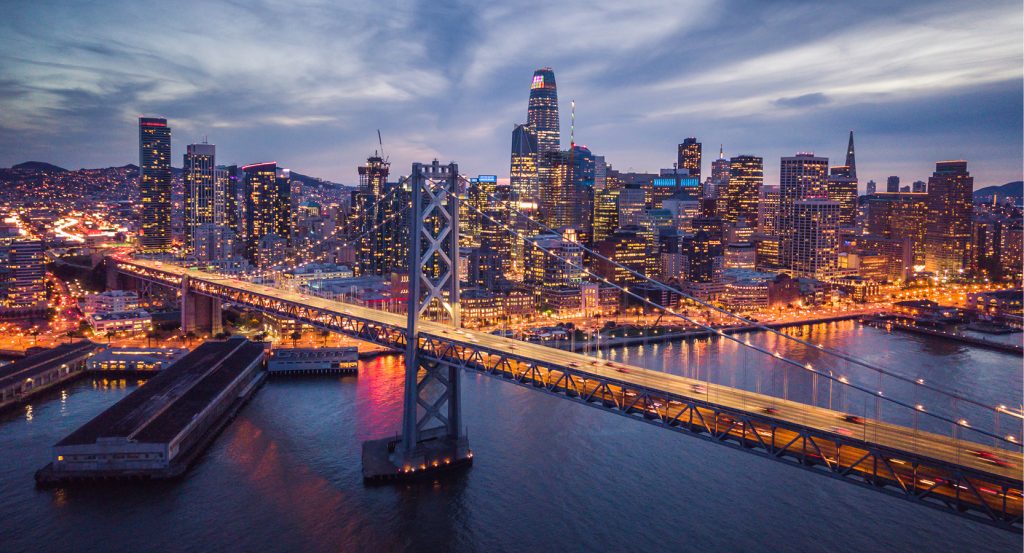
The Grove Inn is a storied inn where Alamo Square's Victorian architectural character meets a family-run boarding-house legacy through an 1865 Italianate residence that has welcomed lodgers across more than a century and a half of neighborhood change.
Set along Grove Street near Fillmore Street and just steps from Alamo Square, the inn occupies the historic district between the Victorian blocks surrounding Steiner Street, the Divisadero corridor extending west and the Western Addition streets reaching east toward the Fillmore cultural district. The Italianate building presents tall bay windows, bracketed cornices and a compact street-facing facade characteristic of San Francisco's nineteenth-century domestic architecture. Interior common areas retain decorative moldings, woodwork and the proportions of the original boarding house within a restrained contemporary refurbishment. Large front windows connect the domestic-scale interior with the surrounding neighborhood streets and their dense concentration of surviving Victorian buildings. The result is an inn whose preserved nineteenth-century architecture and intimate residential scale maintain a direct physical connection with the building traditions that define Alamo Square.
What defines The Grove Inn.
The Grove Inn is best known for an operating history reaching to 1865, when its Italianate Victorian building entered service as a boarding house during the final years of San Francisco's Gold Rush-era population expansion. An original operating certificate dated March 11, 1865 survives at the property and preserves a nightly price of $1.35 from its earliest period. The original lodging arrangement combined shared and private bathing facilities, with simple wash basins installed inside individual quarters. That configuration placed the building within a nineteenth-century boarding-house tradition that accommodated workers, newcomers and longer-term residents inside converted or purpose-built domestic structures across rapidly expanding American cities. Rosetta and Klaus Zimmermann purchased The Grove Inn in 1983, establishing the family ownership that has defined its modern history. Their acquisition followed a fire that severely damaged the eastern portion of the property, making restoration an immediate requirement of the new ownership. The Zimmermanns repaired the damaged structure and returned it to lodging use, preserving an operation that had already survived successive eras of neighborhood transformation around Alamo Square and the Western Addition. The family subsequently maintained the inn across the neighborhood's late twentieth-century revival, when restoration increasingly protected Victorian houses that had escaped earlier redevelopment and demolition. Ownership has remained with the Zimmermann family for more than four decades, an unusually long continuity for a small independent lodging property in Central San Francisco. The surviving 1865 certificate displayed inside the inn creates a direct physical link between that family enterprise and the building's original commercial life. The Grove Inn joins architectural survival with operating continuity, preserving a nineteenth-century boarding-house lineage inside the same Alamo Square building through fire, neighborhood upheaval and successive generations of San Francisco hospitality.
Klaus and Rosetta Zimmermann undertook another major phase of stewardship in 2014 through an extensive infrastructural seismic retrofit accompanied by upgrades across the property. The structural intervention addressed the particular vulnerability of an older San Francisco building whose life spans the city's major earthquake eras. COVID-19 closures created the opportunity for a second comprehensive renewal in 2020, when the family refreshed the private interiors and common areas during the interruption in normal lodging activity. Original Victorian features remained integral to that work, keeping historic architectural elements legible inside the updated interior. Large bay windows continued to define the principal exterior-facing spaces after the refurbishment. Contemporary furnishings introduced a cleaner visual layer against the surviving nineteenth-century fabric. LED smart mirrors and updated bathroom fixtures brought modern technology into the older residential shell through small-scale interventions. Complimentary tea service preserves the informal domestic character associated with the property's long boarding-house history. The inn no longer operates a breakfast service, shifting the morning routine outward toward neighborhood businesses around Alamo Square and Divisadero. Alamo Square Café on Fillmore Street functions as one nearby breakfast option, connecting the small property with the independent food businesses surrounding it. The combination of seismic reinforcement, interior renewal and retained Victorian features demonstrates a stewardship model centered on keeping an 1865 lodging building viable within contemporary San Francisco. The Grove Inn's modern chapter depends on incremental preservation across generations, with the Zimmermann family using structural work and periodic refurbishment to sustain the historic property without erasing the domestic scale inherited from its nineteenth-century origins.
How The Grove Inn fits.
The Grove Inn works as an anchor for an outing connecting Alamo Square's elaborate Victorian domestic architecture, the Western Addition's Black cultural institutions and the Fillmore's pivotal place in twentieth-century American music.
Begin at William Westerfeld House, completed in 1889 for German-born confectioner William Westerfeld at the corner of Fulton and Scott streets opposite Alamo Square. Architect Henry Geilfuss designed the imposing Stick-style residence with an ornate tower and an extensive interior commissioned for Westerfeld's family. The house later passed through Russian ownership, became associated with the Dark Eyes nightclub and housed members of San Francisco's counterculture during the 1960s. Underground filmmaker Kenneth Anger lived there, and the Family Dog collective occupied the building during the era of Avalon Ballroom psychedelic concerts. Conclude that architectural chapter through its 1981 designation as San Francisco Landmark number 135 and 1989 addition to the National Register of Historic Places. Continue to African American Art & Culture Complex, whose institutional roots emerged from the struggle to secure a permanent Black cultural center in the Western Addition. Supervisor Willie B. Kennedy advanced a 1989 resolution addressing the future of the Western Addition Cultural Center, and Geraldine Johnson helped shape the effort that produced a new nonprofit organization. The African American Art & Culture Complex developed inside a 1935 former brewery and became one of the San Francisco Arts Commission's neighborhood cultural centers. Its visual, digital and performance programs sustain a Black artistic presence in a district profoundly altered by twentieth-century redevelopment. Conclude at The Fillmore, whose musical history developed from a 1912 dance hall into one of the central venues of San Francisco's 1960s rock era under promoter Bill Graham. Graham began presenting concerts there in 1965, pairing emerging local groups with blues, jazz, soul and rock performers whose audiences crossed established genre boundaries. The Grateful Dead, Jefferson Airplane, Big Brother and the Holding Company and Santana became closely associated with the venue during the period when psychedelic rock transformed San Francisco's international cultural reputation. The progression moves from William Westerfeld House's layered Victorian and countercultural history through African American Art & Culture Complex's stewardship of Black creative life and culminates in The Fillmore's role in the musical revolution that made the surrounding district consequential far beyond San Francisco.
Where your story begins.
Foresyte Travel reveals places that feel extraordinary long before you arrive.
Enjoy editorial crafted for luxury travelers.
Foresyte may earn a commission when you book.