
Why The Machiya Kazahaya matters.
The Machiya Kazahaya is Kyoto experienced through intimacy, texture, and domestic scale rather than hospitality systems or urban flow.
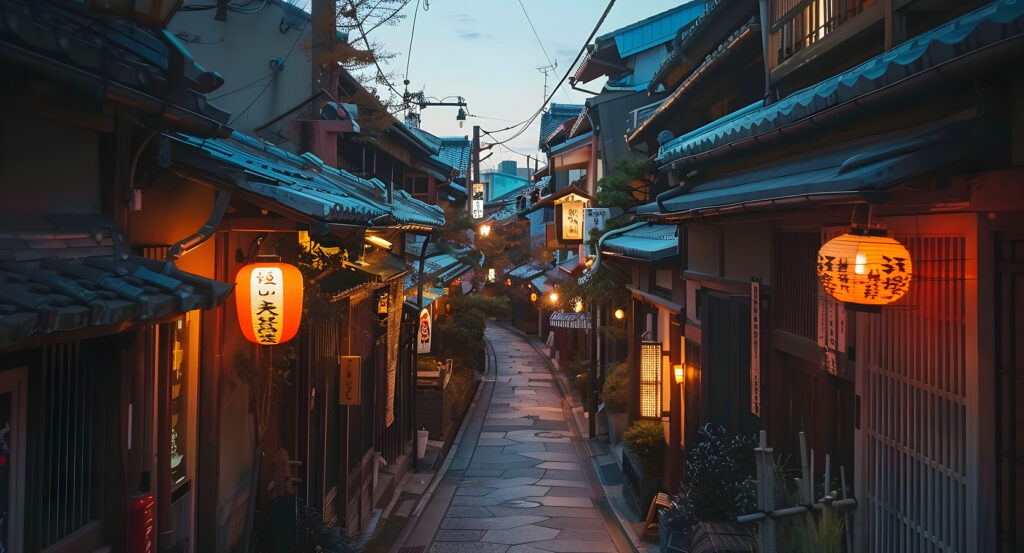
This is not a hotel that introduces you to the city; it places you inside a way of living that Kyoto quietly preserves behind unmarked doors. Tucked into a residential lane away from performance, Kazahaya reveals itself gradually. Arrival feels private and intentional. You pass through a modest exterior and enter a space where the city's volume drops. The architecture does not announce itself. It unfolds. Wood, earth tones, paper screens, and natural light establish a rhythm that feels older than tourism and quieter than commerce. Movement through the space is slow by necessity. Thresholds are low, rooms are sequential, and nothing is oversized. The machiya asks you to be aware of your body, your steps, and the sound you make. That awareness becomes part of the experience. Interior spaces feel grounded and deliberate. Tatami rooms are proportioned for living. The absence of excess furniture allows the room to shift function naturally from day to evening. Futons are prepared with care, offering sleep that feels restorative. Windows open onto inner courtyards or narrow streets, emphasizing enclosure and privacy over view. Light filters rather than floods, changing subtly throughout the day and making time feel present rather than scheduled. Materials show age and intention. Wood bears use, not polish. Surfaces are tactile, meant to be touched. Climate, sound, and scent register differently here than in modern hotels. You feel the season. You notice rain. You hear footsteps outside. The experience is not insulated, but it is deeply personal. There is no lobby, no background music, no passive stimulation. The space gives you just enough to settle and nothing to distract. Service is minimal and thoughtful. Interactions are brief, respectful, and grounded. Guidance is offered quietly and clearly, focused on how to inhabit the neighborhood rather than how to consume the city. The Machiya Kazahaya attracts travelers who want to experience Kyoto without mediation: couples, solo travelers, repeat visitors, and anyone drawn to lived environments over curated ones. This is not a place to recover from the city. It is a place to meet it more closely, at human scale.
What defines The Machiya Kazahaya.
The Machiya Kazahaya exists because traditional Kyoto townhouses were never designed as aesthetic artifacts; they were functional homes shaped by climate, community, and daily ritual.
This machiya was restored with restraint. Structural elements were preserved where possible, repaired where necessary, and left intentionally imperfect. The goal was not visual nostalgia but continuity of use. Spatial organization follows traditional machiya logic: narrow frontage, deep interior, layered rooms, and an internal courtyard that regulates light, air, and temperature. These design choices were not symbolic; they were practical solutions to dense urban living long before modern systems existed. Materials were chosen for breathability and aging. Walls allow moisture to move. Floors respond to temperature. Sound carries softly. Lighting relies on natural shifts. These decisions mean the space responds to the day and season. Guest accommodations were planned to preserve this responsiveness. Rather than adding furniture or technology that would flatten the experience, the space allows flexibility. Rooms change character depending on how they are used. Even the act of preparing bedding becomes a ritual that marks transition from day to night. Operationally, the machiya is intentionally low-intervention. Staff presence is limited, emphasizing autonomy and respect for privacy. The experience depends on your willingness to engage with the space as it is rather than expecting it to adapt to you. In a city where many machiya have been transformed into stylized accommodations, The Machiya Kazahaya stands apart by remaining fundamentally domestic. It does not perform tradition. It continues it.
How The Machiya Kazahaya fits.
The Machiya Kazahaya works best when you allow your schedule to loosen and your awareness to sharpen.
Begin mornings quietly, opening screens to let light and air in before stepping outside. Walk the surrounding neighborhood early, when residents are beginning their day and the streets feel unclaimed. Use the machiya as a point of return. Because the space encourages calm, coming back midday feels grounding. Remove your shoes. Sit. Let the city fall away briefly. Afternoons are ideal for slow exploration: nearby temples, side streets, local cafés, and small shops that reward attention. Evenings should remain simple. Eat nearby, walk home through dim streets, and let the house close around you. Nighttime here feels deeply private, marked by stillness. The Machiya Kazahaya pairs especially well with longer stays, repeat visits, and travelers who value presence over productivity. By the time you leave, Kyoto will feel less like a destination and more like a lived place, and the machiya will feel like a memory you inhabited. In a city defined by restraint, ritual, and continuity, The Machiya Kazahaya offers something rare and unfiltered: the chance to live briefly inside Kyoto's domestic rhythm without commentary, without staging, and without distance.
Where your story begins.
Foresyte Travel reveals places that feel extraordinary long before you arrive.
Enjoy editorial crafted for luxury travelers.
Foresyte may earn a commission when you book.

















































































































