
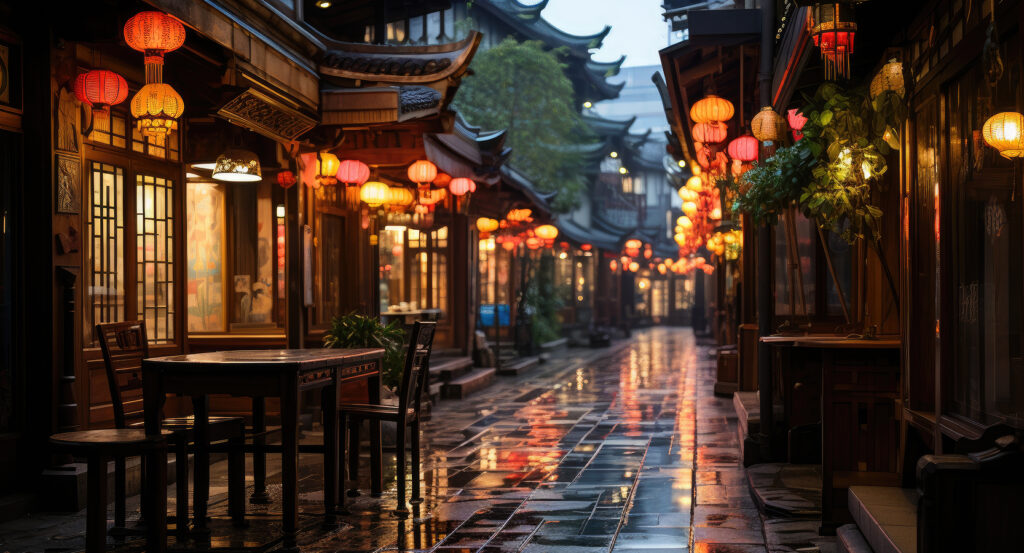
Why Taikang Road matters.
Taikang Road is Shanghai's creative artery, where art, culture, and chaos coexist in perfect harmony.
The narrow lane hums with life: painters displaying their canvases beside coffee drinkers, sculptors working with open doors, and music spilling from windows above. The scent of espresso mingles with the smell of paint and fried dumplings. It's not curated perfection, it's raw, electric, and alive. Every wall, staircase, and storefront bears traces of individuality, murals layered over brick, signs scrawled by hand, and impromptu exhibits unfolding in courtyards no wider than a car. The crowd here is as eclectic as the art: locals debating calligraphy with foreign visitors, students sketching between stalls, and photographers chasing light through tangled wires. It feels like a gallery that refuses walls, where art bleeds into daily life.
What defines Taikang Road.
Taikang Road began as a humble lane of 1930s shikumen homes in Shanghai's former French Concession, later reclaimed by a wave of artists seeking affordable studios in the early 2000s.
When urban renewal threatened the neighborhood, painter Chen Yifei and other local creatives transformed it instead, pioneering a grassroots preservation movement that redefined cultural development in modern Shanghai. The result was Tianzifang, with Taikang Road as its beating heart. Many of the lane's original residences remain inhabited; families still hang laundry above boutiques selling ceramics, leatherwork, and handcrafted jewelry. The walls tell the story of this evolution: remnants of French colonial brick meet postmodern graffiti, while vintage signboards from the 1950s hang beside digital projections. Unlike the polished commercial districts nearby, Taikang Road never surrendered its imperfections, and that authenticity became its identity. Its layout preserves the traditional longtang alleyway system, with networks of lanes branching organically like veins, each hosting its own microcosm of creativity. Hidden within the labyrinth, you'll even find small art collectives that rotate pop-up installations weekly, ensuring the neighborhood never stands still.
How Taikang Road fits.
Taikang Road is best explored on foot, slowly, with no agenda, it's a place that rewards wandering and curiosity.
Arrive in the late afternoon (4-5 p.m.), when the sunlight filters through overhead cables and turns every mural and window into a painting. Start from the Taikang Road entrance to Tianzifang and follow the crowd's gentle current, duck into any alley that calls to you. Visit a few of the artist-run boutiques, many of which still operate as both studios and shops; if you're lucky, you might catch an artist mid-creation. Grab an iced coffee or jasmine tea at a corner café, then climb to one of the second-floor terraces for a bird's-eye view of the maze below. Stay through twilight, when lanterns flicker on and street musicians fill the air with soft jazz. Allocate 1-2 hours, though time tends to lose meaning here. Before you leave, walk back toward Taikang Road itself, from the street, the layered rooftops of Tianzifang rise like a collage of eras. In that single view, you'll see Shanghai's story in miniature: a city forever reinventing itself, yet still holding fast to its human scale.
Where your story begins.
Foresyte Travel reveals places that feel extraordinary long before you arrive.
Enjoy editorial crafted for luxury travelers.
Foresyte may earn a commission when you book.

















































































































