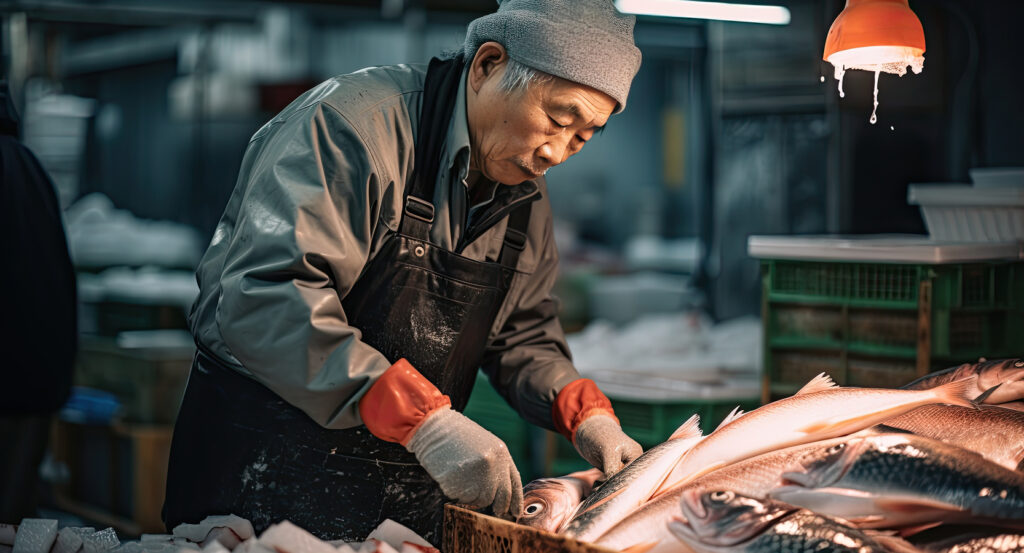
Why you should experience Tsukiji Fish Market in Tokyo, Japan.
Tsukiji Fish Market, or Tsukiji Outer Market, isn't just a food district, it's Tokyo's culinary soul, where the city's obsession with freshness, craft, and ritual unfolds in a sensory explosion.
A labyrinth of narrow lanes just east of Ginza, the Outer Market remains the living heartbeat of the original Tsukiji legacy, a place where chefs, locals, and travelers gather at dawn to celebrate the art of food. The air hums with energy as vendors call out prices, knives flash over cutting boards, and steam rises from sizzling tamago skewers and grilled scallops. The scent of soy sauce, seaweed, and just-caught fish fills the air, mingling with the earthy aroma of green tea and roasted chestnuts. Every stall tells a story: artisans slicing pristine sashimi with surgical precision, families selling pickled vegetables passed down through generations, and chefs selecting tuna for Tokyo's top sushi counters. It's a marketplace that captures Japan's reverence for craftsmanship, a living theatre of taste and technique that feels both ancient and immediate, sacred and chaotic all at once.
What you didn't know about Tsukiji Fish Market.
Behind its bustling façade lies one of Japan's most enduring cultural institutions, a space that continues to thrive even after the famous inner wholesale market's relocation.
For decades's name was synonymous with the world's largest fish auction, but when the inner market moved to Toyosu in 2018, many feared its spirit would fade. Instead, the Outer Market, the public-facing section surrounding the old site, flourished, reinventing itself. Over 400 small businesses still operate here, many run by the same families who have traded for generations. While tourists come for sushi breakfasts and tuna tastings, the market's deeper story lies in its ecosystem: knife forgers, ceramic shops, miso brewers, and dried-seafood merchants sustaining the rhythm of daily Tokyo life. The market's layout, unchanged for decades, feels like a preserved fragment of prewar Japan, wooden signboards, noren curtains, and stalls so small they barely fit two people. Beyond its food, Tsukiji remains a cultural touchstone, a place that honors the Japanese ideal of shokunin, the devotion to mastery through everyday work.
How to fold Tsukiji Fish Market into your trip.
To experience Tsukiji Outer Market is to rise early and surrender to the flow of Tokyo at its most authentic.
Arrive around sunrise, when the first deliveries of seafood and produce arrive and the streets hum with anticipation. Begin with a stroll through the main alleyways, sampling fresh uni, toro sashimi, and grilled eel skewers from vendors who hand them to you with a smile. Stop at a small sushi bar for breakfast, some of the best in Tokyo hide behind curtains so unassuming you might miss them entirely. Explore shops selling kitchen knives honed by master blacksmiths or ceramics crafted in regional styles from across Japan. Pause for tea at a traditional stand, or snack on fluffy tamagoyaki as steam rises around you. As the morning fades, the market's rhythm shifts, locals stock up on miso, soy, and rice while shopkeepers prepare for closing. Before leaving, step toward Namiyoke Shrine at the market's edge, where traders pray for prosperity and protection. The Tsukiji Outer Market in Tokyo isn't just a culinary stop, it's a sacred ritual of flavor, community, and craftsmanship that captures the heartbeat of Japan's food culture.
Where your story begins.
Start your planning journey with Foresyte Travel.
Experience immersive stories crafted for luxury travelers.