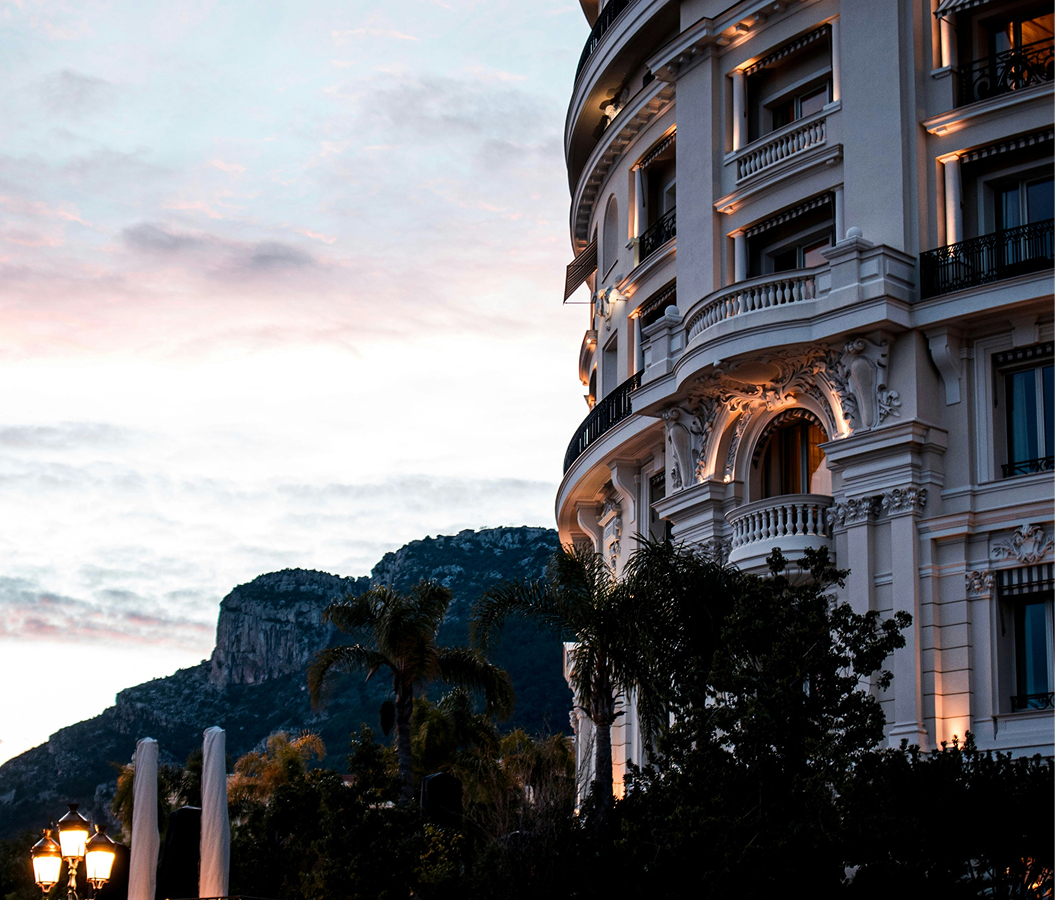
Why Via Cusani matters.
Via Cusani is a stately corridor where Brera's architectural character meets Roman fortifications, Napoleonic citymaking and the nineteenth-century transport systems that connected Central Milan with its expanding northern territory.
Running through Brera between Largo Cairoli and Via Broletto, the straight corridor occupies the transition between Castello Sforzesco, Foro Buonaparte and the dense streets approaching the medieval center. Neoclassical façades on its southern side face a wider northern frontage shaped by postwar rebuilding, producing a pronounced asymmetry that distinguishes the street from the tighter blocks extending toward Brera. Tram tracks establish its primary rhythm through a route that remains visually tied to the castle at its western end, where the open geometry of Largo Cairoli interrupts the enclosed street wall. Palazzo Cagnola and the contrasting twentieth-century buildings opposite introduce another register, compressing major phases of Milanese architecture into a few hundred meters. The result is a corridor where ancient defensive geography, nineteenth-century urban expansion and postwar reconstruction remain visible within the western approach to Milan's historic center.
What defines Via Cusani.
Via Cusani is best known for following one of the oldest defensive lines in Milan, where the fortifications of Roman Mediolanum ran across the territory now occupied by the street and Largo Cairoli. The late third-century enlargement undertaken during the imperial residence of Maximian created a fortified circuit extending 4,500 meters around the expanded city, with its modern trace passing through Via Cusani before continuing toward Via San Giovanni sul Muro. The corridor also occupied territory associated with Porta Cumana and the defensive water system fed by a diverted branch of the Seveso, embedding the later street within infrastructure established around ancient Milan's northern perimeter. Medieval and early modern Milan retained that inherited alignment under the name Contrada da Baggio, derived from the noble Baggio family. The present name arrived in 1786 under imperial minister Johann Joseph Wilczek in honor of Ferdinando Cusani, linking the corridor to one of Milan's prominent aristocratic families. A new political geography appeared at its western end after Napoleon ordered the removal of the Castello Sforzesco's external fortifications in 1800. Giovanni Antonio Antolini conceived Foro Bonaparte as a vast circular composition surrounding the castle, and its first stone was laid at the outlet of Via Cusani on April 30, 1801 following the Peace of Lunéville. Napoleon rejected Antolini's scheme that July on grounds of cost, after which Luigi Canonica developed the reduced plan realized between 1803 and 1807. Via Cusani joined an ancient defensive boundary to the principal urban composition created around the castle during Napoleonic Milan.
A separate chapter developed when Via Cusani became a threshold for the interurban tramways carrying passengers from Central Milan toward the industrializing communities northwest of the city. A horse tram to Saronno established its Milan terminus near Via Cusani and Foro Bonaparte in 1879, positioning the corridor beside one of the earliest interurban systems serving the northern territory. Industrialists and political figures from Legnano, Busto Arsizio and Gallarate had formed a committee in 1878 to promote another connection, securing provincial approval for a Belgian company in March 1880. Steam traction reached Legnano on September 10, 1880, and the extension to Gallarate followed on April 14, 1881. The trains became known in Milan as the Gamba de legn, and period photographs preserve their Foro Bonaparte terminus near the Via Cusani outlet before it moved toward the Arena 1897. This transport concentration gave the western end of Via Cusani a role far beyond central circulation, placing it at the point where travelers transferred between the historic core and settlements undergoing rapid manufacturing growth beyond the city. The horse and steam lines disappeared from this location, yet their former terminus establishes Via Cusani as an early interface between Central Milan and the expanding industrial geography of the metropolitan north.
How Via Cusani fits.
Via Cusani works as the anchor to an exploration of Brera and the Sempione district through a Visconti-sponsored Carmelite church, a state art collection created through Enlightenment education and Napoleonic acquisitions and an imperial amphitheater built from the remains of demolished fortifications.
Begin at Santa Maria presso San Satiro del Carmine, where the Carmelites settled on the present site in 1399 and Gian Galeazzo Visconti authorized construction of a new church and convent in May 1400. Bernardo da Venezia directed the project before a major collapse in 1446 prompted reconstruction under Guiniforte and Pietro Antonio Solari; noble burial chapels subsequently occupied the interior, and Carlo Maciachini supplied the present façade during the nineteenth century. Continue to Pinacoteca di Brera, whose collection originated in 1776 beside the Accademia di Belle Arti established under Maria Theresa of Austria to provide exemplary works for artistic instruction. Napoleon formally established the Pinacoteca in 1809 and redirected paintings from suppressed religious institutions and territories absorbed into the Kingdom of Italy toward Brera, creating a state collection whose formation emerged directly from the political upheavals of the era. Conclude at Arena Civica Gianni Brera, commissioned from Luigi Canonica in 1805 as an amphitheater for public festivities within the territory opened by demolition of the Castello Sforzesco's Spanish fortifications. Canonica drew upon the form of ancient Roman entertainment architecture and incorporated stone recovered from demolished defenses; the Arena opened under Napoleon in 1807 and passed to the Comune di Milano in 1870 before sporting events became a central part of its later history. The progression moves from Visconti patronage of a Carmelite complex through the state formation of Brera's art collection and onward to Canonica's architecture for Napoleonic performance, connecting ducal religion, Enlightenment education and imperial urban ambition around Via Cusani.
Where your story begins.
Foresyte Travel reveals places that feel extraordinary long before you arrive.
Enjoy editorial crafted for luxury travelers.
Foresyte may earn a commission when you book.