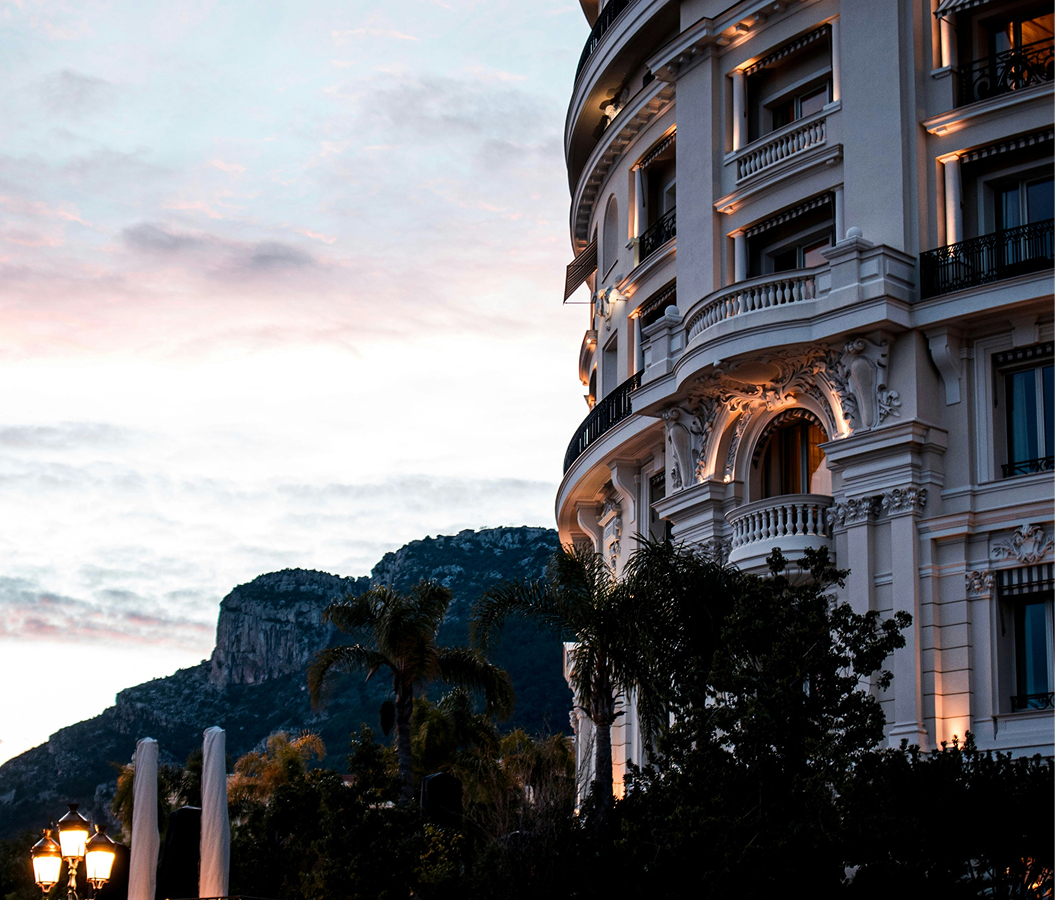
Why Via Monte Napoleone matters.
Via Monte Napoleone is a storied corridor where Quadrilatero della Moda's luxury character meets an ancient urban boundary, Habsburg financial history and the aristocratic palaces that remade this section of Milan during the Neoclassical era.
Running through Quadrilatero della Moda between Via Alessandro Manzoni and Corso Giacomo Matteotti, the compact corridor crosses Via Sant'Andrea, Via Verri, Via Gesù and Via Santo Spirito within the dense network east of Brera and north of San Babila. Restrained palace façades, rusticated ground floors, stone portals, iron balconies and carefully composed upper stories give the street an architectural continuity extending well beyond the boutiques occupying their lower levels. Retail establishes its primary rhythm through closely spaced fashion, jewelry and watchmaking houses, concentrating successive storefronts inside a corridor measuring only 350 meters. Neoclassical residences introduce another register above that commercial frontage, preserving the scale of the nineteenth-century aristocratic street through courtyards, piano-nobile windows and façades commissioned during Milan's expansion under Austrian and post-Napoleonic rule. The result is a corridor where global luxury commerce operates inside an inherited aristocratic district whose physical structure and name emerged from much older layers of Milanese history.
What defines Via Monte Napoleone.
Via Monte Napoleone is best known for deriving its name from a financial institution whose history transformed an older Milanese street associated with the city's Roman boundary and the buried Seveso. The route follows the line of the walls expanded under Emperor Maximian, with the Grande Sevese still running underground along the odd-numbered side of the street; later maps called the corridor Contrada di Sant'Andrea or Contrada delle Sbarre di Sant'Andrea. A decisive change began in 1782 when Giuseppe Piermarini designed a headquarters for the Monte Camerale di Santa Teresa at the present number 8, requiring demolition of Palazzo Marliani, an important Sforza-era residence whose destruction drew protests from Pietro Verri. The institution managed the public debt of the State of Milan, and its presence produced the name Contrada del Monte di Santa Teresa before French rule altered both institution and street. The bank closed in 1796 and reopened in 1804 as Monte Napoleone when Milan was capital of the Napoleonic Italian Republic, supplying the name that survived subsequent political changes. Aristocratic reconstruction then reshaped much of the corridor during the opening nineteenth century: Giovanni Battista Bareggi designed Palazzo Melzi di Cusano in 1830 with four Ionic columns and Gaetano Monti's relief of the Imprese di Francesco Sforza, and Luigi Clerichetti completed Palazzo Gavazzi at number 23 in 1838-39 with superimposed Doric and Corinthian orders rising toward caryatids. Carlo Cattaneo lived in Palazzo Gavazzi between 1840 and 1848, placing one of the principal intellectual figures of the Risorgimento inside the street shortly before insurrection transformed it into a political center. On March 18, 1848, leaders of the Milanese uprising gathered at number 37, and the corridor became one of the command points from which the revolt against Austrian rule was coordinated during the Cinque Giornate.
A separate commercial transformation began during the late nineteenth century as wealthy households, antiquarians and jewelers increasingly concentrated along Via Monte Napoleone. Annibale Cusi established one of the consequential early jewelry houses and became an official supplier to the House of Savoy, followed by names including Buccellati, Faraone and Pederzani. Lorenzi added its specialist cutlery business in 1929, extending the corridor's association with finely worked personal goods before fashion became its dominant industry. The postwar period accelerated that shift as clothing houses displaced remaining productive activities and Via Monte Napoleone entered the international luxury market during the 1950s. Caffè Cova, founded in 1817 near Teatro alla Scala, transferred to the street in 1950 after its original premises were destroyed during the war, bringing an older institution of Milanese social culture into the emerging retail district. Gaetano Boggiali opened his jewelry shop on Via Monte Napoleone in 1960 after decades in Milanese goldsmithing and silversmithing, further extending the corridor's specialist commercial lineage. Fashion, jewelry and watchmaking houses subsequently concentrated throughout the former aristocratic buildings, converting a street already associated with elite residence and specialist craftsmanship into the principal axis of the Quadrilatero della Moda.
How Via Monte Napoleone fits.
Via Monte Napoleone works as the anchor to an exploration of the surrounding district through an eighteenth-century noble residence converted into a civic museum, a Baroque church commissioned by the Order of Minims and a late nineteenth-century house conceived around an immersive reconstruction of Renaissance domestic culture.
Begin at Palazzo Morando, constructed toward the end of the sixteenth century and substantially shaped by the noble families that occupied it across the following centuries, including the Casati and Villa households. Countess Lydia Caprara di Montalba and Gian Giacomo Morando Attendolo Bolognini made it their residence in 1903, and her 1945 bequest transferred the palace and its furnishings to Milan; its civic collections now combine historic views of the city with the municipal Costume and Fashion collection, whose holdings extend from the seventeenth century into the early twenty-first. Continue to Chiesa di San Francesco di Paola, where the Order of Minims returned to the former Sant'Anastasia complex in 1675 before commissioning a substantially larger church from Marco Bianchi during the expansion of its convent begun in 1727. The project inserted a major Baroque religious commission into the aristocratic quarter adjoining the Contrada del Monte, preserving the institutional presence of an order whose Milanese history on the site had begun during an earlier residence between 1599 and the 1620s. Conclude at Museo Bagatti Valsecchi, where brothers Fausto and Giuseppe Bagatti Valsecchi began reshaping their family residence during the 1880s around fifteenth and sixteenth-century Italian art and decorative arts. Their rooms united Renaissance-inspired architecture with central heating, running water and electric lighting, placing works by Gentile and Giovanni Bellini, Giampietrino and Zenale alongside maiolica, parade armor, glass and inlaid furniture; the family occupied the house until 1974, and the museum opened in 1994 after the collection passed to the Fondazione Bagatti Valsecchi. The progression moves from Morando's conversion of aristocratic residence into civic patrimony through the Minims' eighteenth-century religious commission and onward to the Bagatti Valsecchi brothers' union of Renaissance collecting with nineteenth-century domestic technology, developing three distinct forms of patronage within the streets surrounding Via Monte Napoleone.
Where your story begins.
Foresyte Travel reveals places that feel extraordinary long before you arrive.
Enjoy editorial crafted for luxury travelers.
Foresyte may earn a commission when you book.