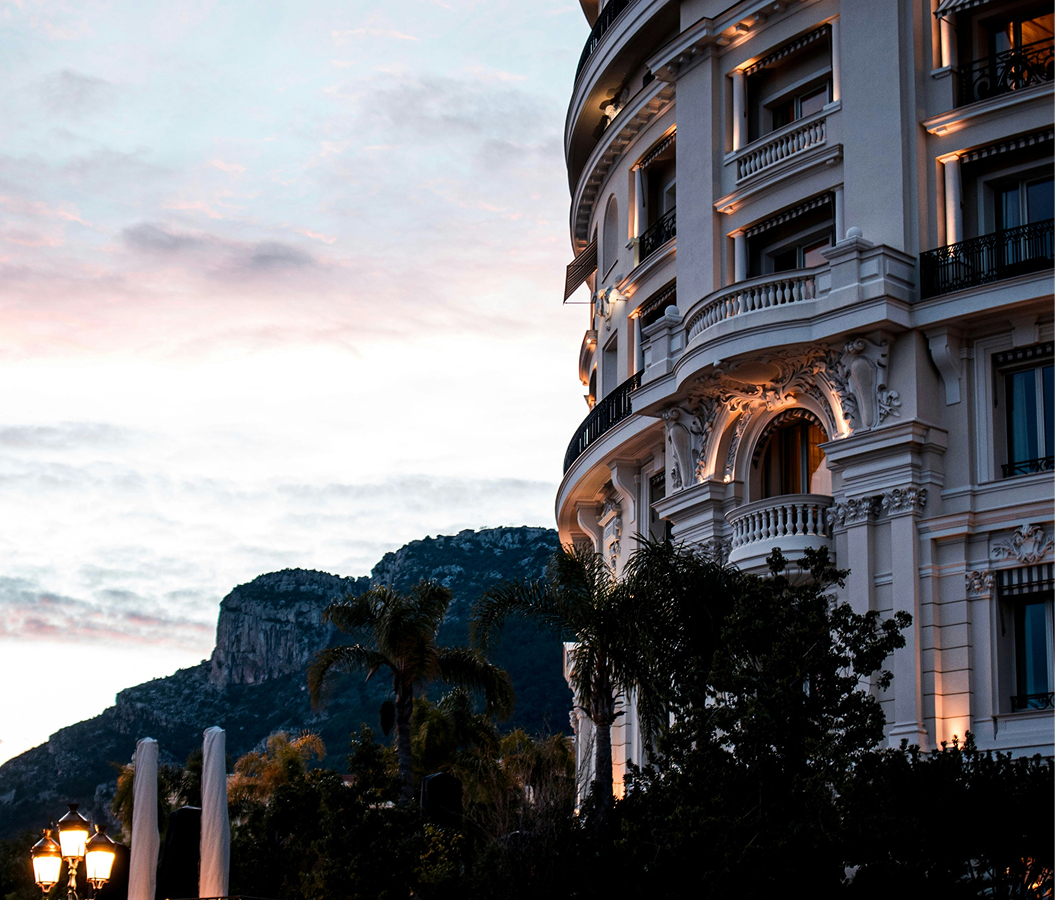
Why Via Palazzo Reale matters.
Via Palazzo Reale is a secluded corridor where Duomo's ceremonial character meets the medieval seat of Milanese power, surviving Visconti architecture and a twentieth-century intervention that reopened the dense fabric behind the cathedral.
Running through Duomo between Piazza del Duomo and Via delle Ore, the narrow pedestrian corridor occupies the compressed passage between the Archbishop's Palace and the historic court complex immediately south of the cathedral. Medieval masonry, restrained plaster walls, barred windows and surviving Gothic openings create an enclosed architectural channel whose scale changes abruptly when the Duomo's marble mass enters view at its northern end. Pedestrian movement establishes its primary rhythm through a route shielded from the intense circulation of Piazza del Duomo, allowing the medieval surfaces of the adjoining buildings to remain unusually prominent within Milan's civic center. The junction with Via delle Ore introduces another register, exposing the consequences of twentieth-century demolition that opened surrounding sightlines and separated structures once joined within a far denser court quarter. The result is a corridor where the political and ecclesiastical geography of medieval Milan survives within a street whose present dimensions were substantially clarified by the remaking of the historic center.
What defines Via Palazzo Reale.
Via Palazzo Reale is best known for running through the medieval Visconti court quarter, where the Archbishop's Palace and the residence occupying the site of the present royal palace formed parts of an interconnected seat of government. The political transformation began after Ottone Visconti defeated the Torriani at Desio in 1277 and established himself beside Santa Maria Maggiore, placing his nephew Matteo in the adjoining Broletto Vecchio as communal authority shifted toward Visconti rule. A fire after Ottone's death in 1295 prompted Matteo to rebuild and enlarge the Broletto through acquisition of Della Fiamma properties, and Azzone Visconti developed the complex further after becoming lord of Milan in 1329. Giovanni Visconti expanded the neighboring archiepiscopal residence between 1337 and 1339 with two wings parallel to the cathedral, physically joining the ecclesiastical residence with Azzone's court. An elevated covered passage crossed the line of present Via Palazzo Reale between those buildings, allowing movement from the Archbishop's Palace to the Corte dell'Arengo. The system extended farther through additional aerial connections linking Visconti residences toward Via Rastrelli, Via Unione and Corso di Porta Romana, making this small passage part of a much larger court territory. Surviving architecture still exposes that medieval arrangement: the Via Palazzo Reale side of the Archbishop's Palace retains a blocked Gothic portal framed by pointed stonework in alternating light and dark tones, together with terracotta bifore from the fourteenth-century building. Restoration work in 1930 exposed the old masonry and pointed arch beneath later surface treatments, physically recovering a fragment of the street's Visconti phase within the modern center.
A separate transformation occurred during the 1920s when demolition altered the southern end of Via Palazzo Reale and dismantled part of the palace complex that had previously continued toward San Gottardo in Corte. A 1923 photograph preserves the lost configuration, showing the palace extending without interruption to the church apse before the adjoining section disappeared. The intervention created an outlet for an enlarged Via delle Ore and the new Via Santa Tecla toward the territory of present Largo Schuster and Via Francesco Pecorari. Contemporary planning also projected a new street on the axis of Via Paolo da Cannobio to separate the retained royal residence from a new municipal office building, exposing architecture that had previously been embedded within the court complex. The change recast Via Palazzo Reale from an enclosed passage beside a continuous palace mass into part of a more permeable network behind Piazza del Duomo. Photographs from the period preserve the resulting intersection with Via delle Ore and the newly visible historic architecture at its southern end. Via Palazzo Reale carries two radically different phases of Milanese spatial history within its short length: a medieval court assembled through physical connections between residences and a twentieth-century center reshaped through their deliberate separation.
How Via Palazzo Reale fits.
Via Palazzo Reale works as the anchor to an exploration of Central Milan through an eleventh-century religious complex rebuilt around an ossuary, a Renaissance library created from Federico Borromeo's collection and the nineteenth-century home from which Alessandro Manzoni became a central figure in Italian letters.
Begin at San Bernardino alle Ossa, whose history developed beside the hospital of San Barnaba in Brolo and a cemetery that exhausted its burial capacity early in the thirteenth century, prompting construction of an ossuary in 1210. Collapse of the Santo Stefano bell tower destroyed the earlier complex in 1642, and the surviving ossuary emerged from later reconstruction with walls densely arranged in human bones and a painted vault by Sebastiano Ricci, joining medieval funerary practice with Baroque artistic intervention. Continue to Pinacoteca Ambrosiana, founded by Cardinal Federico Borromeo and opened to scholars in 1609 as a library built around manuscripts gathered through an extensive European and Mediterranean acquisition campaign. Borromeo added the Pinacoteca in 1618 and an academy of drawing in 1620, establishing an institution where Leonardo da Vinci's Codex Atlanticus later joined works by Raphael, Caravaggio, Botticelli and Titian within a collection conceived around scholarship and art. Conclude at Casa Manzoni, acquired by Alessandro Manzoni in 1813 and occupied from the following year until his death in 1873. The residence became a meeting place for figures including Tommaso Grossi and Antonio Rosmini as Manzoni worked through the long development of I Promessi Sposi, binding a private household near the Duomo to the literary culture of nineteenth-century Italy. The progression moves from medieval burial practice transformed through Ricci's Baroque painting through Borromeo's institutional union of books, scholarship and art and onward to Manzoni's literary household, connecting sacred memory, intellectual collecting and Italian letters within the historic center.
Where your story begins.
Foresyte Travel reveals places that feel extraordinary long before you arrive.
Enjoy editorial crafted for luxury travelers.
Foresyte may earn a commission when you book.