Why Via Pietro Calvi matters.
Via Pietro Calvi is a layered corridor where Risorgimento's residential character meets the geometry of Milan's nineteenth-century expansion, surviving traces of an earlier railway landscape and architecture ranging from Liberty experimentation to postwar reconstruction.
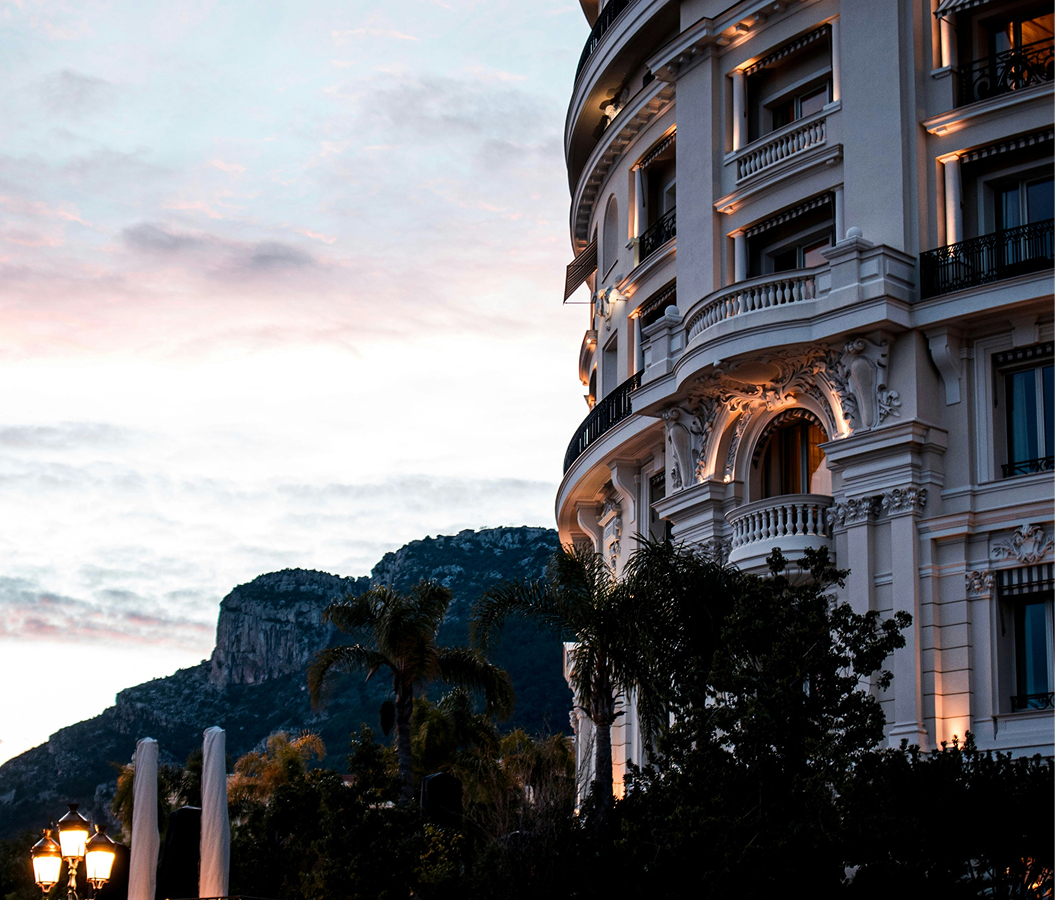
Running through Risorgimento between Piazza Risorgimento and Corso XXII Marzo, the elongated corridor crosses Via Melloni, Via Sottocorno and Via Archimede through a district developed immediately beyond the historic approaches to Porta Tosa. Ornate apartment façades, projecting balconies, enclosed courtyards and mature trees establish a predominantly residential scale, joined near its southern reaches by denser blocks extending toward Piazza Cinque Giornate. Pedestrian movement establishes its primary rhythm through a street whose regular alignment encounters older buildings surviving from the landscape that preceded the surrounding grid, producing abrupt changes in frontage and perspective near Via Melloni. Liberty residences, twentieth-century housing and postwar reconstruction introduce another register, placing several stages of Milanese expansion within a corridor short enough for their differences to remain immediately legible. The result is a corridor where the ordered city created beyond the nineteenth-century gates still carries physical fragments of the earlier territory it replaced.
What defines Via Pietro Calvi.
Via Pietro Calvi is best known for crossing territory whose present street geometry emerged after Milan's eastern railway infrastructure disappeared and the Beruto-era city expanded across the resulting ground. One surviving building near number 3 predates the street itself and retains an oblique alignment inherited from the older landscape, interrupting the later grid between Via Sottocorno and Via Melloni. The irregularity derives from the territory surrounding one of Milan's earliest railway stations, whose nineteenth-century tracks and associated structures preceded the residential streets subsequently imposed across the district. Via Francesco Guicciardini preserves another trace of that incomplete transition, ending against the older fabric despite an intended continuation toward Via Benvenuto Cellini. Reconstruction later altered the same corner after wartime destruction, with work on Via Pietro Calvi 3 documented between 1950 and 1952 under Studio dott. architetti Monti G.P.A. Twenty-eight architectural drawings survive from that project, covering plans, elevations, sections and construction details. Farther south, the large residential complex at Via Pietro Calvi 29 and 31 extends through Via Galvano Fiamma 3, 5 and 7 to Corso XXII Marzo 23, embedding the corridor within Milan's early public-housing history. The block belongs to a generation of housing created for working families in compact apartments organized around shared service arrangements, giving the street a social dimension distinct from the ornate private residences surrounding it. Via Pietro Calvi preserves an unusually compressed physical sequence from pre-grid construction through planned metropolitan expansion, public housing and postwar rebuilding.
Via Pietro Calvi 29 acquired a separate cultural significance in 2001 when the Libreria delle donne di Milano transferred there after twenty-five years in Via Dogana. The bookstore had opened on October 15, 1975 through twelve founding members including Lia Cigarini, Luisa Muraro, Renata Dionigi and Giordana Masotto, creating a permanent Milanese center for books by women and feminist political thought. Publishing activity developed beside the bookstore through the Sottosopra texts and, beginning in 1991, the periodical Via Dogana, whose title preserved the original address after the later relocation. Rising municipal rents prompted the move from Via Dogana to the larger Via Pietro Calvi premises, inaugurated in March 2001. The new location expanded the bookstore from a single display window and two walls of books into four windows and a collection exceeding ten thousand volumes, including scarce first editions consulted by scholars. The Circolo della Rosa joined the bookstore at the address, extending activity through meetings, discussions, publishing and cultural programming. Milan marked the institution's fiftieth anniversary throughout 2025, culminating in celebrations at Via Pietro Calvi 29 in October. A residential address created during the district's earlier housing development became the permanent home of an institution whose publishing and political activity spans half a century of Milanese feminism.
How Via Pietro Calvi fits.
Via Pietro Calvi works as the anchor to an exploration of eastern Central Milan through an eighteenth-century funerary complex created for the Ospedale Maggiore, a private villa commissioned from Piero Portaluppi by an industrial family and the Napoleonic music school established inside a former religious college.
Begin at Rotonda della Besana, developed from the Foppone dell'Ospedale Maggiore after construction of a new cemetery began under Arrisio Arrigoni in 1695 and the first burials followed in 1697. Work on the church of San Michele Arcangelo ai Nuovi Sepolcri began in 1719, and Francesco Croce subsequently shaped the polylobed portico completed in 1731 with financial support from silk merchant Giambattista Annone. Austrian sanitary reforms ended the funerary function after 1792, and Luigi Cagnola later proposed converting the complex into a pantheon for the Napoleonic Kingdom of Italy. Continue to Villa Necchi Campiglio, designed by Piero Portaluppi between 1932 and 1935 for Angelo Campiglio, his wife Gigina Necchi and her sister Nedda on land carved from the former Sola-Busca garden. Portaluppi developed an independent urban residence for a family enriched through industry, placing geometric stone surfaces and expansive glazing within a private garden; Tomaso Buzzi subsequently altered parts of the interiors and furnishings from 1938 onward with eighteenth-century references. The villa later entered the Circuito delle Case Museo di Milano, preserving the Necchi Campiglio collections alongside later gifts inside Portaluppi's architecture. Conclude at Conservatorio Giuseppe Verdi di Milano, established by Napoleonic decree in 1807 and inaugurated on September 3, 1808 inside the former collegiate complex adjoining Santa Maria della Passione. Its original residential school provided twenty-four free places, and its first generation of teachers included Alessandro Rolla, Bonifazio Asioli, Luigi Belloli and Benedetto Carulli, linking formal musical instruction with the professional world of Milanese theaters, orchestras and chapels. The institution expanded from that small founding cohort into one of Italy's principal centers of musical education. The progression moves from the Ospedale Maggiore's eighteenth-century funerary architecture through Portaluppi's commission for the Necchi Campiglio industrial family and onward to a Napoleonic school built around professional musical training, connecting public welfare, private patronage and cultural education across the districts surrounding Via Pietro Calvi.
Where your story begins.
Foresyte Travel reveals places that feel extraordinary long before you arrive.
Enjoy editorial crafted for luxury travelers.
Foresyte may earn a commission when you book.