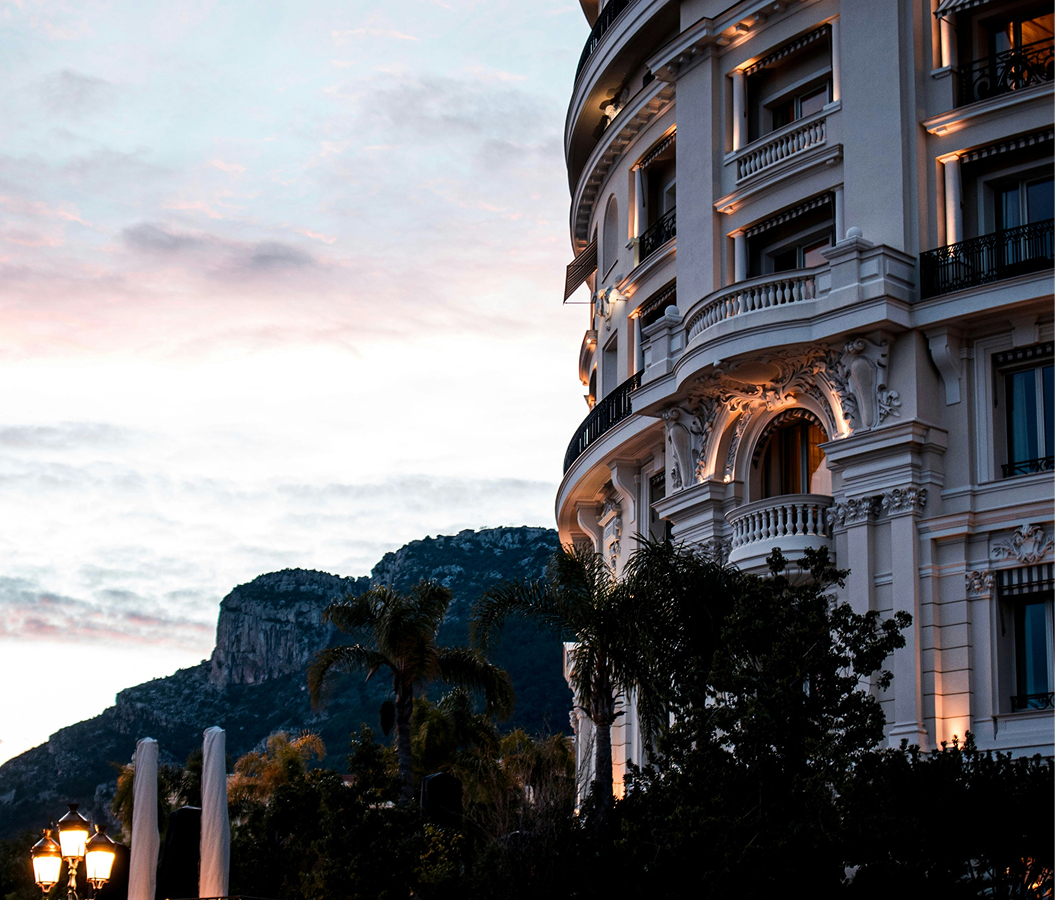
Why Via Roberto Lepetit matters.
Via Roberto Lepetit is a compact corridor where Centrale's metropolitan character meets early twentieth-century expansion, the architectural edge of the station district and a street name carrying the memory of industrialist and Resistance figure Roberto Lepetit.
Running through Centrale between Via Vitruvio, and Piazza San Camillo de Lellis, the corridor occupies a short sequence of blocks immediately southeast of Milano Centrale and beside the dense residential grid extending toward Corso Buenos Aires. Early twentieth-century apartment houses establish much of its scale through stone balconies, molded window surrounds and closely aligned façades before larger office volumes interrupt the older frontage near the station. Pedestrian movement establishes its primary rhythm through the continual exchange between the railway terminus, Via Vitruvio and the surrounding hotel and residential blocks, giving the street an intensity disproportionate to its short length. The pointed brick architecture terminating the view toward Piazza San Camillo de Lellis and later commercial buildings introduce another register, concentrating several stages of the district's growth within a tightly enclosed streetscape. The result is a corridor where Milan's great railway quarter becomes intimate, carrying metropolitan movement through a street whose twentieth-century history remains attached to one of the city's consequential antifascist industrialists.
What defines Via Roberto Lepetit.
Via Roberto Lepetit is best known for commemorating Roberto Lepetit, the chemical and pharmaceutical industrialist whose resistance to Fascism turned the former stretch of Via Carlo Tenca beside his company headquarters into a permanent piece of Milanese civic memory. Lepetit took control of the family enterprise at twenty-two after the death of his father, inheriting a business founded by his grandfather in 1868 that developed into Ledoga, a name formed from Lepetit, Dollfus and Gansser. The group eventually operated sixteen plants and an international commercial network, moving from dyes and tannin chemistry increasingly toward pharmaceuticals under Roberto's leadership. Fascist authorities expelled him from the party in 1942, and after September 8, 1943 he committed company resources to the Resistance through money, medicines, false papers, transport and assistance to fugitives. His Garessio operations helped shelter 360 escaped Yugoslav officers, and his contacts expanded through the Partito d'Azione, Ferruccio Parri and the Comitato di Liberazione Nazionale after he returned toward Milan. Lepetit also collaborated with the GBT intelligence mission and arranged production of 100,000 large caltrop-like nails used to obstruct German vehicles. His Milan office on Via Carlo Tenca became a meeting place for CLN leaders and partisan commanders. Nazi authorities arrested him there on September 29, 1944, then moved him through the Hotel Regina, San Vittore, Bolzano, Mauthausen, Melk and Ebensee. Lepetit died at Ebensee on May 4, 1945, two days before American troops liberated the camp. Milan renamed the section of Via Carlo Tenca containing his former workplace for Roberto Lepetit on June 17, 1955, attaching the geography of his arrest directly to his name.
The Santuario di San Camillo de Lellis establishes a separate historical mechanism at the northern end of the corridor through the return of the Camillian order to Milan after nearly a century of absence. Camillo de Lellis and members of his congregation had first reached Milan in 1594 at the invitation of Archbishop Gaspare Visconti to assist patients at the Ospedale Ca' Granda, beginning more than two centuries of work in the city. Napoleonic suppression forced the order to leave in 1800, and Cardinal Andrea Carlo Ferrari invited the Camillians back in 1896. Their former church of Santa Maria della Sanità on Via Durini was no longer available, prompting construction of a new sanctuary at the Via Boscovich and Via Lepetit intersection under architect Spirito Maria Chiappetta. Ferrari blessed the first stone on January 1, 1900, construction advanced during the following decade and the sanctuary opened on July 15, 1912. Chiappetta developed an eclectic neo-Gothic composition dominated by exposed brick, pointed openings, marble accents, buttresses and a central spire serving as the bell tower. The intended spire rose only in reduced form when work concluded during the 1950s, leaving the façade with the distinctive vertical emphasis visible from Via Lepetit. Cardinal Alfredo Ildefonso Schuster solemnly consecrated the sanctuary on October 30, 1937, completing an institutional return that had begun forty-one years earlier under Ferrari.
How Via Roberto Lepetit fits.
Via Roberto Lepetit works as the anchor to an exploration of the neighborhoods southeast of Centrale through a Liberty residence covered in ceramic art, a private twentieth-century collection preserved inside its original home and an underground interwar interior built for a newly mobile metropolis.
Begin at Casa Galimberti, designed by Giovanni Battista Bossi and completed in 1904 as one of the most concentrated surviving examples of Milanese Liberty residential architecture. Fire-painted ceramic tiles spread across the elevations through floral compositions and human figures, joining painted surfaces with sculpted cement and iron balconies in a façade conceived as an integrated decorative work. The commission belongs to Bossi's intense activity around Porta Venezia and remains closely paired with his nearby Casa Guazzoni, demonstrating how the district became an experimental ground for residential design during Milan's early twentieth-century expansion. Continue to Casa Museo Boschi Di Stefano, installed in the apartment where Antonio Boschi and Marieda Di Stefano assembled more than two thousand works of twentieth-century art. Piero Portaluppi designed their Via Giorgio Jan building between 1929 and 1931 for a family development led by engineer Gino Radici and Marieda's father Francesco Di Stefano, combining projecting balconies and bow windows with geometric interior decoration. Boschi donated the collection to Milan in 1974 and 1988, and the museum now presents around three hundred works across eleven rooms, moving through Mario Sironi, Giorgio Morandi, Filippo De Pisis, Lucio Fontana, Spazialismo and Informale inside the collectors' former domestic setting. Conclude at Albergo Diurno Venezia beneath Piazza Oberdan, developed between 1923 and 1926 with Piero Portaluppi shaping its architecture and decorative conception. The subterranean complex extended 88 meters across 1,200 square meters, combining public baths with barbers and personal services for citizens and travelers at a moment when Porta Venezia was becoming one of Milan's principal metropolitan gateways. Its closure in 2006 preserved a rare interwar interior beneath the traffic above, with subsequent recovery returning attention to the decorative ambition invested in a utilitarian urban facility. The progression moves from Bossi's fusion of residential architecture and decorative art through Boschi and Di Stefano's transformation of domestic rooms into an extraordinary private collection and onward to Portaluppi's subterranean metropolitan interior, connecting Liberty experimentation, twentieth-century collecting and interwar urban culture around Via Roberto Lepetit.
Where your story begins.
Foresyte Travel reveals places that feel extraordinary long before you arrive.
Enjoy editorial crafted for luxury travelers.
Foresyte may earn a commission when you book.