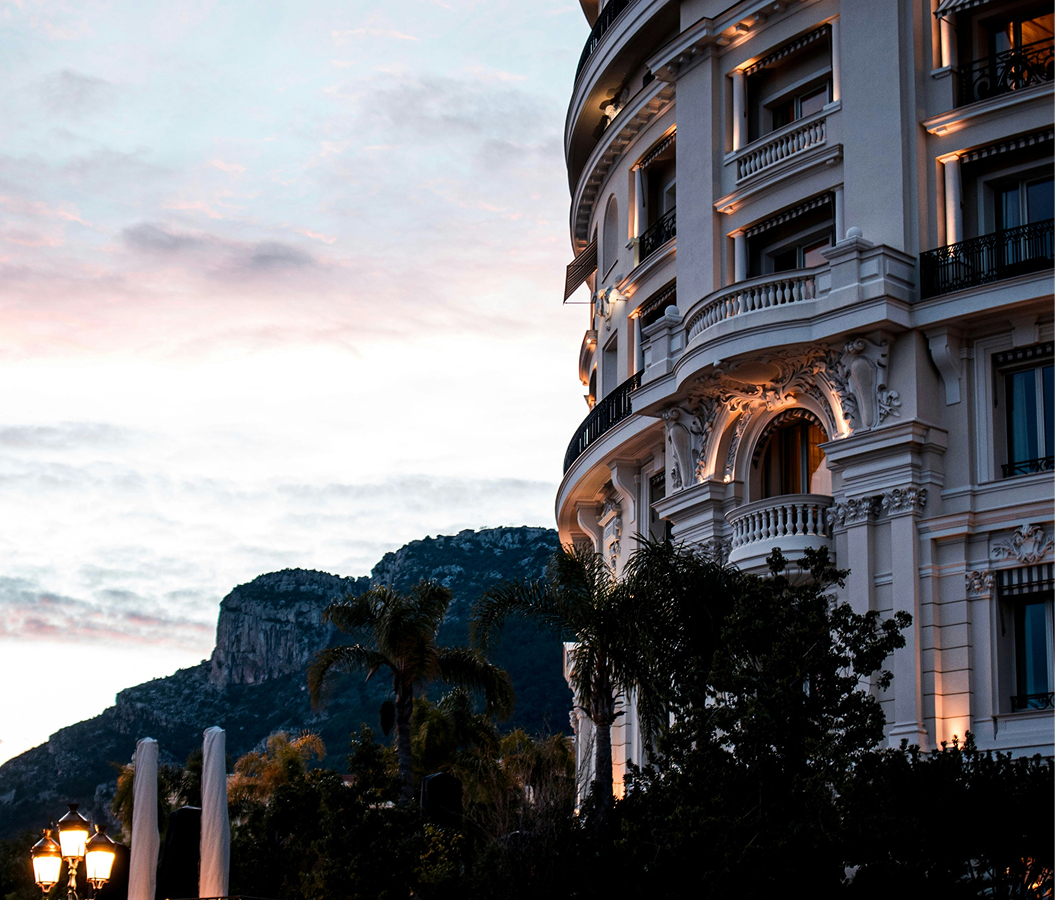
Why Viale Pasubio matters.
Viale Pasubio is a layered corridor where Porta Volta's creative character meets Milan's Spanish perimeter, wartime destruction and the architectural reinvention of ground left vacant for nearly seven decades.
Running through Porta Volta between Piazza XXV Aprile, and Piazzale Baiamonti, the compact avenue occupies a surviving section of Milan's inner ring between the neoclassical entrance to Corso Garibaldi and the twin tollhouses opening toward Via Alessandro Volta. Its northern frontage retains the dense scale of nineteenth- and twentieth-century Milan, yet the opposite side opens dramatically around a linear park and the steep roofline of Fondazione Giangiacomo Feltrinelli. Movement along the avenue compresses that contrast into a few blocks, carrying the street from traditional apartment façades and historic commercial premises into open greenery and sharply contemporary architecture. Tram tracks, mature planting and the preserved geometry of the former bastions deepen the encounter by keeping successive periods of Milanese construction visible along the same short route. The result is a corridor where destruction left an enduring break in the urban fabric and a twenty-first-century architectural intervention turned that absence into one of Porta Volta's most distinctive public spaces.
What defines Viale Pasubio.
Viale Pasubio is best known for tracing the inner circulation road immediately outside Milan's former Spanish walls between Porta Garibaldi and Porta Volta, two gateways whose different origins reveal the northern city expanding beyond its fortified perimeter. The avenue was already densely developed and served by the circumferential tramway by 1878, two years before Porta Volta opened at its western end to create a more direct connection toward the new Cimitero Monumentale and the replacement road to Como. Cesare Beruto designed the twin Porta Volta tollhouses in 1880 after landowners Molteni and Feltrinelli pressed for the new entrance, linking the gate to property development beyond the old bastions. The street then carried the name Viale di Porta Garibaldi before receiving its present dedication to Monte Pasubio, where Italian and Austro-Hungarian forces fought extensively during the First World War. Bombing on October 24, 1942 and during the nights of August 8 and 13, 1943 devastated the avenue, with buildings along its southern side never reconstructed after the conflict. Their ruins left an elongated void through Central Milan that survived subsequent redevelopment proposals, including plans associated with the 1953 business district that would have replaced older buildings on the opposite side and radically altered Piazzale Baiamonti. The failure of those schemes preserved the avenue's unusual asymmetry for decades, making wartime destruction itself a major determinant of Viale Pasubio's physical form.
The long-vacant southern strip entered a new architectural era through land the Feltrinelli family had owned since the nineteenth century, when its commercial activities included timber storage on the site. Carlo Feltrinelli later commissioned Herzog & de Meuron to develop a new home for Fondazione Giangiacomo Feltrinelli, extending an institutional project first pursued through an unrealized Vittorio Gregotti scheme elsewhere in Milan. Jacques Herzog and Pierre de Meuron developed the Porta Volta project from 2008, drawing its elongated form from Milanese precedents including the Ospedale Maggiore, Rotonda della Besana, Castello Sforzesco and Lombard cascine. Construction ran from 2013 to 2016, producing two adjoining five-storey structures whose repeated concrete frames rise into steep pitched roofs beside Viale Pasubio. Fondazione Giangiacomo Feltrinelli inaugurated its 2,700-square-meter headquarters there in 2016, placing its historical collection, reading room and cultural spaces above secure underground archives. The project concentrated construction along the avenue to release extensive public greenery beside the former wall line, turning a gap created by wartime bombing into a new architectural boundary for Porta Volta.
How Viale Pasubio fits.
Viale Pasubio works as the anchor to an exploration of northern Milan through neoclassical civic architecture, industrial engineering and the design culture that later emerged from the manufacturing city.
Begin at Porta Garibaldi, where the Austrian government commissioned Giacomo Moraglia in 1826 to replace the older Porta Comasina after an earlier design by Luigi Cagnola was abandoned. Milanese merchants financed Moraglia's Doric arch, completed in 1828 in Viggiù stone, and adjoining tollhouses followed during the 1830s before the gateway received its present dedication to Giuseppe Garibaldi in 1860, carrying an entrance once associated with the road to Como into the political culture of unified Italy. Continue to Fabbrica del Vapore, where Antonio Carminati, Giuseppe Pozzi and Carlo Toselli founded Carminati, Toselli & C. in 1899 to build and repair railway and tram rolling stock near the Porta Garibaldi rail yard. Reorganized as Società Italiana Carminati Toselli in 1907, the company expanded across the surrounding block and later manufactured Milanese tramcars derived from the Peter Witt concept developed locally by engineers D'Alòi and Cuccoli before the firm ceased activity in 1935. Conclude at ADI Design Museum, opened in 2021 inside a converted 1930s industrial building to house the Collezione Storica del Compasso d'Oro, the award created by La Rinascente in 1954 from an idea by Gio Ponti and Alberto Rosselli. ADI assumed responsibility for the prize in 1959 and full ownership in 1967, carrying an initiative born during Italy's postwar industrial ascent into a collection now encompassing more than 2,300 awarded or honored projects. The progression moves from Moraglia's nineteenth-century gateway through Carminati Toselli's engineering works and onward to the Compasso d'Oro collection, revealing how commerce, industrial production and design culture successively shaped the territory extending north from Viale Pasubio.
Where your story begins.
Foresyte Travel reveals places that feel extraordinary long before you arrive.
Enjoy editorial crafted for luxury travelers.
Foresyte may earn a commission when you book.