Why Villa Finzi matters.
Villa Finzi is a contemplative neoclassical residence where Gorla's canal-side character meets Hungarian aristocratic retreat, romantic garden design and a philanthropic legacy that redirected private grounds toward generations of local children.
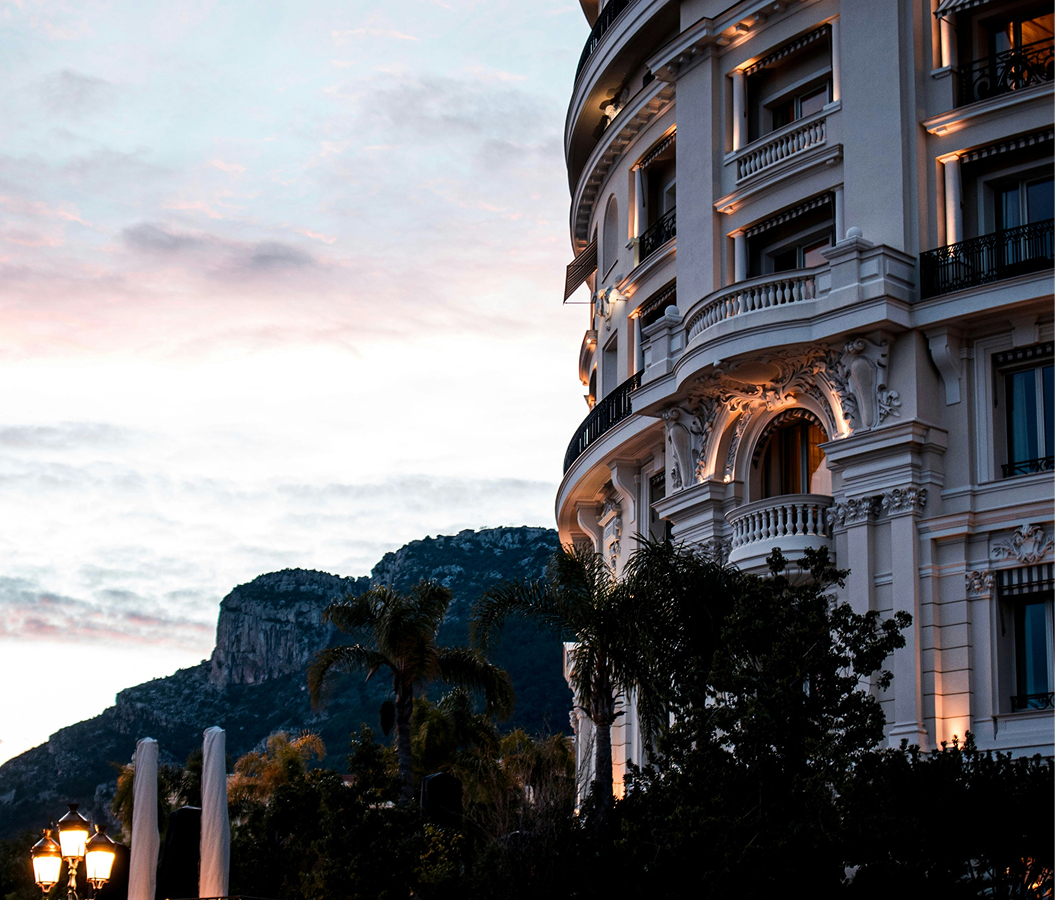
Set along Via Sant'Erlembardo near Viale Monza and just steps from the Naviglio Martesana, the villa occupies a deep garden enclave behind Gorla's historic canal-side settlement, separated from the surrounding city by mature trees and remnants of its nineteenth-century estate. The residence presents a restrained country-house composition within grounds whose winding paths, changes in elevation and dense planting retain the spatial depth of a garden conceived beyond the formal geometry of the house. Moving inward from Via Sant'Erlembardo establishes the primary encounter through a sequence of wooded clearings that gradually separates the villa from Viale Monza and the surrounding urban fabric. Mature horse chestnut, beech, elm, lime and paper mulberry deepen the atmosphere as the garden shifts between broad lawns and enclosed passages beneath the tree canopy. The result is a residence where architecture and mature landscape preserve the secluded character of an aristocratic retreat inside a district shaped by the Martesana and Milan's expansion northward.
What defines Villa Finzi.
Villa Finzi is best known for the romantic garden created around the residence by Hungarian count Giuseppe Batthyány, an officer of the Hussars who reshaped the Gorla property during the first decades of the nineteenth century. The estate had earlier appeared as a rental house in 1721, giving Batthyány an existing country property from which to develop a far more elaborate retreat. Architect Gaetano Brey designed a lake for the grounds in 1826 using water from the Acqualunga, a spring-fed channel originating near Precotto that crossed the estate before passing beneath the Naviglio Martesana. Batthyány expanded that water-centered scheme into an English garden in 1829 with winding paths, woodland, greenhouses, a café pavilion and several architectural diversions distributed across the grounds. The Tempietto dell'Innocenza occupied an artificial island within the lake as an open circular structure of eight stone columns, introducing neoclassical architecture directly into Brey's water composition. A second structure, the Tempio della Notte, descended underground through an artificial grotto into a chamber built by the Batthyány family between 1826 and 1836, where marble columns with Corinthian capitals created one of the estate's most unusual architectural episodes. The subterranean room later became an icehouse, giving the same chamber a practical role after its original use as a retreat and meeting place had ended. Batthyány died in 1836, and his heirs transferred the property to Prospero Finzi in 1839. Finzi ownership gave the villa its enduring name and preserved a garden whose lake, grotto, temples and water engineering had turned a Gorla country residence into an elaborate nineteenth-century landscape.
Fanny Finzi Ottolenghi redirected the estate during the second half of the nineteenth century by converting an aristocratic property into a center for children and young people requiring assistance. She inherited Villa Finzi after Prospero Finzi's death in 1876, together with extensive agricultural holdings accumulated by the family around Gorla and Precotto. Fanny established the Casa-Giardino per i Bambini di Gorla within the property, joining the inherited estate to a philanthropic program centered on local childhood. A refuge for young people with disabilities followed during the early twentieth century in cooperation with the Istituto Ortopedico Gaetano Pini, extending that mission into physical rehabilitation. Finzi ownership ended after 1919, when part of the estate passed into the hands of Società Anonima Parco Gorla for sports and entertainment before the company became Rosa Film in 1920 and later Sabaudo Film. Film activity continued on the property until 1928, adding an unexpected production chapter between the Finzi period and municipal acquisition. Milan acquired the estate in 1934 and converted the surviving grounds into a public park, preserving the social direction Fanny Finzi Ottolenghi had introduced decades earlier. Villa Finzi moved from private inheritance through childhood philanthropy and film production into public ownership without losing the humanitarian purpose that had distinguished its Finzi period.
How Villa Finzi fits.
Villa Finzi works as the anchor for a daytime exploration of Gorla and the Martesana through canal engineering, neighborhood memory and a literary site that carries the waterway toward nineteenth-century Milan.
Begin at Ponte Vecchio di Gorla, built in 1703 from blocks of ceppo dell'Adda as the sole crossing of the Naviglio Martesana along the Precotto-Turro route for more than a century. Its arched, humpbacked profile allowed boats carrying goods and passengers to pass beneath, joining Gorla's agricultural roads directly to a navigable canal whose development under Francesco Sforza and Ludovico il Moro connected the Adda with Milan. Continue to Monumento ai Piccoli Martiri di Gorla, created by sculptor Remo Brioschi on the former site of the Francesco Crispi elementary school after the air raid of October 20, 1944 killed 184 children along with teachers and school personnel. Parents and Gorla residents drove the memorial project, with Falck contributing iron and La Rinascente supplying Candoglia marble before the ossuary monument opened in 1952 around Brioschi's bronze group of a mother holding her dead child. Conclude at Cassina de' Pomm, the centuries-old farmstead beside the Martesana that became an inn during the eighteenth century and received figures including Stendhal and Carlo Porta. Alessandro Manzoni gave the site a second cultural life in chapter 33 of I Promessi Sposi, placing Renzo at a farmstead in Greco for a night on his return toward plague-stricken Milan and binding the Martesana landscape to one of Italy's central literary works. The progression moves from a 1703 canal crossing through Brioschi's memorial to Manzoni's literary geography, revealing how transport, wartime memory and literature shaped the territory surrounding Villa Finzi.
Where your story begins.
Foresyte Travel reveals places that feel extraordinary long before you arrive.
Enjoy editorial crafted for luxury travelers.
Foresyte may earn a commission when you book.