Why Vizcaya Museum & Gardens matters.
Vizcaya Museum & Gardens is a historic estate where Coconut Grove's waterfront heritage, Gilded Age ambition, European artistry, and tropical landscape design preserve one of America's finest residential estates.
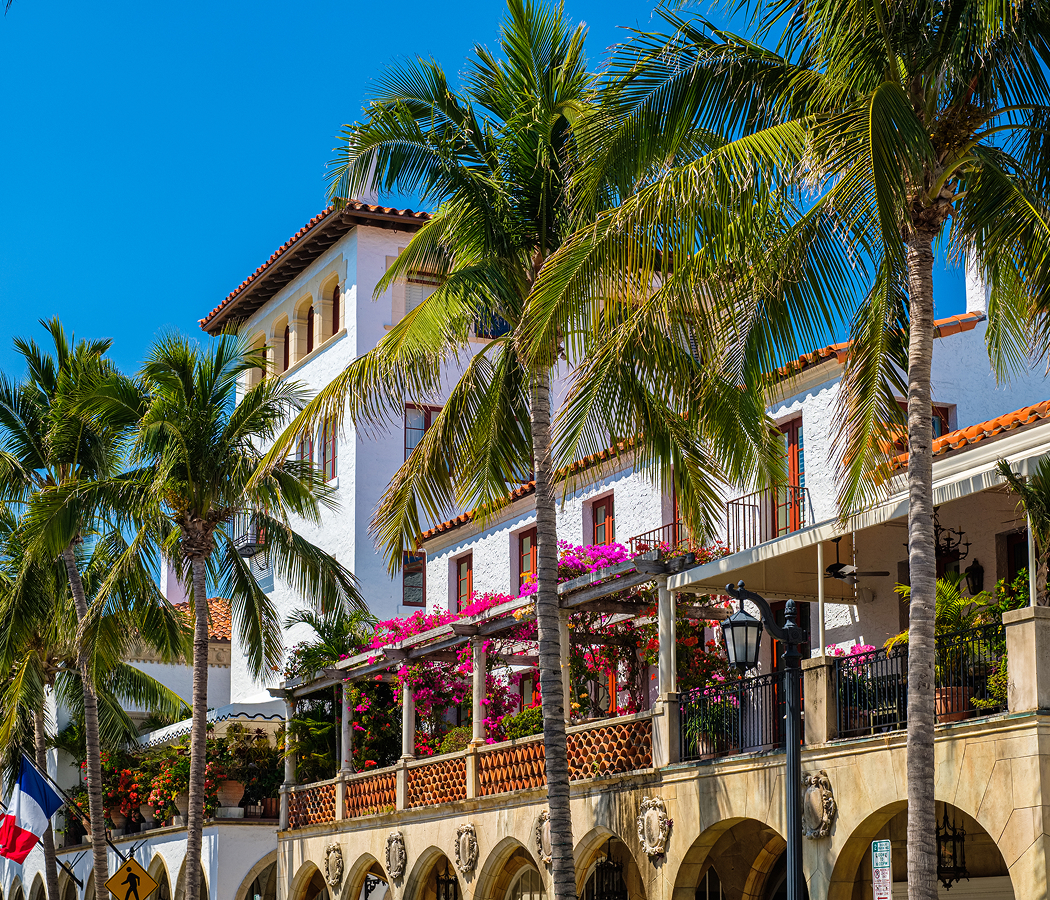
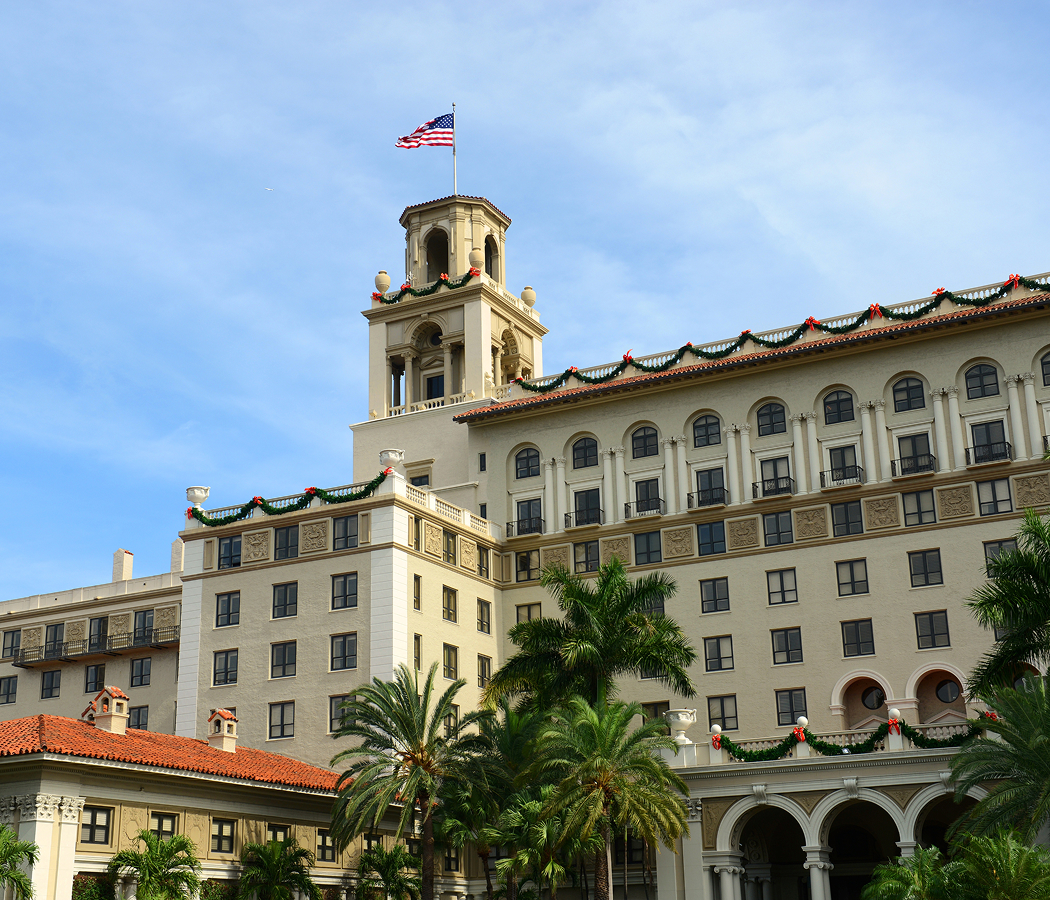
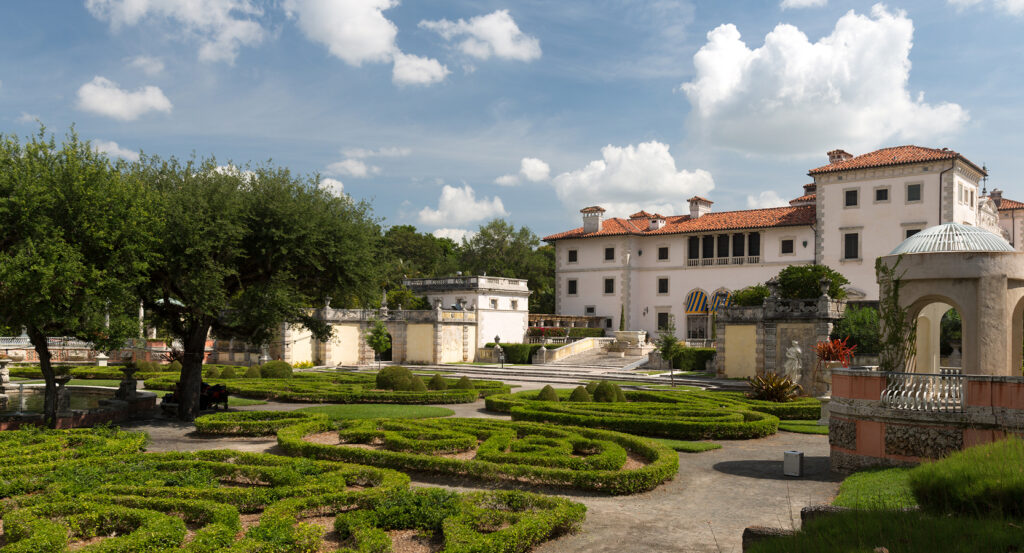
Set along South Miami Avenue near Vizcaya Drive and just steps from Biscayne Bay, this elegant estate unfolds through Italian Renaissance-inspired architecture, formal gardens, sculpted terraces, ornamental fountains, shaded courtyards, and waterfront vistas where European craftsmanship meets South Florida's subtropical landscape. Coral limestone, hand-carved stonework, imported antiques, reflecting pools, and carefully composed garden rooms reveal an estate conceived as both an artistic statement and a private winter residence. Architecture, horticulture, and craftsmanship define every path and gallery.
What defines Vizcaya Museum & Gardens.
Vizcaya Museum & Gardens is best known for being commissioned by industrialist James Deering between 1914 and 1922 as a lavish winter estate designed by architect F. Burrall Hoffman Jr., artistic director Paul Chalfin, and landscape architect Diego Suárez, creating a 34-room villa surrounded by ten acres of formal gardens within a historic estate that originally encompassed 180 acres along Biscayne Bay. Inspired by Italian Renaissance villas visited throughout Europe, the estate incorporates architectural elements, ceilings, fireplaces, doors, and furnishings acquired from the fifteenth through nineteenth centuries, many of which were transported from Europe and carefully integrated into the residence during construction. More than one thousand craftsmen, artisans, and laborers contributed to the project, adapting European building traditions to South Florida's humid subtropical climate through reinforced concrete construction concealed beneath coral rock finishes and historic decorative materials. The gardens blend Italian, French, and Mediterranean influences with native and tropical plantings, featuring elaborate parterres, fountains, pergolas, labyrinths, orchid collections, and sculptural ensembles organized into a sequence of outdoor rooms extending toward Biscayne Bay. Offshore, the sculptural stone breakwater known as the Stone Barge functions both as an artistic composition and as protection from wave action, becoming one of the estate's most recognizable architectural features. Following James Deering's death in 1925, Miami-Dade County acquired the property in 1952 before opening it as a museum, where ongoing architectural conservation, landscape restoration, collection stewardship, archival research, and hurricane resilience projects preserve more than 2,500 decorative art objects, historic interiors, and one of the nation's most significant early twentieth-century estates.
European antiques, hand-painted ceilings, carved stone ornament, formal garden geometry, and carefully framed waterfront views reveal the close collaboration between architects, artists, horticultural specialists, and skilled craftsmen working toward a unified artistic vision. Mediterranean-inspired planting schemes adapt gracefully to South Florida's climate, allowing palms, orchids, cycads, and flowering tropical species to become integral components of the estate. More than a century after construction began, the residence and gardens continue reflecting James Deering's ambition to unite architecture, art, and landscape within a setting unlike any other in the United States.
How Vizcaya Museum & Gardens fits.
Vizcaya Museum & Gardens works as the centerpiece of an exploration through Coconut Grove's historic waterfront.
Begin at Vizcaya Metrorail Station, where convenient access establishes the journey before exploring Vizcaya Museum & Gardens. Continue to The Kampong, whose botanical collections deepen appreciation for South Florida's tropical horticultural heritage. Conclude at Peacock Park, where Biscayne Bay views provide a memorable finale celebrating the natural beauty that inspired the estate's waterfront setting. The progression moves naturally from historic architecture to tropical landscapes before concluding beside the bay that shaped Vizcaya's design, revealing why Coconut Grove remains one of Miami's most culturally significant neighborhoods.
Where your story begins.
Foresyte Travel reveals places that feel extraordinary long before you arrive.
Enjoy editorial crafted for luxury travelers.
Foresyte may earn a commission when you book.