Why Rosarium Vondelpark matters.
Rosarium Vondelpark is a cultivated rose garden where Amsterdam's pastoral park tradition meets horticultural experimentation, geometric planting and nearly a century of public flower culture.
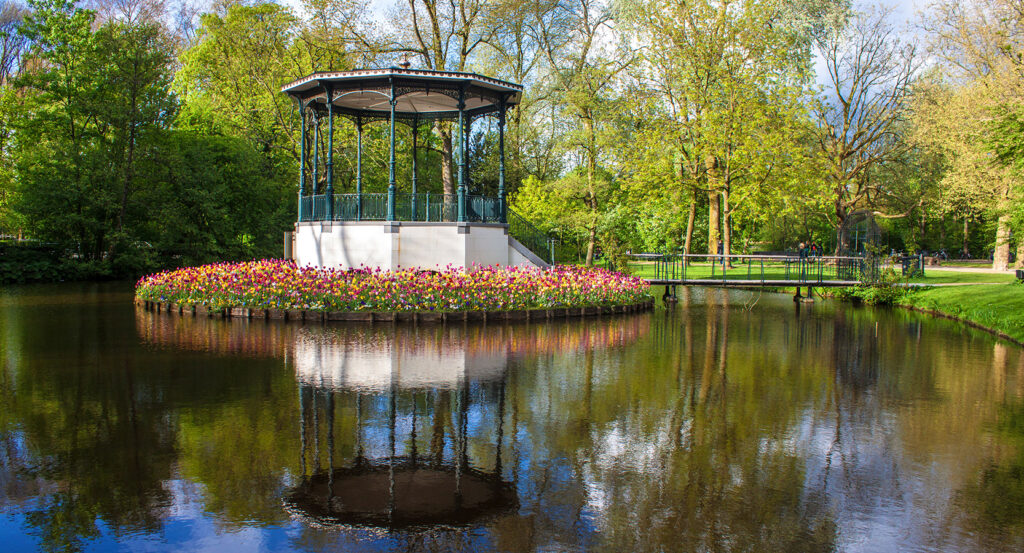
Set within Vondelpark near Van Eeghenstraat and just south of the park's northern perimeter, the garden occupies a sheltered interior pocket between the broad lawns toward Museumkwartier, the elongated watercourses extending west through the park and the residential edges of Oud-Zuid, with Overtoom running beyond the park to the north and Amstelveenseweg defining its far western reach. Hexagonal beds impose a deliberately ordered geometry on the surrounding landscape, concentrating individual rose varieties into discrete blocks separated by narrow paths. Repeated changes in colour, height and flower form make movement between those beds the principal way the garden unfolds during the flowering season. Mature trees around the perimeter soften that formal arrangement against the broader lawns, ponds and winding paths beyond the garden. The result is a contained horticultural garden whose geometric beds, concentrated rose displays and enclosed position create a formal counterpoint within Vondelpark's sweeping nineteenth-century landscape.
What defines Rosarium Vondelpark.
Rosarium Vondelpark is best known for descending from Kleurenpracht II, an ambitious rose and sculpture exhibition opened on the site in July 1936. Rose association Nos Jungunt Rosae initiated the project with Comité Practisch Werken Amsterdam, whose workforce included 70 unemployed young men engaged in construction during the economic crisis. Garden architect F.J. Abbing and horticulturist Jello Jongsma designed the enclosed grounds with 144 rose beds, and 24 Dutch growers joined one German grower in donating 7,000 plants. Thirty-seven sculptures assembled through the Amsterdam circle of sculptors expanded the display beyond horticulture, and lighting specialist J.W. Duchâteau contributed to an exhibition conceived for daytime and illuminated evening viewing. Poor weather delayed the planned opening by four weeks before the gates finally opened in July, and more than 30,000 people entered during the exhibition period. Admission charges disappeared after the temporary enclosure and sculptures were removed in autumn 1936, converting the exhibition grounds into a freely accessible public rose garden. 140 wild and cultivated varieties continued growing there for two decades, carrying an event created as a temporary performance into the permanent landscape of Vondelpark.
Where your story begins.
Foresyte Travel reveals places that feel extraordinary long before you arrive.
Enjoy editorial crafted for luxury travelers.