Why Vudu Cafe matters.
Vudu Cafe is an established Queenstown café where Queenstown's waterfront hospitality culture meets Michelle Freeman's pioneering approach to seasonal cooking, house-made baking and the development of contemporary New Zealand café cuisine.
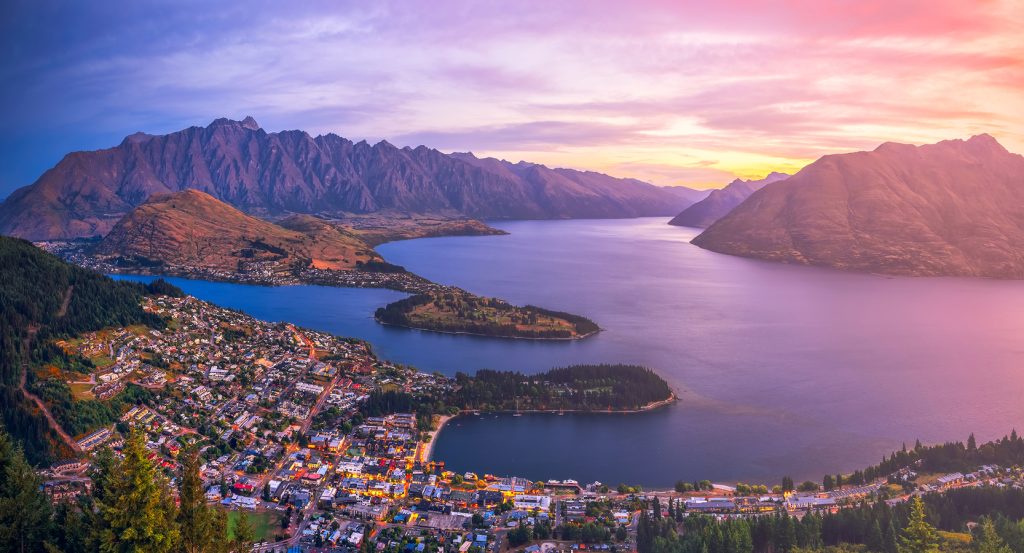
Positioned along Rees Street near its intersection with Beach Street, immediately above the Lake Wakatipu waterfront and a short walk from Queenstown Mall, the café occupies a prominent ground-floor location within the town's compact lakeside commercial district. Its broad windows connect the dining room to the pedestrian activity outside, with views extending across Queenstown Bay toward the Remarkables. Vintage-inspired furnishings, warm timber surfaces, decorative lighting and layered interior finishes create an intimate environment around closely arranged tables and a substantial food display. An outdoor seating area extends the café toward the waterfront, providing an open-air dining position overlooking the lake and surrounding mountains. The result is a café whose waterfront position, carefully furnished interior and prominent baking display establish a distinctive setting for contemporary New Zealand breakfast and lunch cooking.
What defines Vudu Cafe.
Vudu Cafe is best known for Michelle Freeman's transformation of a small Queenstown coffeehouse into an influential local hospitality business whose approach to fresh baking, vegetarian cooking and seasonal produce helped shape the town's contemporary café culture. Freeman grew up on New Zealand's West Coast, where baking became an important part of her early relationship with food. She became vegetarian at seventeen, developing an interest in preparing substantial meals around vegetables, grains and ingredients that demanded creative treatment. During her university years, she worked at Nomads in Christchurch, a restaurant whose commitment to preparing food from scratch introduced her to falafel, baklava, salads and the possibilities of vegetarian cooking beyond conventional café fare. Freeman established the original Vudu Cafe on Beach Street in 1997, bringing those influences into a Queenstown hospitality market undergoing substantial growth alongside the region's international tourism industry. The café developed a following through its combination of carefully prepared coffee, substantial breakfasts, house-made baking and a menu that gave vegetarian ingredients a prominent position. Its early success established the foundations for a wider hospitality partnership with Rae Ellis, whose professional background brought a complementary emphasis on nutrition, specialty coffee and international food culture. Ellis developed her interest in hospitality through travel across Europe, Asia and Australia, gaining experience that informed her approach to the preparation and presentation of contemporary café food. Their collaboration expanded Vudu's culinary direction through increasingly elaborate seasonal dishes, fresh ingredients and baking developed within the business. The opening of Vudu Cafe & Larder on Rees Street introduced a larger waterfront operation, providing additional room for an extensive display of sweet and savory preparations alongside the kitchen's breakfast and lunch service. Freeman and Ellis subsequently joined Chris Vile in developing Bespoke Kitchen, which opened in June 2015 and extended their approach to organic ingredients, raw preparations and plant-based cooking. Bespoke Kitchen won the New Zealand Café of the Year title for 2016, together with the Best Suburban Café category, after a national competition attracting more than 700 entries. The achievement brought significant recognition to the hospitality group and strengthened the association between Queenstown and ambitious contemporary café cooking. A major turning point arrived in January 2016 when Freeman closed the original Beach Street café after nineteen years. The Davies family had acquired its building and neighboring properties for NZ$10 million, planning redevelopment that required demolition of the existing premises. Freeman declined an opportunity to return under substantially higher rental terms, ending the operation at the location where Vudu had begun. The Rees Street café continued the business's established culinary direction, preserving its emphasis on house-made food and carefully developed coffee service. By 2018, Freeman and Ellis were operating Vudu Cafe & Larder alongside Bespoke Kitchen, consolidating a partnership that had become an important part of Queenstown's independent hospitality industry. Vudu's reputation also attracted recognition from international travel publications, including Lonely Planet, Fodor's and Frommer's, which brought its distinctive breakfast and baking program to audiences beyond New Zealand. The business subsequently received recognition through the 2021 Queenstown Hospitality Awards, extending a record of local and national hospitality achievement. Its continued operation connects Freeman's original 1997 enterprise to nearly three decades of changes in Queenstown's restaurant industry, preserving the influence of independent café operators within a destination increasingly associated with international tourism and sophisticated dining.
Michelle Freeman's culinary approach begins with the principle that baking, vegetables and carefully prepared coffee deserve the same attention as the central components of a substantial breakfast. The café's extensive display of house-made sweet and savory preparations gives that principle immediate physical form, placing cakes, pastries, slices and baked goods at the center of the ordering experience. Baking establishes the kitchen's characteristic balance between richness and freshness, using butter, eggs, fruit, nuts and carefully developed batters to create preparations whose textures remain distinct. Carrot cake demonstrates the importance of that control through a moist crumb, concentrated spice and cream-cheese frosting that introduces acidity against the sweetness of the cake. The same attention to texture extends into savory baking, particularly cheese scones whose tender interiors and browned exteriors carry the concentrated flavor of melted cheese. Spring onion contributes a fresh aromatic quality, allowing the richness of the cheese to develop alongside the lighter character of the dough. These preparations establish the relationship between familiar New Zealand baking traditions and the café's more elaborate breakfast cooking. Free-range eggs provide an important foundation for the all-day menu, supporting preparations that depend on precise cooking and carefully balanced accompaniments. Hollandaise introduces the richness of an emulsified butter sauce, and its acidity provides a necessary counterpoint to poached eggs and the ingredients beneath them. Toasted bread contributes a firm foundation that preserves contrast against softer eggs, vegetables and sauces, allowing the finished preparation to develop through distinct textures. Freeman's longstanding commitment to vegetarian cooking becomes particularly apparent in the treatment of fresh vegetables as substantial ingredients. The Green Goddess sandwich develops that approach through a combination of vegetables, herbs and creamy elements whose contrasting textures make the filling central to the preparation. Seasonal produce shapes the wider menu, allowing the kitchen to incorporate vegetables and fruit at their most flavorful while adjusting accompaniments to suit their natural sweetness, acidity and texture. Roasting develops deeper flavors in vegetables through caramelization, creating substantial components for grain bowls and composed breakfast dishes. Fresh herbs and acidic dressings then restore brightness, connecting the richer cooked ingredients to the café's emphasis on balanced, vegetable-led meals. Fruit provides a complementary foundation for sweeter breakfast preparations, particularly French toast whose soft interior and browned exterior establish a contrast against berries and accompanying dairy elements. Blueberries contribute concentrated sweetness and acidity, supporting a preparation that develops from the familiar structure of bread soaked in egg and milk into a more elaborate café breakfast. Coffee completes the relationship between baking and cooked food through Vudu's proprietary espresso blend, roasted locally by Wolf Coffee Roasters in Arrowtown. The blend is developed specifically for the café, connecting its coffee service to a regional roasting business and maintaining a consistent foundation for espresso and milk-based drinks. Espresso introduces concentrated roasted aromas and bitterness that balance the sweetness of cakes and pastries, and textured milk softens those qualities in flat whites and cappuccinos. Locally sourced juices and smoothies extend the beverage program toward fresh fruit and vegetables, reinforcing the kitchen's broader emphasis on seasonal ingredients. The café's morning service brings these elements together through a substantial baking display, freshly prepared espresso and a kitchen producing breakfast dishes throughout the day. Vudu's distinctive culinary character emerges from this sustained relationship between traditional New Zealand baking, carefully developed vegetarian cooking, seasonal ingredients and specialty coffee, giving familiar café preparations a level of attention that has defined the business since its earliest years.
How Vudu Cafe fits.
Vudu Cafe works as the starting point for an outing exploring Queenstown's pastoral beginnings, the emergence of its lakeside hospitality industry and the transformation of the waterfront into a public recreational landscape.
Begin at William Gilbert Rees Statue, the waterfront memorial honoring the pastoralist whose arrival preceded Queenstown's development as a goldfields settlement. Rees traveled into the Wakatipu district with Nicholas von Tunzelmann in 1860, establishing a sheep run across land that later became central to the town's development. His pastoral enterprise initially supplied wool and agricultural products to the wider Otago economy, placing livestock farming at the foundation of European settlement in the district. Gold discoveries during 1862 transformed the region, bringing prospectors into the surrounding valleys and creating an urgent demand for food, accommodation and transportation. Rees subsequently adapted his commercial activities to serve the growing settlement, becoming an important figure in the transition from isolated pastoral land to a developing town. Continue to Eichardt's Private Hotel, the historic hospitality establishment whose origins reach to the commercial changes that followed the Central Otago gold rush. Rees converted his original woolshed into the Queen's Arms Hotel, creating accommodation for travelers and miners arriving in the expanding settlement. Albert Eichardt subsequently became associated with the property, developing the business into one of Queenstown's principal hotels during the nineteenth century. A substantial rebuilding program following the destructive flood of 1878 produced the masonry hotel that became an enduring feature of the waterfront. The surviving building preserves a direct architectural connection to the period when Queenstown's commercial institutions developed around goldfields transportation and hospitality. Conclude at St. Omer Park, the lakeside reserve whose establishment reflects the gradual transformation of Queenstown's waterfront into a public recreational landscape. The park takes its name from François St. Omer, an early settler and mayor whose involvement in local improvement projects contributed to the development of public spaces around the settlement. During the 1860s, St. Omer, his son Frank and other residents planted willow trees along a previously exposed section of shoreline, beginning the transformation of the waterfront through deliberate landscaping. Subsequent generations developed the reserve into a public park, preserving an accessible stretch of lakeside land as commercial activity expanded through the surrounding streets. Its mature trees, grassed areas and pedestrian paths now form an important component of Queenstown's waterfront recreation network. The progression moves from William Gilbert Rees Statue's commemoration of the district's pastoral beginnings through Eichardt's Private Hotel's development of goldfields hospitality and culminates in St. Omer Park's transformation of the shoreline into public recreational space, connecting the settlement's agricultural origins to the development of its contemporary lakeside character.
Where your story begins.
Foresyte Travel reveals places that feel extraordinary long before you arrive.
Enjoy editorial crafted for luxury travelers.
Foresyte may earn a commission when you book.