Why Vue de Monde matters.
Vue de Monde is an internationally acclaimed fine-dining restaurant where Melbourne CBD's historic financial grandeur meets Shannon Bennett's transformation of French haute cuisine into an ambitious expression of Australian ingredients, culinary innovation, and contemporary gastronomic theatre.
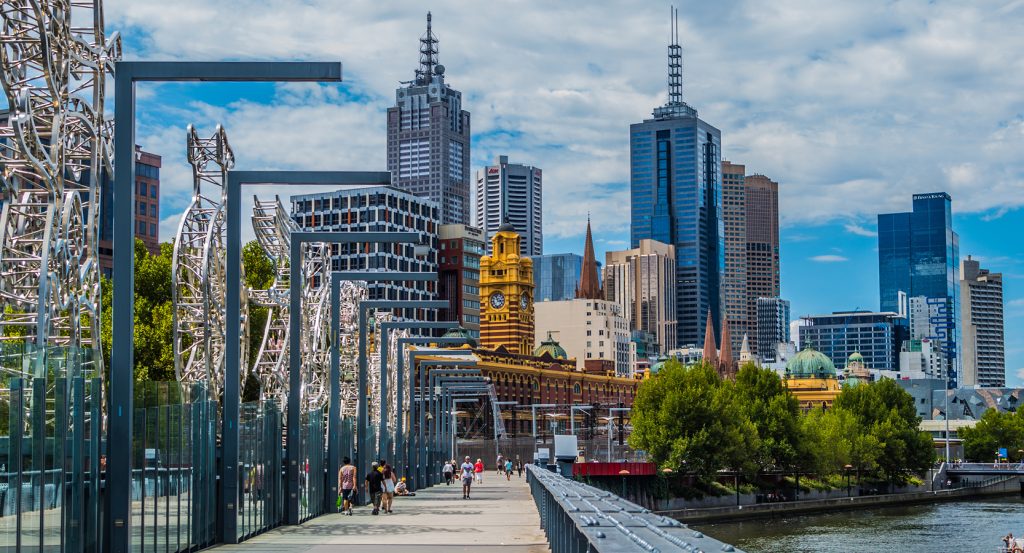
Occupying the 55th floor of Rialto Towers on Collins Street near King Street, Vue de Monde rises above Melbourne's western financial district, overlooking the Yarra River, Southbank and Docklands, with the city's central commercial towers extending eastward toward the distant Dandenong Ranges. The restaurant occupies the former observation level of the southern tower, whose expansive glazing establishes an extraordinary visual relationship between the dining room and the surrounding metropolitan landscape. The interior combines dark timber, Australian stone, leather, and carefully controlled lighting, establishing a restrained architectural composition whose substantial windows remain the dominant feature. Kangaroo-leather upholstery and locally crafted furnishings introduce tactile connections with Australian design, complementing the restaurant's emphasis on native ingredients and regional craftsmanship. A substantial open kitchen provides a theatrical center for the dining room, with dedicated preparation areas supporting the technical demands of an elaborate tasting-menu service. The result is an exceptional metropolitan dining destination whose dramatic elevation, sophisticated interior architecture, and panoramic views establish a distinctive setting for one of Australia's most influential fine-dining institutions.
What defines Vue de Monde.
Vue de Monde is best known for Shannon Bennett's transformation of a modest French restaurant into a nationally influential culinary institution whose development helped redefine the ambitions of Australian fine dining. Bennett grew up in Melbourne and developed an early interest in cooking through his family's appreciation of French cuisine, subsequently beginning his professional training in the city's restaurant industry. His formative career included work under John Burton-Race at London's L'Ortolan, whose demanding classical techniques introduced the discipline associated with MICHELIN-starred European kitchens. Further professional development brought him into contact with the culinary traditions of Marco Pierre White and Alain Ducasse, strengthening his understanding of French restaurant organization, technical precision, and the relationship between ingredients and elaborate preparations. Bennett returned to Melbourne with ambitions to establish a restaurant capable of competing with leading international dining institutions. In 2000, he opened Vue de Monde in a small Carlton terrace, introducing a French bistro whose original operation depended upon limited resources, personal determination, and a concentrated commitment to culinary quality. The restaurant gradually developed a substantial reputation through its interpretation of French classics and Bennett's increasingly ambitious approach to presentation and service. Its success prompted a move to Normanby Chambers on Little Collins Street in 2005, establishing a more sophisticated dining environment within Melbourne's central commercial district. The relocation introduced greater opportunities for culinary experimentation, supported by expanded kitchen facilities and an increasingly experienced professional team. Bennett's growing influence extended into television, publishing, and the development of additional hospitality businesses, bringing wider public attention to the standards and techniques associated with professional fine dining. The restaurant's most consequential transformation arrived in 2011 through its relocation to the uppermost occupied level of Rialto Towers, establishing an unprecedented architectural setting for Bennett's culinary ambitions. The project required an investment of $10 million, introducing an elaborate interior whose original design incorporated kangaroo-leather-covered tables, dramatic contemporary furnishings, and illuminated conceptual artworks by American artist Joseph Kosuth. The relocation established a substantial departure from the restaurant's original French bistro character, introducing a distinctly Australian gastronomic direction through native ingredients, elaborate tasting menus, and theatrical service. Bennett's professional responsibilities subsequently expanded through the development of Vue Group, whose hospitality interests encompassed restaurants, cafés, bars, and event operations across Melbourne. An important leadership transition emerged through the appointment of Hugh Allen as executive chef in 2019, introducing a younger culinary perspective shaped by exceptional international training. Allen had joined Vue de Monde as a teenage apprentice before pursuing professional development at Copenhagen's Noma, where René Redzepi's influential approach to Nordic ingredients and experimental cooking informed his understanding of contemporary gastronomy. His return to Melbourne established a significant generational transition within the restaurant, bringing a former apprentice into responsibility for one of Australia's most demanding kitchens. Allen's subsequent leadership strengthened the restaurant's commitment to native produce, technical innovation, and the relationship between Australian landscapes and contemporary culinary expression. Vue de Monde entered another substantial phase in 2023 through a three-month refurbishment that reorganized the dining room, kitchen, and associated hospitality spaces. Melbourne architectural practice Elenberg Fraser developed the renovation, introducing a larger kitchen, dedicated pastry facilities, revised lighting, new furnishings, and a more extensive relationship between the restaurant's culinary program and its physical environment. The renewed restaurant reopened in October 2023, establishing a sophisticated contemporary setting for an expanded tasting-menu format. The institution subsequently retained its position among Australia's most highly regarded restaurants, earning three chef's hats in the 2024 and 2025 editions of the Good Food Guide. Its sustained importance derives from the relationship between Bennett's original ambition, the development of a distinctive Australian culinary language, and the professional evolution of a restaurant that has influenced Melbourne's fine-dining culture for more than two decades.
Hugh Allen's culinary direction develops the exceptional diversity of Australian ingredients through an elaborate tasting menu whose successive preparations combine classical technical discipline with the distinctive flavors of the continent's coastal waters, native vegetation, and agricultural regions. His professional development introduced a particular interest in the relationship between ingredient provenance and the controlled application of contemporary cooking techniques, establishing a culinary approach grounded in precision and experimentation. Australian seafood occupies a substantial position within this repertoire, with marron introducing the sweetness and delicate texture of a freshwater crustacean associated with Western Australia's southwestern waterways. The kitchen's treatment of marron emphasizes careful temperature control, preserving the natural character of the flesh through restrained cooking and carefully developed sauces. Rock oysters contribute another maritime dimension, introducing pronounced salinity and mineral complexity that support combinations with native botanical ingredients. Western Australian sea snails extend this exploration through their distinctive texture and concentrated marine flavor, establishing a contrasting interpretation of Australia's coastal resources. The menu's relationship with native plants introduces aromatic ingredients whose unusual characteristics support combinations of acidity, bitterness, and fragrance. Lemon aspen contributes a pronounced citrus character, bringing brightness to preparations whose richness requires carefully balanced acidity. Native herbs and coastal vegetation introduce further complexity through flavors shaped by the environmental conditions of their natural habitats. Premium Australian beef establishes another important dimension through carefully selected wagyu, whose substantial intramuscular fat supports preparations emphasizing controlled heat, tenderness, and concentrated savory flavor. The kitchen's attention to texture extends into bread and pastry through heritage grains, fermented doughs, and cultured dairy products, introducing a relationship between traditional baking techniques and contemporary Australian agriculture. Dessert preparations develop the tasting menu's technical ambitions through carefully controlled aeration, temperature contrasts, and the incorporation of native aromatic ingredients. Chocolate soufflé introduces the precision associated with classical French pastry, its delicate structure requiring exact timing and controlled oven conditions. Billy tea contributes a distinctly Australian aromatic element, connecting the preparation with a beverage tradition associated with rural life and outdoor cooking. The beverage program introduces another substantial dimension through a carefully developed wine collection encompassing established European regions and Australia's major viticultural districts. Sommelier-led pairings establish connections between individual preparations and the structural characteristics of selected wines, including acidity, tannin, aromatic intensity, and maturation. Dedicated tea pairings extend this approach through carefully selected infusions, introducing a complementary interpretation of the relationship between beverages and food. Non-alcoholic preparations incorporate botanical ingredients and contemporary extraction techniques, developing additional combinations suited to the menu's changing flavors. The restaurant's service establishes a carefully coordinated relationship between the kitchen, dining room, and beverage team, with individual courses presented through an extended sequence that emphasizes technical detail and culinary craftsmanship. Vue de Monde's distinctive gastronomic character emerges through this sustained combination of Australian produce, classical French foundations, and the experimental ambitions of contemporary fine dining.
How Vue de Monde fits.
Vue de Monde works as the evening culmination of an exploration connecting Melbourne's maritime immigration history, the architectural extravagance of its nineteenth-century banking institutions, and the extraordinary financial prosperity that transformed Collins Street into one of Australia's most distinguished commercial thoroughfares.
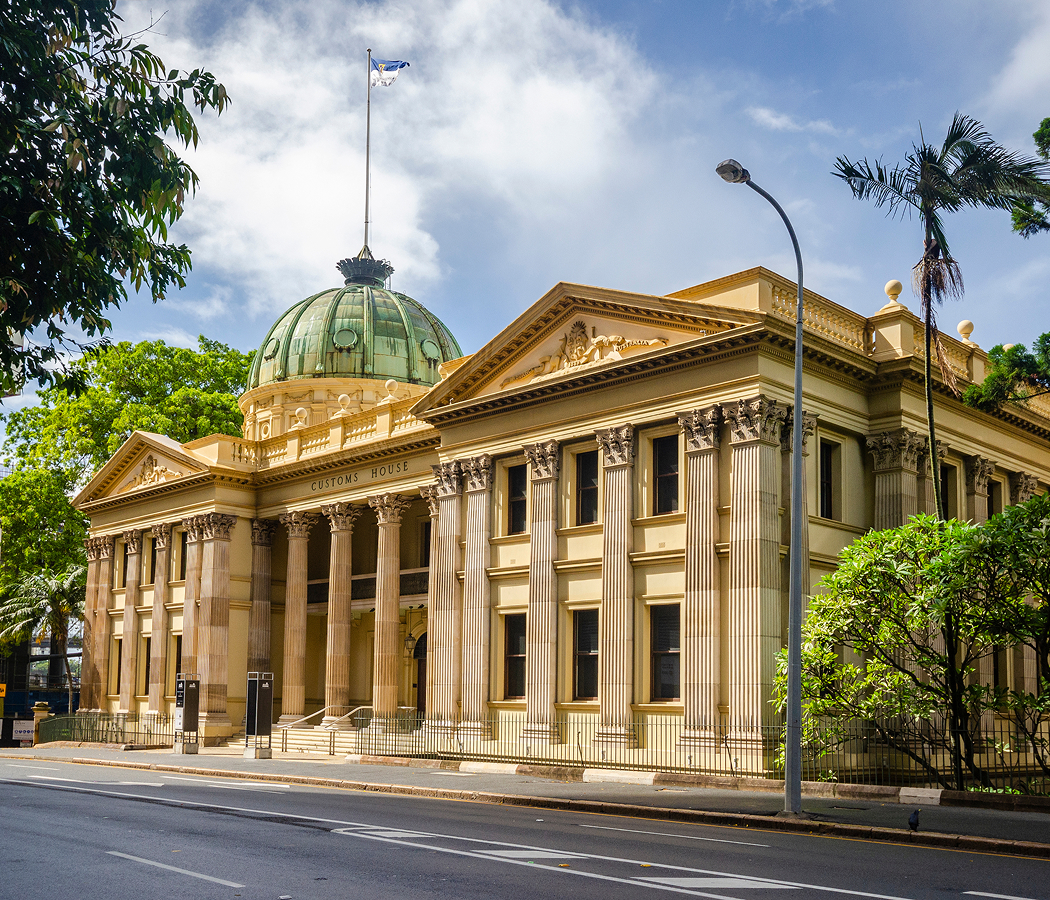
Begin at Immigration Museum, occupying the former Customs House whose history connects Melbourne's nineteenth-century port economy with the arrival of successive immigrant communities. The original customs establishment operated from a modest structure during the 1830s before a substantial bluestone replacement was completed in 1841, establishing an important administrative center for the growing colonial settlement. The Victorian gold rush generated extraordinary increases in maritime trade and government revenue, prompting architect Peter Kerr to develop an ambitious replacement whose construction began during the 1850s. The completed building opened in 1876, incorporating an imposing Renaissance Revival composition and a substantial Long Room where customs officials supervised the commercial transactions supporting Victoria's international trade. Its conversion into Immigration Museum in 1998 introduced a permanent cultural institution devoted to the personal histories, communities, and social transformations associated with migration to Australia. Continue to 333 Collins Street, the expansive commercial complex whose preserved banking chamber provides an extraordinary architectural connection with Melbourne's nineteenth-century financial expansion. The original Commercial Bank of Australia headquarters emerged through an architectural competition won jointly by Lloyd Tayler and Alfred Dunn, whose design introduced an elaborate banking interior during the speculative prosperity of the early 1890s. Construction proceeded between 1891 and 1893, producing an octagonal chamber twenty metres across beneath an expansive dome whose intersecting arches rise thirty metres above the floor. The building opened in July 1893 during a severe financial crisis that forced the bank into reconstruction, establishing a remarkable contrast between its architectural extravagance and the collapse of Victoria's speculative economy. A substantial redevelopment completed in 1990 incorporated the preserved banking chamber and entrance vestibule into a contemporary office tower, securing the survival of one of Melbourne's most exceptional commercial interiors. Conclude at ANZ Gothic Bank, the extraordinary nineteenth-century financial institution whose architectural grandeur represents the culmination of Melbourne's Victorian banking ambitions. Sir George Verdon commissioned architect William Wardell to develop the Australian headquarters of the English, Scottish and Australia Chartered Bank, establishing a substantial building whose construction began in October 1883. The bank opened on May 31, 1887, introducing a remarkable Venetian Gothic composition whose sandstone exterior concealed an elaborately decorated banking chamber incorporating iron columns, painted ceilings, and extensive gilded ornamentation. Verdon's private residence occupied two upper floors, establishing an exceptional arrangement in which the institution's principal executive lived above its commercial operations. The adjoining former Melbourne Stock Exchange, designed by William Pitt, introduced another interpretation of Gothic Revival architecture through an exceptionally ornate façade and a vaulted trading chamber. The complex underwent a major restoration completed in 2024, reopening its historic interiors alongside a banking museum devoted to the development of Australian finance. The progression moves from the maritime administration that regulated colonial trade through the expansive banking chamber completed during Victoria's financial collapse and culminates in the Gothic headquarters of an institution whose architectural extravagance embodied Melbourne's nineteenth-century commercial ambitions, establishing a coherent historical foundation for an evening above the city's financial district.
Where your story begins.
Foresyte Travel reveals places that feel extraordinary long before you arrive.
Enjoy editorial crafted for luxury travelers.
Foresyte may earn a commission when you book.